The painting industry in Melbourne has a low barrier to entry. Anyone with an ABN and a brush can call themselves a painter, advertise on social media, and start quoting jobs tomorrow. There is no mandatory licensing for jobs under $10,000, no formal qualification requirement, and no shortage of operators who disappear the moment something goes wrong. As a painter who has been doing this for 35 years, I have seen what happens when homeowners hire the wrong person — and I have fixed enough of those jobs to know that the damage goes beyond money. It wastes your time, your patience, and leaves you with a result that needs to be stripped and redone.
This guide is what I wish every Melbourne homeowner read before picking up the phone. It is not about hiring us specifically — it is about knowing what to look for, what to ask, and what to walk away from, no matter who you are talking to.
The 10-Point Hiring Checklist
Before you accept a quote or hand over a deposit, every painter you are considering should pass all ten of these checks. Not most of them. All of them.
1. Valid ABN
Every legitimate painting business operating in Australia has an Australian Business Number. Ask for it upfront, then verify it yourself on the ABN Lookup website. Check that the ABN is active, that the entity name matches the business name the painter gave you, and that it is registered for GST if the business turns over more than $75,000 per year. If a painter will not give you their ABN, stop the conversation there. There is no legitimate reason to withhold it.
2. Public liability insurance ($10M minimum)
Public liability insurance protects you if something goes wrong on your property during the job — a ladder through a window, paint spilled on your flooring, a worker injured on site. $10 million minimum is the industry standard. $20 million provides better protection and is what established painting companies carry. Do not take a painter’s word for it — ask for a copy of their certificate of currency. This is a one-page document from their insurer that confirms the policy is current and the coverage amount. Any professional painter will have this ready to send within minutes.
3. VBA registration (for jobs over $10,000)
In Victoria, any painting work valued at over $10,000 (including labour and materials) legally requires the painter to be a registered building practitioner with the Victorian Building Authority. You can search the VBA register online to confirm registration. This is not optional — it is the law. If a painter is quoting $12,000+ and is not VBA registered, they are operating illegally and you have no recourse through the Victorian building dispute process if something goes wrong.
4. Written itemised quote (not a phone estimate)
A professional painter will visit your property, assess the surfaces, discuss your requirements, and then provide a written quote. That quote should be a document — not a text message, not a verbal figure, not a ballpark over the phone. It must specify which surfaces are included, how many coats, what preparation is involved, the paint brand and product, and a fixed total price. If you want to know what a proper painting quote looks like, read our guide to getting a painting quote in Melbourne.
5. Paint brand and product specified
“Premium paint” and “quality paint” are marketing terms, not product specifications. A professional painter should name the exact product: Dulux Weathershield for exteriors, Dulux Wash&Wear for interiors, or whatever specific product they recommend for the job. The product choice directly affects how long your paint job lasts. There is a significant difference between a $40/litre trade-grade paint and a $90/litre premium product — and the painter who will not tell you what they are using is almost certainly using the cheapest option available.
6. Preparation process explained
This is where most of the difference between a good painter and a dodgy one shows up. Preparation accounts for 60–80% of the time on a quality paint job, yet it is the first thing that gets cut when a painter needs to hit a low price. Ask the painter to walk you through exactly what preparation they will do. You should hear specifics: scraping loose paint, sanding surfaces, filling cracks and holes, washing walls, spot-priming bare timber or plaster, caulking gaps. If the answer is vague — “we’ll prep as needed” or “standard prep included” — that is not an answer.
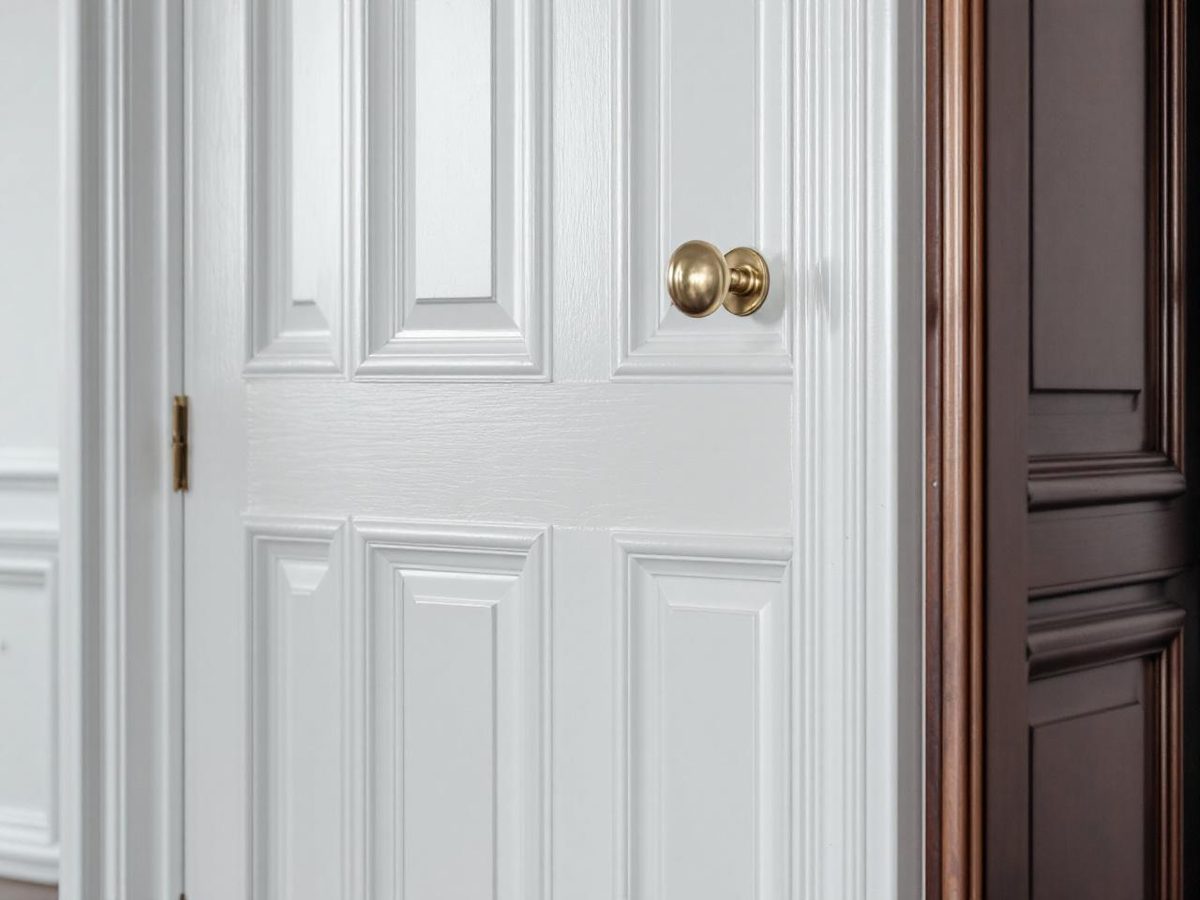
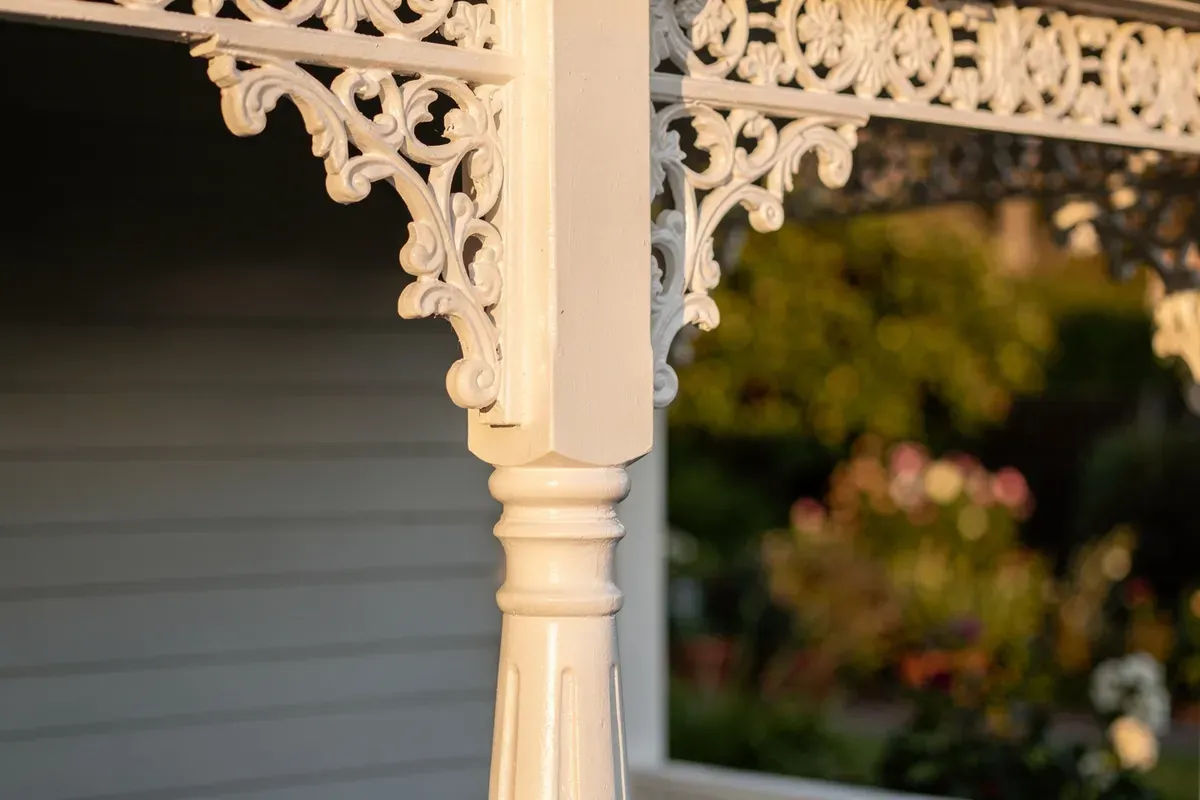
Detail work like this door finish is only possible with thorough preparation — sanding, filling, priming, and multiple coats. There are no shortcuts.
7. Photos of recent work
Every experienced painter has a portfolio. Ask to see photos of completed projects — not stock images from paint company websites, but actual photos of their recent work. Look for clean edges, consistent coverage, and attention to detail areas like trim, window frames, and cut-in lines. If a painter has been working for years and cannot show you a single photo of their finished work, that tells you something.
8. Verifiable Google reviews from local homeowners
Google reviews are the most reliable indicator of consistent quality because they are tied to real Google accounts and cannot be easily faked at scale. Look for patterns, not just the star rating. Read the written reviews. Do multiple reviewers mention specific things — good communication, clean worksite, attention to detail, on-time completion? Or are the reviews generic one-liners? Check the dates — are reviews coming in regularly over years, or were 50 reviews posted in the same week? Also check that the reviews are from the geographic area the painter claims to service.
9. Clear warranty and guarantee terms
Ask what happens if you are not satisfied with the finish, or if the paint fails prematurely. A professional painter will offer a walk-through inspection upon completion and fix any issues at no additional cost. Beyond that, ask about their warranty on workmanship and whether the paint products they use carry a manufacturer’s warranty. Get the warranty terms in writing as part of the quote — verbal promises have no value if you need to enforce them.
10. Professional communication and timeline
This is the one most homeowners underrate. Pay attention to how the painter communicates from the first contact. Do they return calls and messages promptly? Do they show up to the quote appointment on time? Do they explain things clearly without being evasive? How a painter communicates before they have your money is the best version of their communication you will ever see. If they are slow, vague, or disorganised before the job starts, expect worse once they are booked and busy.
Red Flags: When to Walk Away
Some warning signs should end the conversation immediately. These are not minor concerns — they indicate a pattern of behaviour that leads to poor results, disputes, and wasted money.
- Cash only, no invoice. This means no paper trail, no GST, no accountability. If the job goes wrong, you have no documentation to support a dispute or insurance claim.
- No written quote. A verbal price is not a contract. Without a written, itemised scope, there is no agreement on what the job includes — and no basis for holding the painter accountable.
- Will not specify the paint brand. A painter who says “don’t worry about the paint, we use good stuff” is hiding the fact that they use the cheapest product available. Every professional painter is happy to name their products.
- Demands full payment upfront. A 10–20% deposit on signing is standard. Staged payments at defined milestones are reasonable for larger jobs. Any painter who wants 50%+ upfront before starting work is a major risk. You lose all leverage once the money is paid.
- No insurance documentation. If a painter says they are insured but will not provide a certificate of currency, assume they are not insured. The certificate takes 30 seconds to email.
- Unusually low price with no explanation. If three painters quote $8,000–$10,000 and one comes in at $4,500, the low quote is not a bargain — it is a warning. Either the scope is different, the products are inferior, or the preparation will be skipped. See our guide to house painting costs in Melbourne for realistic pricing benchmarks.
- No preparation mentioned in the scope. If the quote says nothing about preparation — no sanding, scraping, filling, washing, or priming — the painter is either planning to skip it entirely or has not assessed the job properly. Either way, the paint will fail prematurely.
- Pressure to sign immediately. “This price is only valid today” or “I have another job starting next week so I need an answer now” — these are sales tactics, not professional behaviour. A confident painter stands behind their pricing without artificial urgency.
Why the Cheapest Quote Costs You More
I understand the temptation. When you are looking at three quotes and one is 30–40% cheaper, the maths seems obvious. But in painting, the cheapest quote almost always ends up being the most expensive decision over time.
Here is why. A cheap paint job fails in one of three ways: the paint peels because preparation was skipped, the finish fades and chalks because cheap paint was used, or the coverage is patchy and uneven because only one coat was applied. In every case, the job needs to be redone within 2–3 years. And the redo costs more than the original job because now the failed paint needs to be stripped before the surface can be repainted properly.
Real cost comparison
Consider a standard 3-bedroom weatherboard exterior in Melbourne’s western suburbs:
| Cheap quote | Quality quote | |
|---|---|---|
| Initial cost | $5,000 | $9,000 |
| Paint product | Builder-grade acrylic | Dulux Weathershield |
| Preparation | Minimal — wash and one coat | Full scrape, sand, fill, prime, two topcoats |
| Expected lifespan | 3–5 years | 10–15 years |
| Cost over 15 years | $15,000–$25,000 (3–5 repaints) | $9,000–$18,000 (1–2 paints) |
The “expensive” quote saves you $7,000+ over the same period — and you avoid the hassle, disruption, and frustration of multiple repaints. Quality painting is a long-term investment. Cheap painting is a short-term expense that keeps recurring.
What Different Credentials Actually Mean
Not all certifications carry the same weight. Here is what each one actually tells you about a painter.
Victorian Building Authority (VBA) registration
VBA registration is a legal requirement for any painting work valued over $10,000 in Victoria. Registered painters have demonstrated competency, carry appropriate insurance, and are subject to the Victorian building dispute resolution process. You can search the register online. If your job is over $10,000 and the painter is not registered, they are breaking the law — and you lose access to the formal complaints process if something goes wrong.
Premium paint products
A quality painter will specify exactly which paint products they use — such as Dulux Weathershield for exteriors and Dulux Wash&Wear for interiors — rather than using generic or builder-grade products. Painters who use premium brand-name paints and name them on the quote demonstrate transparency and a commitment to a lasting finish. Premium products also come with manufacturer warranties that provide additional protection for the homeowner.
Master Painters Australia
Master Painters Australia is the national industry body for painting contractors. Membership indicates a commitment to industry standards, ongoing training, and a code of conduct. Member painters also have access to industry-specific insurance products and dispute resolution services. It is a credible industry membership that demonstrates a painter’s commitment to professional standards.
Public liability insurance levels
Most trade painters carry $10 million in public liability — that is the standard. $20 million provides a higher level of protection and is typical of established painting companies that work on larger residential and commercial projects. The coverage amount matters if a serious incident occurs — a $5 million policy may not cover significant property damage or injury claims on a larger home.
What about “qualified” or “certified” painter?
In Australia, there is no single national licensing system for painters. Victoria requires VBA registration for work over $10,000, but below that threshold, anyone can legally operate as a painter. This is why credentials like VBA registration, Master Painters membership, and verifiable use of premium brand-name products matter — they are the closest thing to an objective quality benchmark.
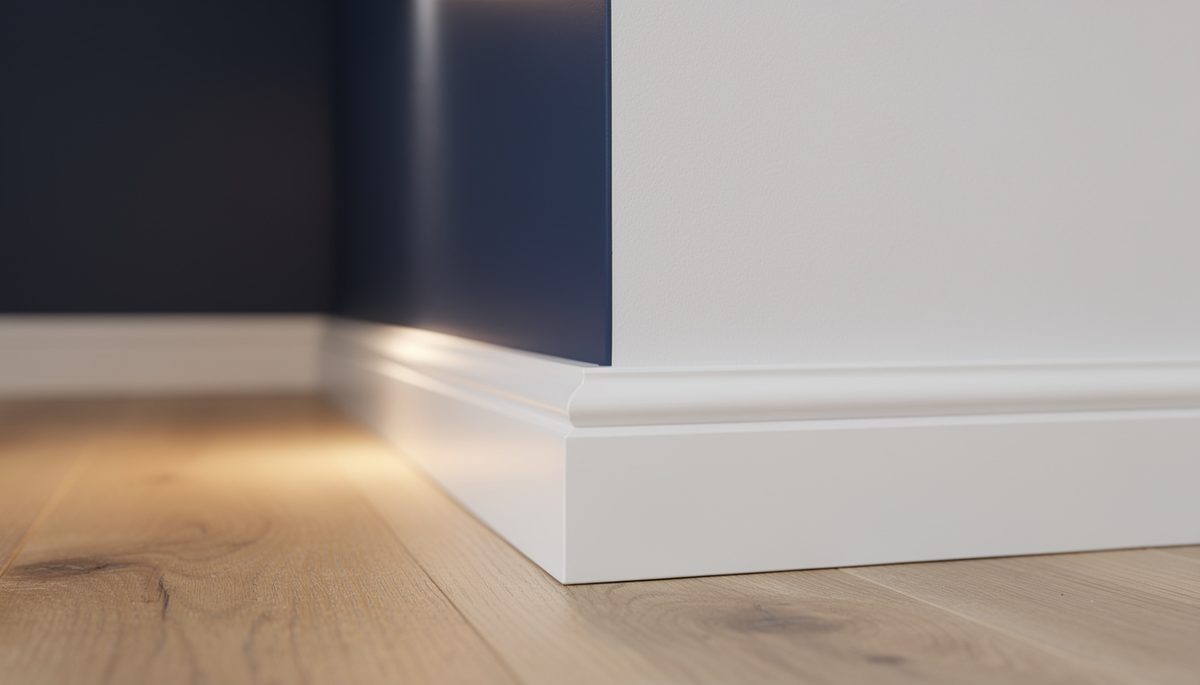
Clean cut-in lines like this require steady hands and years of practice. It is one of the clearest visual indicators of a skilled painter.
How to Compare Painting Quotes Properly
If you have followed this guide and collected two or three quotes from painters who passed the 10-point checklist, the next step is comparing them on equal terms. Do not just look at the total — read the detail.
Line-by-line scope comparison
Lay the quotes side by side and check each of these items:
- Surfaces included — Does each quote cover the same walls, ceilings, trim, doors, and window frames? One quote might include ceilings while another excludes them entirely.
- Number of coats — Two coats is the minimum standard. If one quote specifies one coat and another specifies two, they are not comparable.
- Paint product — Compare the actual products named. A quote using Dulux Weathershield is not the same as one using an unnamed “exterior acrylic.” Read our comparison of Dulux vs Haymes if you want to understand the differences between major brands.
- Preparation scope — What does each painter plan to do before the first coat? Scraping, sanding, filling, priming, and washing should all be specified. If one quote has a detailed preparation section and another says nothing, the cheaper price is explained.
- Materials included or separate — Make sure you are comparing total costs, not just labour rates. A $6,000 labour-only quote plus $1,500 in materials is $7,500 — not $6,000.
- Timeline — How long does each painter estimate the job will take? A significantly shorter timeline may indicate that less preparation is planned.
Ask questions about the differences
If one quote is noticeably lower than the others, call that painter and ask: “Your quote is $3,000 less than the other two I received. Can you walk me through what preparation is included and what paint product you are using?” The answer will tell you everything. A good painter will explain their process confidently. A dodgy one will get vague or defensive.
Trust the detail, not the price
The best value is almost never the cheapest quote and almost never the most expensive. It is the quote that gives you the most thorough scope, uses quality products, includes proper preparation, and comes from a painter with verifiable credentials and reviews. Price is just one factor — and it should be the last thing you compare, not the first.
How Modernize Solutions Measures Up
I will be direct about where we stand against this checklist, because if I am going to tell you what to look for, I should show you that we meet every standard.
- ABN: Active and verifiable on ABN Lookup
- Public liability insurance: $20 million — double the industry standard
- Written quotes: Every quote is an itemised, fixed-price document specifying surfaces, coats, products, preparation, and timeline
- Paint products: We use Dulux Weathershield for exteriors and Dulux Wash&Wear for interiors — named on every quote
- Preparation: Fully detailed in the scope for every job — no vague language
- Portfolio: Hundreds of completed project photos across Melbourne
- Google reviews: Rated 4.8 stars on Google (154 reviews) — built consistently over years, not manufactured overnight
- Warranty: Clear workmanship guarantee provided in writing
- Communication: Owner-operated — the person who quotes the job is the person who does the job
We have been painting homes across Melbourne since 1987 — 35+ years as a family-owned business. We use premium Dulux products on every project, including Dulux Weathershield for exteriors and Dulux Wash&Wear for interiors. We started in Footscray and still work across Melbourne’s western suburbs and beyond.
If you want to know more about how we work, what our services include, or you are ready to get a quote, call 0451 040 396 or get in touch online. No pressure, no sales pitch — just an honest assessment of your job and a clear price.
Your home is worth getting it right. Do your due diligence, ask the hard questions, and hire someone who can answer them without flinching. Whether that is us or another quality painter, following this checklist will protect you from the dodgy ones.
For more information about your rights as a consumer when engaging a tradesperson, visit Consumer Affairs Victoria.
Frequently Asked Questions
What questions should I ask a house painter before hiring them in Melbourne if I’ve never had painting done before?
Ask for their ABN and check it on the ABN Lookup website. Ask for a certificate of currency for public liability insurance — $10 million minimum. Request an itemised written quote specifying surfaces included, number of coats, paint brand and product, preparation method, and total fixed price. Ask to see photos of recent completed work and at least two references from local homeowners. Ask whether they hold Victorian Building Authority registration if the job is valued over $10,000.
How do I tell the difference between a good painter and a dodgy one in Melbourne when quotes range from $4,000 to $12,000 for the same job?
The range usually comes down to preparation and paint quality. A $4,000 quote on a job that should cost $10,000 typically means fewer coats, minimal surface preparation, cheap paint, or no insurance. Ask each painter to specify exactly what preparation is included, what paint brand and product they will use, and how many coats. A quality painter will walk you through their process and explain why it takes longer. If a painter cannot tell you specifically what paint product they use, that is a major red flag.
Do painters in Melbourne need to be licensed and what certifications and insurance should I check for?
In Victoria, any painter performing work valued at over $10,000 must be a registered building practitioner with the Victorian Building Authority. All painters should carry public liability insurance — $10 million minimum is industry standard, though $20 million provides better protection. Check their ABN is active on ABN Lookup. A painter who uses premium brand-name paints and specifies exact products on the quote demonstrates quality and accountability. Master Painters Australia membership indicates commitment to industry standards.
I got a really cheap painting quote in Melbourne — should I be suspicious and what are the red flags that corners will be cut?
Yes, be cautious. Red flags include: no written quote or only a verbal estimate, no ABN or insurance details provided, cash-only payment with no invoice, refusing to specify the paint brand, no preparation included in the scope, demanding full payment upfront, and no photos of previous work. A quote that is 30–40% below others for the same scope almost always means reduced preparation, fewer coats, or cheap paint — all of which lead to premature failure and a repaint within 2–3 years.
Is it worth paying more for a painter who uses premium paint vs a cheaper painter in Melbourne?
Yes. Premium paints like Dulux Weathershield and Dulux Wash&Wear are formulated with higher-quality resins and pigments that provide better coverage, adhesion, and UV resistance. A quality exterior paint job using premium products lasts 10–15 years. A cheap paint job using builder-grade paint typically lasts 3–5 years — meaning you pay for the job twice in the same period. Painters who use premium brand-name paints and specify them on the quote demonstrate a commitment to quality that cheaper operators typically do not match.
Related Service: Exterior Painting
Protect and beautify your home with professional exterior painting built to last.
Learn more about our Exterior Painting service →
Modernize Solutions
Melbourne's most experienced residential painters since 1987.