Peeling paint is the number one complaint I hear from Melbourne weatherboard homeowners. After 35 years of repainting timber homes across every suburb from Footscray to Williamstown, I can tell you that peeling is never random. It always has a specific, identifiable cause — and once you understand what is driving the failure, you can fix it permanently rather than just painting over the same problem every few years.
This guide explains why weatherboard paint fails in Melbourne, which products actually perform in our climate, and how to diagnose exactly what is going wrong on your home. If you are looking for the step-by-step repainting process itself — scraping, priming, and applying topcoats — I have covered that in detail in our weatherboard repainting guide.
The 4 Causes of Peeling Weatherboard Paint
Every case of peeling paint on Melbourne weatherboards traces back to one of four root causes. Understanding which one is at work on your home determines the correct fix.
1. Poor Surface Preparation — The Number One Cause
Roughly 70% of premature paint failures I see are caused by inadequate preparation. The science is straightforward: paint is essentially a thin polymer film that needs to mechanically grip the substrate beneath it. When new paint is applied over old paint that is chalking, flaking, or contaminated with dirt, it bonds to that failing layer rather than to sound timber or a stable existing coat. When the weak layer underneath eventually lets go, everything above it comes with it.
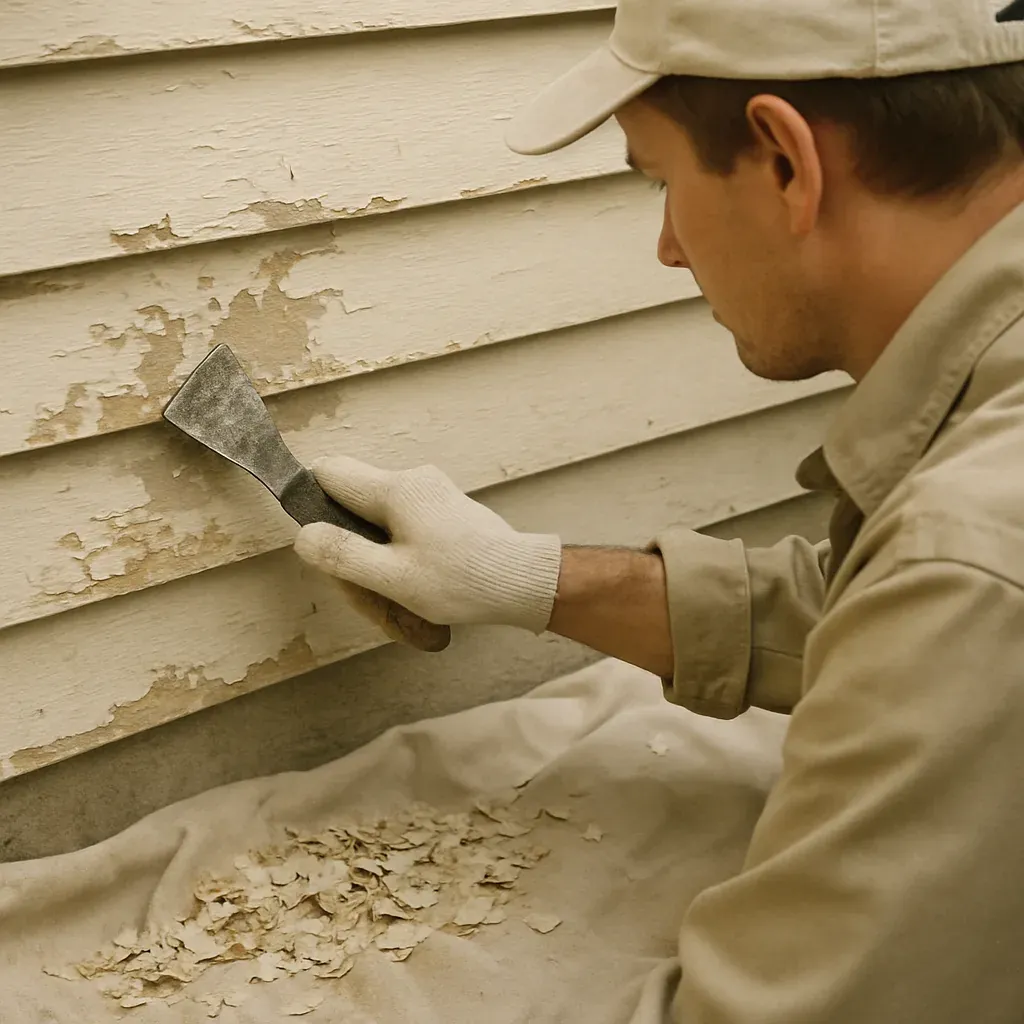
The telltale sign of a preparation failure is peeling that lifts in sheets — you can often see the old paint layer still attached to the underside of the peeling section. This type of failure typically appears within 2–5 years of a repaint and is concentrated on walls that received the least preparation attention, often the less visible rear and side elevations where corners were cut.
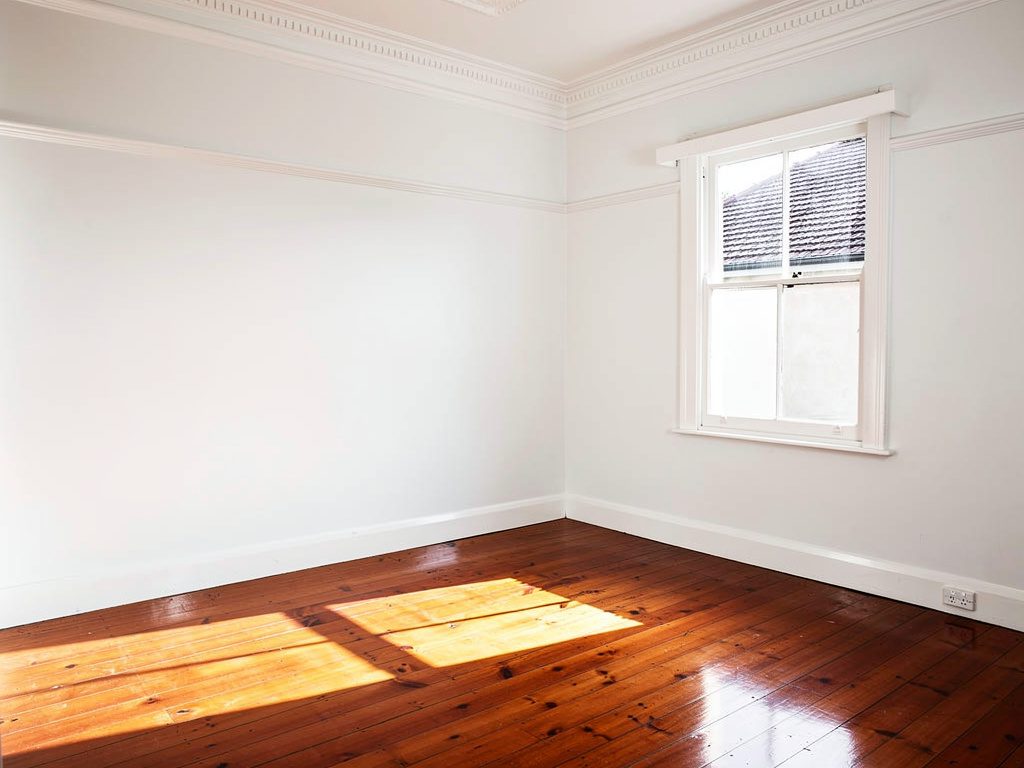
Surface condition before repainting — every square metre of weatherboard needs proper scraping and sanding for the new coat to hold.
2. Wrong Product for the Conditions
Not all exterior paints are equal, and using the wrong product for your specific exposure conditions guarantees premature failure. The most common product mistakes I encounter on Melbourne weatherboards are:
- Using interior paint on exterior surfaces — Interior paints lack UV stabilisers and flexible resins. They become brittle within one season of outdoor exposure and crack.
- Using oil-based paint over old acrylic — Oil and acrylic have fundamentally different expansion rates. As temperatures swing, the rigid oil-based top layer cracks while the flexible acrylic underneath moves freely.
- Using a budget paint on high-exposure walls — Economy exterior paints contain lower concentrations of binder resin and pigment. They break down under UV exposure 40–60% faster than premium formulations.
A paint film needs to be flexible enough to expand and contract with the timber as temperatures change. Melbourne can swing from 15 degrees Celsius to over 40 degrees Celsius in a single day — that places enormous mechanical stress on rigid or low-quality coatings.
3. Moisture Trapped Behind the Paint Film
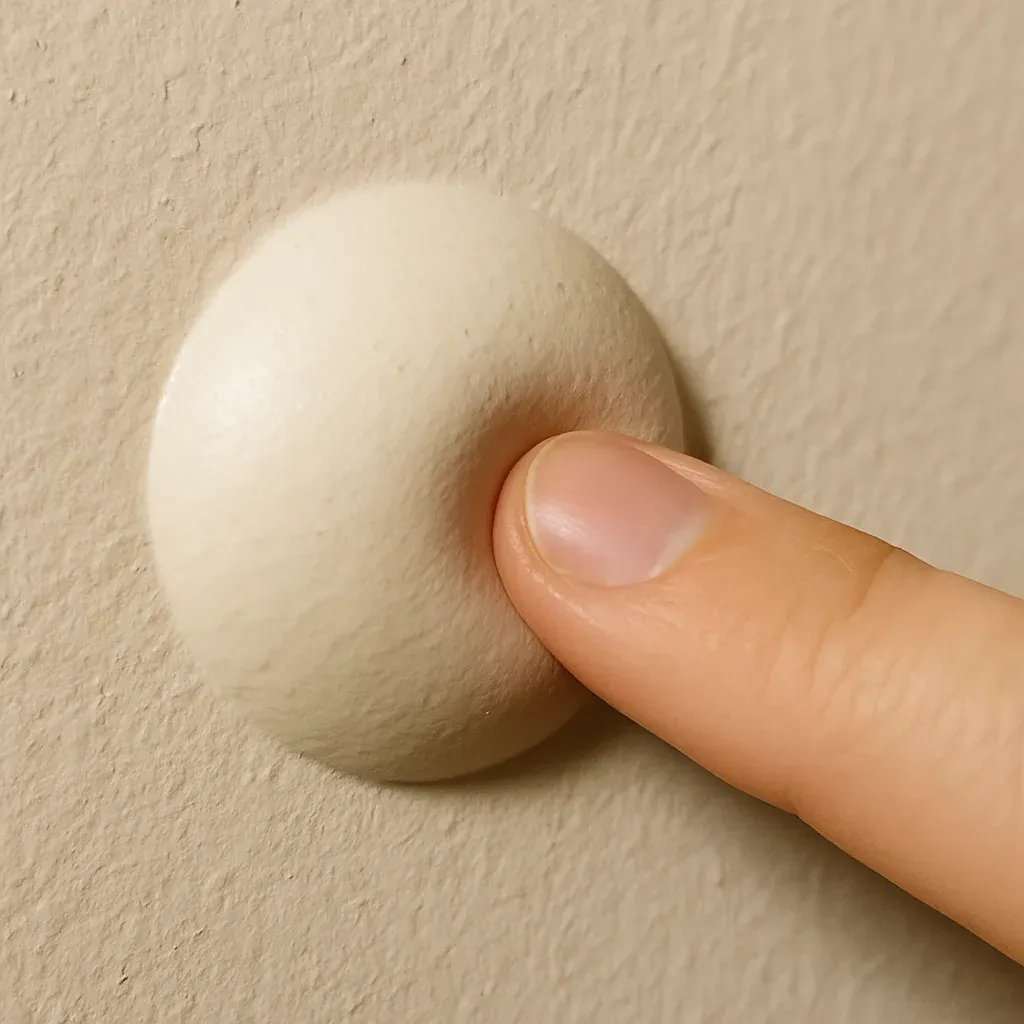
Moisture-driven failure looks different from preparation failure. Instead of peeling in sheets, you see bubbling and blistering — the paint film pushes outward as water vapour behind it tries to escape. This is essentially the same mechanism described in our guide to fixing paint bubbling, but on exterior weatherboards the moisture sources are different.
Common moisture sources on Melbourne weatherboards include:
- Rising damp through stumps and sub-floor areas, particularly in older homes without adequate ventilation
- Leaking gutters and downpipes allowing water to run behind the boards
- Bathroom and kitchen exhaust venting moisture directly into the wall cavity rather than to the exterior
- Painting in the wrong conditions — applying paint to damp timber or painting on dewy mornings before the surface has dried
Moisture failure is particularly common on the south-facing walls of Melbourne homes, which receive the least direct sunlight and stay damp for longer after rain.
4. UV and Thermal Cycling Damage
This is the one cause that is genuinely Melbourne’s fault rather than a human error. Ultraviolet radiation breaks down the chemical bonds in paint resin — a process called photodegradation. Every day of sun exposure degrades the paint film slightly. Over years, the surface becomes chalky, loses its sheen, and eventually cracks.
Thermal cycling compounds this. When timber heats up in direct sun, it expands. When it cools overnight, it contracts. The paint film on the surface must stretch and compress with every cycle. According to the Bureau of Meteorology Melbourne climate data, Melbourne’s UV index regularly reaches 11–13 in summer — classified as “extreme” — while daily temperature swings of 15–25 degrees Celsius are routine.
UV and thermal damage presents as chalking and fine cracking (alligatoring) rather than sheet peeling. It is worst on west-facing and north-facing walls and typically appears after 8–12 years on premium paint systems, or as early as 4–5 years on economy products.
Melbourne’s Climate: Why It Is Particularly Hard on Weatherboards
Melbourne is uniquely punishing on exterior paintwork. I have worked on homes across Victoria, and Melbourne weatherboards consistently fail faster than homes in rural or northern regions. There are five specific climate factors driving this.
Extreme UV intensity. Melbourne sits at latitude 37.8 degrees south, receiving intense UV radiation through the relatively thin ozone layer over the Southern Hemisphere. The Bureau of Meteorology records an average UV index of 12–13 during December through February. For context, any reading above 8 is classified as “very high” and above 11 as “extreme.” This level of UV breaks down paint resin faster than almost any other climate factor.
Rapid temperature swings. Melbourne is famous for its “four seasons in one day” reputation, and this is not just a cliche — it is a measurable, documented climate pattern. A hot northerly wind can push temperatures above 40 degrees Celsius in the early afternoon, only for a cool change to drop them below 20 degrees within two hours. Each swing forces the paint film and the timber beneath it to expand and contract at different rates, creating microscopic fractures that accumulate over thousands of cycles.
Western sun exposure. The afternoon sun that bakes west-facing walls between 2pm and 7pm during summer is the single most destructive force on Melbourne weatherboard paint. West-facing walls absorb heat for hours when the sun is at its most intense angle. Surface temperatures on dark-coloured weatherboards can exceed 70 degrees Celsius on extreme days — far beyond the design limits of standard exterior paints.
Humidity and rainfall patterns. Melbourne receives an average of 648mm of rainfall annually, distributed across approximately 160 rain days. The combination of regular wetting followed by strong UV drying creates a punishing wet-dry cycle that tests paint adhesion constantly. Southern and eastern walls that stay shaded and damp are particularly vulnerable to mould growth beneath the paint film.
Coastal salt exposure. Suburbs along Port Phillip Bay — Williamstown, Altona, St Kilda, Brighton, Sandringham — are exposed to airborne salt carried by onshore winds. Salt is hygroscopic, meaning it actively attracts moisture to the paint surface. This accelerates both corrosion of metal elements and breakdown of paint film on timber, reducing the lifespan of exterior coatings by 20–30% compared to inland homes.
Best Exterior Paints for Melbourne Weatherboards
After testing and applying thousands of litres of exterior paint across 35 years, I have strong opinions about which products actually deliver in Melbourne conditions. Here is an honest comparison of the products I recommend and when to use each.
Dulux Weathershield — The Industry Standard
Dulux Weathershield is the product I use on the majority of Melbourne weatherboard projects and the one I recommend for most homeowners. It contains flexible acrylic resins that expand and contract with timber through temperature swings, built-in fungicide to resist mould growth on shaded walls, and strong UV stabilisers that maintain colour and sheen for years.
- Best for: General Melbourne weatherboard homes, inner suburbs, standard exposure
- Expected lifespan: 12–15 years with proper preparation
- Price tier: Mid-premium (approximately $85–$110 per 4 litres)
- Finish options: Low sheen and semi-gloss for body, gloss for trim
For homes in Heritage Overlay zones, Dulux Weathershield is available in the full Dulux Heritage colour range, which includes historically accurate palettes for Victorian, Edwardian, and Federation homes.
Haymes Solashield — Extreme UV Protection
Haymes Solashield is my recommendation for homes with severe western or northern sun exposure — particularly in Melbourne’s western suburbs where afternoon heat is relentless. Solashield uses an advanced UV-reflective technology that reduces surface heat absorption, keeping the paint film cooler and reducing thermal stress on the coating.
- Best for: West-facing and north-facing walls, dark colour schemes, western suburbs homes
- Expected lifespan: 12–15 years on high-exposure walls
- Price tier: Premium (approximately $95–$120 per 4 litres)
- Key advantage: Superior colour retention on dark shades that would normally fade quickly
I particularly recommend Solashield when homeowners insist on a dark exterior colour. Dark paints absorb significantly more heat than light colours, which accelerates thermal cycling damage. Solashield’s reflective properties partially offset this disadvantage.
Taubmans Endure with Nanoguard — Coastal and Salt Environments
Taubmans Endure with Nanoguard technology is a purpose-built coastal coating. The Nanoguard formula creates a tighter, less porous paint film that resists salt penetration and moisture absorption. For Melbourne homes within 1 kilometre of Port Phillip Bay, this is the product I specify.
- Best for: Williamstown, Altona, St Kilda, Brighton, Sandringham, and any home exposed to salt air
- Expected lifespan: 10–12 years in coastal conditions (equivalent to 15+ years inland)
- Price tier: Premium (approximately $90–$115 per 4 litres)
- Key advantage: Superior resistance to salt damage and moisture ingress
Dulux Weathershield Max — Severe Coastal Environments
For homes directly on the foreshore or in severe coastal exposure zones, Dulux Weathershield Max takes the standard Weathershield formula and adds additional salt-resistance technology. This is a specialist product for extreme environments — most Melbourne homes do not need it.
- Best for: Foreshore properties, homes within 200 metres of the water
- Expected lifespan: 10–15 years in severe coastal conditions
- Price tier: Ultra-premium (approximately $110–$140 per 4 litres)
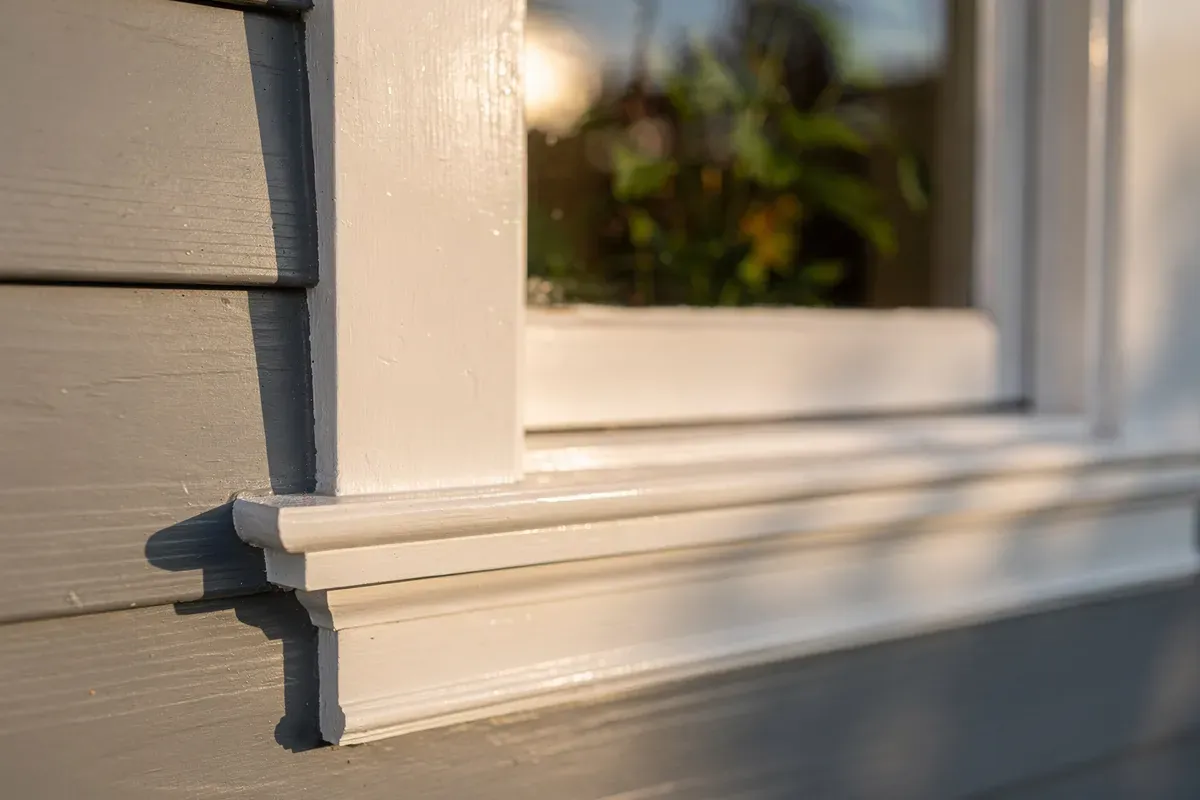
Quality exterior trim work using premium paint — the detail areas are where product choice matters most for long-term durability.
Which Product Should You Choose?
A simple decision framework:
- Standard Melbourne home, typical exposure — Dulux Weathershield
- Harsh western or northern sun, dark colours — Haymes Solashield
- Within 1km of Port Phillip Bay — Taubmans Endure with Nanoguard
- Directly on the foreshore — Dulux Weathershield Max
Regardless of which product you select, the primer system must be compatible with the topcoat. Using a Dulux primer under a Taubmans topcoat — or vice versa — voids the manufacturer’s warranty and can cause intercoat adhesion failure. Always use the primer recommended by the topcoat manufacturer.
Coastal vs Inland: Different Challenges, Different Solutions
Melbourne is not one uniform environment. A weatherboard in Yarraville faces completely different stresses than one in Williamstown, even though they are only 5 kilometres apart. Understanding your specific exposure zone determines both the product you need and the maintenance schedule you should follow.
Bayside and Coastal Suburbs (Williamstown, Altona, St Kilda, Brighton, Sandringham)
The dominant challenge is salt and moisture. Airborne salt carried by onshore winds deposits on paint surfaces and actively draws moisture into the film. This accelerates adhesion breakdown and promotes corrosion on any exposed metal — gutters, downpipes, window frames, and nail heads.
Coastal homes need:
- A full acrylic primer system on all bare timber — oil-based primers break down faster in salt environments
- A coastal-rated topcoat (Taubmans Endure or Dulux Weathershield Max)
- Annual washing of salt deposits, particularly after winter storms
- Marine-grade enamel or metal primer on all metal surfaces
- Closer inspection intervals — check every 6–12 months rather than annually
Western Suburbs (Footscray, Yarraville, Sunshine, Braybrook)
The dominant challenge is UV and heat. West-facing walls in Melbourne’s western suburbs absorb brutal afternoon sun for 5–6 hours during summer. Surface temperatures can reach extremes that push paint films beyond their rated flexibility. The western suburbs also tend to be warmer than inner and eastern suburbs due to the urban heat island effect and less tree canopy coverage.
Western suburbs homes need:
- Lighter exterior colours wherever possible — a dark charcoal absorbs 90%+ of solar energy, while a light grey absorbs only 40–50%
- UV-resistant topcoat such as Haymes Solashield on west-facing and north-facing walls
- Priority repainting of west-facing walls — these may need attention 3–5 years before the rest of the house
- Particular attention to lead paint safety — most homes in Footscray and Yarraville predate 1970 and contain lead paint layers. Test with 3M LeadCheck swabs before any preparation work and follow EPA Victoria lead paint guidelines.
Inner City and Northern Suburbs
The dominant challenge is a combination of moderate UV and pollution. Inner-city homes face less extreme individual stresses but accumulate road grime, airborne particulates, and general urban contamination that can interfere with paint adhesion if not properly cleaned before repainting.
Standard Dulux Weathershield is the right choice for most inner suburban homes. The key differentiator is thorough washing before preparation — a sugar soap or pressure wash to remove years of accumulated surface contamination.
How to Tell What Is Causing Your Paint Failure
You do not need to be a paint chemist to diagnose what is going wrong on your weatherboards. The pattern of failure tells you the cause.
If Paint Is Peeling in Sheets Within 5 Years — It Is a Preparation Issue
The new paint bonded to a failing layer of old paint rather than to sound substrate. The fix requires stripping back to a stable base, sanding to create a mechanical key, priming all bare or exposed areas, and recoating with a quality topcoat. There is no shortcut — painting over a preparation failure simply repeats the cycle.
If Paint Is Chalking and Fading — It Is a UV and Product Issue
Run your hand across the surface. If a fine, powdery residue comes off on your fingers, the paint resin has broken down under UV exposure. This is either because the original paint was a low-grade product with insufficient UV stabilisers, or because the coating has simply reached the end of its natural lifespan. The fix is a repaint with a premium UV-resistant product.
If Paint Is Bubbling or Blistering — It Is a Moisture Issue
Bubbles indicate water vapour trapped behind the paint film. Before repainting, you must identify and eliminate the moisture source — whether that is rising damp, leaking gutters, poor sub-floor ventilation, or an internal exhaust dumping moisture into the wall cavity. Painting over a moisture problem is futile. Read our detailed guide on fixing paint bubbling for the full diagnostic and repair process.
If Failure Is Only on West-Facing or North-Facing Walls — It Is Thermal Cycling
When one side of a house fails years before the others, the cause is almost always directional sun exposure. West-facing walls in Melbourne take the worst punishment. The fix is to use a heat-reflective product like Haymes Solashield on the affected elevations and consider a lighter colour to reduce heat absorption.
If Failure Is Concentrated Around Windows, Doors, and Joints — It Is Water Ingress
Peeling that clusters around penetrations in the cladding points to water getting behind the boards through poorly sealed gaps. The fix is comprehensive sealing with a flexible exterior sealant before repainting, combined with checking flashings and drainage above the affected areas.
When to Call a Professional
Some weatherboard paint problems are genuinely within DIY capability. Others are not. Here is where the line sits.
DIY is reasonable when:
- The peeling is limited to a small area (less than 10% of total surface)
- The home is single storey with safe ground-level access
- There is no lead paint present (test first with 3M LeadCheck swabs)
- The cause is simple — a spot that was missed during the last paint job, or localised damage from an impact or leak
Call a professional when:
- More than 20–30% of the surface is failing — the volume of preparation work exceeds safe DIY scope
- The home was built before 1970 and has not been tested for lead paint — EPA Victoria regulations apply to lead-safe preparation
- The failure is moisture-related and the source has not been identified
- The home is two-storey or requires scaffold access
- The home is in a Heritage Overlay and requires council-approved colour schemes
- Previous repaints have failed repeatedly and the root cause needs professional diagnosis
A professional painter brings diagnostic experience that goes beyond just applying paint. Identifying whether the failure is preparation-related, product-related, or moisture-related determines the entire approach — and getting that diagnosis wrong means repeating the same failure cycle.
For a full walkthrough of the professional repainting process, from preparation through to final topcoats, see our complete weatherboard repainting guide.
How Modernize Solutions Handles Weatherboard Repaints
At Modernize Solutions, every weatherboard project begins with a diagnostic assessment before we quote. We inspect each elevation of the home, identify the cause of paint failure, test for lead paint on pre-1970s homes, and check for moisture issues. This assessment determines the scope of preparation required and the product system we recommend — because simply repainting over a misdiagnosed problem wastes everyone’s time and money.
We use premium Dulux products as standard across all weatherboard projects, giving us access to Dulux’s technical support team for complex coating situations. We carry $20 million in public liability insurance and are Rated 4.8 stars on Google (154 reviews) across 35 years of operation.
Founded in 1987 in Footscray, Modernize Solutions is owner-operated and specialises in the timber weatherboard homes that define Melbourne’s inner-west and bayside suburbs. We understand the specific challenges of lead paint on century-old Footscray cottages, salt exposure on Williamstown foreshore homes, and Heritage Overlay requirements across the western suburbs.
Our weatherboard coating system uses Dulux Weathershield as the standard topcoat, with Haymes Solashield specified for severe UV exposure and Taubmans Endure for coastal properties. Every job includes full preparation — scraping, sanding, filling, and priming — because we know from decades of experience that preparation determines whether the finish lasts 3 years or 15 years.
To learn more about our approach, visit our weatherboard painting service page or explore our full range of painting services. For a free, detailed written quote, call Lachlan directly on 0451 040 396.
Frequently Asked Questions
Why does the paint on my weatherboard house keep peeling even though it was painted only 5 years ago — is it the paint, the preparation, or Melbourne’s weather?
If your paint is failing within 5 years, it is almost always a preparation issue rather than a paint quality or weather issue. The most common cause is painting over surfaces that were not properly scraped, sanded, and primed. Old paint that was chalking or flaking was not removed, so the new paint bonded to the failing layer rather than the timber. Melbourne’s weather accelerates this failure — UV exposure and thermal cycling stress poorly adhered paint films until they crack and peel. A properly prepared weatherboard home should hold paint for 10–15 years even in Melbourne’s harsh conditions.
What is the best exterior paint for a weatherboard house in Melbourne that will not peel or fade in harsh weather?
For most Melbourne weatherboard homes, Dulux Weathershield is the industry standard — it is formulated with flexible acrylic resins that expand and contract with timber through Melbourne’s temperature swings. For homes with extreme western sun exposure, Haymes Solashield offers additional UV resistance. For coastal suburbs within 1km of the bay, Taubmans Endure with Nanoguard technology provides superior salt and moisture resistance. All three require proper surface preparation and a compatible primer system to perform to their rated lifespan of 15+ years.
My 1920s weatherboard has lead paint underneath the peeling layers — what is the safe process for dealing with that before repainting in Melbourne?
Lead paint on pre-1970s Melbourne weatherboards must be handled according to EPA Victoria regulations. Dry sanding is prohibited — it creates toxic lead dust that is hazardous to your family and neighbours. Safe removal requires wet-sanding techniques, full containment with plastic sheeting, and disposal of debris as hazardous waste. Test first using 3M LeadCheck swabs, then engage a painter experienced in lead-safe work practices. A professional lead-safe preparation adds $2,000–$5,000 to the cost of the repaint but is not optional — it is a legal and health requirement.
How often should you repaint a weatherboard house in Melbourne and is the west-facing side going to need it sooner?
A properly painted weatherboard in Melbourne should last 10–15 years before needing a full repaint. However, west-facing walls receive the most intense afternoon sun and can deteriorate 30–40% faster than east-facing walls on the same house. It is common for west-facing walls to need attention at 7–10 years while the rest of the home is still in good condition. Coastal suburbs like Williamstown and Altona see faster deterioration from salt air — expect 8–12 years. Annual visual inspection catches early failure before it becomes a major project.
I am in a bayside suburb in Melbourne and my house paint is deteriorating fast from salt air — what paint products work best for coastal weatherboard homes?
Coastal Melbourne homes within 1km of Port Phillip Bay need a coating system specifically rated for salt exposure. Taubmans Endure with Nanoguard technology is purpose-built for coastal conditions. Dulux Weathershield Max is rated for severe coastal environments. Both require a full acrylic primer system on bare timber — do not use oil-based primers in coastal areas as salt accelerates their breakdown. Metal surfaces like gutters and downpipes need marine-grade enamel or a dedicated metal primer. Expect to repaint 20–30% sooner than inland properties and inspect annually for salt damage.
Related Service: Weatherboard Painting
Specialist weatherboard painting, repair and protection for Melbourne homes.
Learn more about our Weatherboard Painting service →
Modernize Solutions
Melbourne's most experienced residential painters since 1987.