A feature wall — one wall painted in a bold or contrasting colour — is one of the most cost-effective ways to transform the feel of a room in a Melbourne home. The right accent wall creates depth, draws attention to an architectural asset, and gives a room a sense of design intention that four identical walls never achieve. Done badly, it looks like an afterthought. Done well, it anchors the entire space. This guide covers how to choose which wall to feature, what colours and techniques work in Melbourne homes, what professional interior painting looks like when applied to accent walls, and what professional feature wall painting costs.
What Is a Feature Wall?
A feature wall (also called an accent wall) is a single wall within a room painted in a distinct colour or finished with a special technique to create visual contrast and focal interest. It works by drawing the eye to a specific point in the room, making the space feel deliberately designed rather than generically painted. The technique is as useful in a compact Melbourne apartment as it is in a large Victorian terrace — when the right wall is chosen, the impact is immediate.
How to Choose Which Wall to Feature
Choosing the wrong wall is the single most common reason a feature wall fails to deliver. The selection is not about the largest wall or the easiest to paint — it is about identifying the focal point of the room and amplifying it.
The focal wall principle
Enter a room and let your eye settle naturally. Whichever wall you look towards first — before you have consciously decided — is typically your focal wall. This is where the feature wall belongs. Painting any other wall creates visual confusion rather than intention.
Room-by-room guidance
- Living rooms: The wall behind the sofa or the television wall. In rooms where the TV is wall-mounted, the wall it sits on already acts as a focal point and responds well to a feature colour.
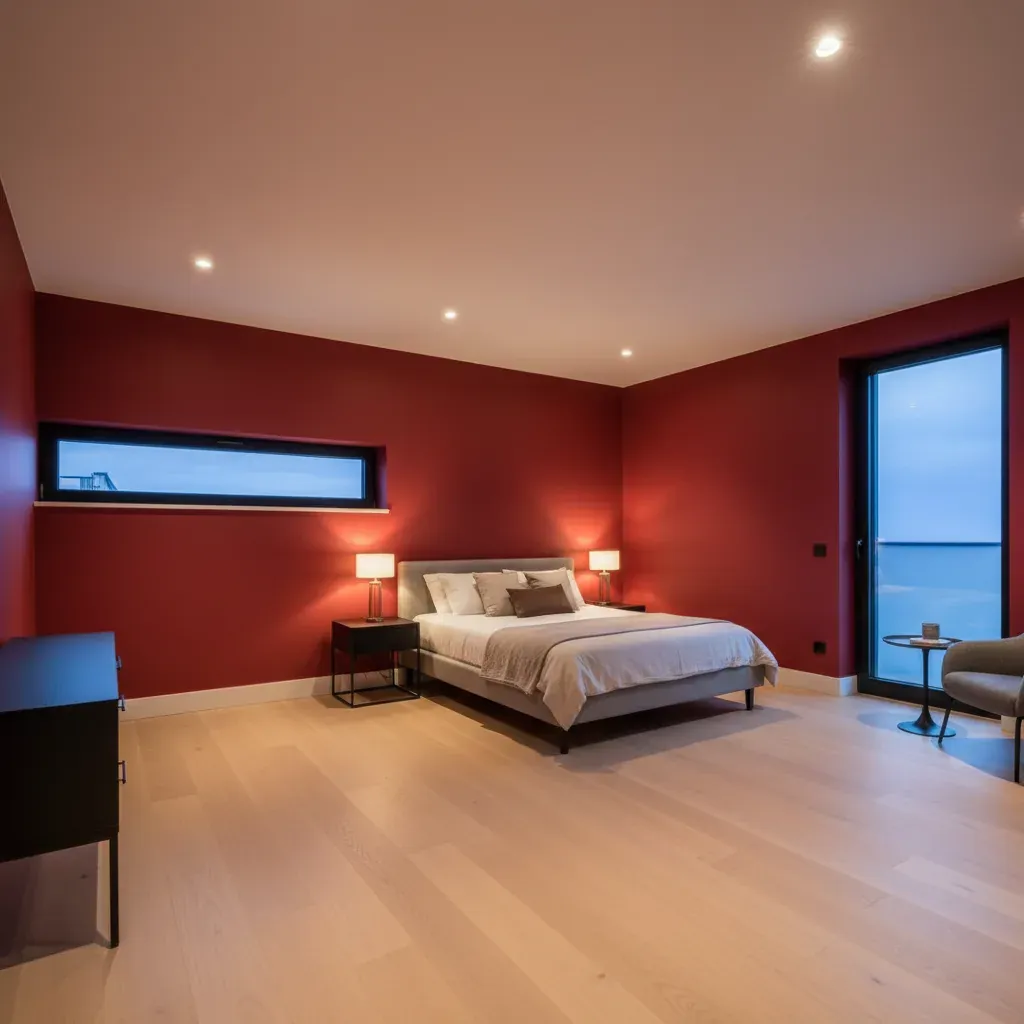
- Bedrooms: The wall behind the bed head. This is the most universally effective feature wall placement in residential painting — the bed head wall is the first thing you see when you enter and the last thing you see before you sleep.
- Dining rooms: The wall behind the dining table or at the head of the table. A deep colour behind the dining setting creates an intimate, restaurant-like atmosphere.
Walls to avoid
- Walls with multiple windows or doors — the colour is visually interrupted and loses coherence
- Walls directly opposite large windows — they sit in shadow for most of the day and a dark colour will disappear rather than pop
- Corridor walls without a clear endpoint — the colour has nowhere to direct the eye
Melbourne’s period homes
In Melbourne’s older terrace houses, Victorian-era properties, and Edwardian homes, chimney breast walls are natural feature walls. The alcove structure on either side of a chimney breast already creates a visual anchor — a feature colour on the chimney wall, with the alcoves painted in the same neutral as the rest of the room, is one of the most effective and historically appropriate accent wall treatments for inner-city Melbourne properties.
Key takeaway
The most common feature wall mistake is choosing a wall because it's the largest, not because it's the focal point.Feature walls work with the architecture of the room — not against it. If you are not sure which wall is the focal point, stand in the doorway and look into the room without trying. Where your eye lands first is your answer.
Best Feature Wall Colours for Melbourne Homes
Colour choice for a feature wall is where most Melbourne homeowners either get it very right or very wrong. Choosing the right colours for the overall room scheme is covered in detail in our colour selection guide — the most effective feature wall colours are ones that create genuine contrast with the surrounding walls while still sitting within the overall palette of the room. Here are the colour families that consistently work across Melbourne’s diverse housing stock.
Deep, saturated colours — charcoal, navy, forest green, deep terracotta
These create maximum contrast and are the dominant trend in inner Melbourne terrace houses and apartments. A deep charcoal or forest green feature wall behind a sofa or bed head, with the other three walls in a warm or cool white, produces a sophisticated, gallery-like result that photographs beautifully and feels dramatic in person. These colours work best in rooms with good natural light — a southern-facing room with limited windows is not the right environment for a very dark feature wall. Dulux Deep Ocean and Dulux Monument are two well-established choices in this category that hold up well in Melbourne interiors.
Warm earth tones — burnt orange, rust, warm ochre
Trending strongly in 2025 and continuing into 2026, warm earth tones are particularly well-suited to Melbourne’s many Victorian and Edwardian homes. They complement the exposed brick, hardwood floors, and ornate cornices that characterise inner-suburb terrace houses in Fitzroy, Collingwood, Carlton, and Northcote. The Dulux Colour Forecast for 2026 leans toward warm earth palettes, making this a current and considered choice rather than a fad. Rust and warm ochre work especially well in dining rooms and studies.
Moody blues and greens — midnight blue, eucalyptus, sage
Moody blues and greens are bedroom feature wall specialists. They create a calm, restful quality that other colours rarely match. Eucalyptus and sage greens read as sophisticated and naturalistic, while midnight blue creates a more dramatic, enveloping atmosphere. Both colour families work in rooms with white or warm-white ceilings — the contrast between a deep green or blue wall and a white ceiling adds height to the room without effort. This is a particularly popular residential painting choice in Melbourne’s inner eastern and northern suburbs.
Architectural whites — warm and cool whites with depth
A feature wall does not always mean a bold colour. In minimalist, Scandi-influenced, or industrial-aesthetic interiors, using a feature wall in a warm or cool architectural white — one with noticeably more depth or undertone than the other three walls — creates subtle but effective visual contrast. This approach is common in new apartments and warehouse conversions across Collingwood, Brunswick, and Fitzroy North where the design language is already restrained.
The colour rule that matters most: Whatever colour you choose for the feature wall, it should appear in at least one other element in the room — a cushion, a lampshade, a rug, a vase. This repetition is what makes a feature wall feel intentional rather than random. Without it, the wall looks like a mistake rather than a decision.
Feature Wall Techniques Beyond Plain Paint
A feature wall does not need to be a flat single colour. Several specialist paint techniques can add texture, depth, and a distinctive finish that plain paint cannot achieve. These are particularly popular in Melbourne’s renovation-active inner suburbs where homeowners are looking for something beyond a standard repaint.
Colour blocking
Rather than painting the full wall in a contrasting colour, colour blocking applies the feature colour to a defined section — the lower two-thirds of the wall, a geometric rectangle, or a band that follows the room’s proportions. This is effective in rooms where a full dark wall would feel too dominant, or where the wall has architectural detail that makes a clean full-wall finish complicated.
Limewash
Limewash is a textured, aged finish applied with a specific brushing technique that creates natural variation across the wall — light in some places, deeper in others — giving the impression of aged plaster. It is very popular for Melbourne’s period properties, particularly Victorian terraces, where the technique complements the heritage character of the home. Limewash requires specialist application: uneven technique produces a muddy, patchy result rather than the soft, organic finish the technique is known for. This is not a DIY-friendly product.
Venetian plaster
Venetian plaster produces a smooth, polished surface with depth and a slight sheen — a high-end finish that works particularly well in living rooms and master bedrooms. It requires multiple coats, burnishing between coats, and significant skill to achieve the characteristic depth and luminosity of a true Venetian plaster finish. It is the most expensive feature wall technique for good reason: when done well, it is genuinely difficult to replicate.
Two-tone walls
A two-tone wall paints the lower section — typically the lower third of the wall, below a dado rail or an applied chair rail — in a deeper colour than the upper section and ceiling. The effect is grounding: the room feels more structured and the ceiling height reads as greater by contrast. This is a good approach for rooms that are too small for a full feature wall but would benefit from more design interest than a single flat colour.
Bold geometric patterns
Tape-based geometric patterns — diamonds, chevrons, half-tone grids — use masking tape to create clean lines between two contrasting colours on the same wall. The result is striking in contemporary apartments and modern homes but time-intensive to execute correctly. Sharp, clean tape lines are essential: a bleed under the tape or an imprecise geometric layout looks worse than a plain wall. This technique requires patience and experience to deliver a result that looks intentional rather than amateurish.
It is worth noting that all textured and specialist finishes demand experienced application. An uneven limewash, a Venetian plaster with inconsistent burnishing, or a geometric tape job with bleed lines will look significantly worse than a well-executed plain feature wall. If you are considering a specialist finish, professional application is not optional — it is what separates the technique working from it looking like a failed experiment.
Feature Wall Painting Cost Melbourne
Feature wall painting costs in Melbourne vary based on the size of the wall, whether it is part of a larger room repaint or a standalone visit, the surface condition, and the finish type. Below are indicative 2026 Melbourne rates:
- Standard feature wall (paint only, as add-on to a room repaint): $180–$350
- Feature wall only (single-visit job): $300–$500 — the minimum call-out and preparation time for a one-wall job means pricing is higher per wall than when the feature wall is done as part of a full room
- Limewash feature wall: $400–$800 — more specialist product, longer application time, and technique variation that requires experienced hands
- Venetian plaster feature wall: $600–$1,200 per wall — the most labour-intensive and technically demanding finish, requiring multiple visits and extended cure times between coats
All prices are indicative and depend on individual wall size and surface condition. A freshly plastered wall in good condition costs less to prepare than an older wall with patchy previous paint, cracks, or texture inconsistencies. Get a written quote that specifies the finish type, number of coats, and any prep work included before committing.
How Modernize Solutions Approaches Feature Walls
Modernize Solutions paints feature walls for Melbourne homeowners who want a clean, professional result that actually transforms the room. We help with colour selection, advise on which wall creates the best effect for your room’s proportions, and apply specialist finishes including limewash and two-tone techniques. With 30+ years of interior painting experience and Dulux premium products, we make feature wall ideas into feature wall results. Call 0451 040 396 for a free quote.
Common Feature Wall Mistakes to Avoid
Most feature wall failures come down to a small number of predictable errors. Knowing what they are before you start saves both money and the frustration of having to repaint.
- Painting too dark in a small or poorly lit room: A very dark feature wall in a room that already lacks natural light will disappear into shadow and make the room feel smaller and more oppressive rather than dramatic and designed. Test the colour in the actual lighting conditions of the room — not just in natural daylight.
- Not testing the colour first: Bold, dark colours especially behave very differently on a large wall than on a small colour card. Always apply a generous test patch — at least 30 x 30 cm — and observe it at different times of day before committing to a full wall.
- Poor edge cutting: A sloppy line where the feature wall meets the adjacent walls is the most visually obvious sign of poor workmanship. The precision of the cut-in line is what separates a professional feature wall from an amateur attempt. Uneven edges read immediately and undermine the entire effect of the colour choice.
- Choosing a wall broken up by windows and doors: A wall with three windows and a doorway does not have enough uninterrupted surface for the colour to read as a coherent feature. The visual impact is lost, and the result looks patchwork rather than deliberate.
- Ignoring the trim: A deep feature wall colour — particularly dark charcoals, navies, and dark greens — can make brilliant white skirting boards and architraves look stark and harsh by contrast. Consider updating the trim to a slightly warmer or softer white when going very dark on a feature wall. This small adjustment makes the overall finish significantly more refined.
Frequently Asked Questions
Which wall should be the feature wall in a living room?
In a living room, the best feature wall is the wall your eye is drawn to naturally when you enter the room — typically the wall behind the sofa or the wall behind or opposite the television. Choose the wall that already acts as a focal point, not the largest wall in the room. Avoid walls broken up by multiple windows or doorways, as the colour loses its visual impact when the surface is interrupted.
How much does a feature wall cost to paint in Melbourne?
A standard feature wall painted as part of a room repaint typically costs $180 to $350 as an add-on in Melbourne. If a painter attends specifically for a feature wall only, expect $300 to $500 depending on wall size, condition, and access. Specialist finishes cost more: limewash feature walls run $400 to $800, and Venetian plaster can cost $600 to $1,200 per wall. All prices are indicative 2026 Melbourne rates.
Should the feature wall be lighter or darker than the other walls?
In most Melbourne homes, the feature wall should be darker or more saturated than the other three walls. A deeper colour creates contrast, draws the eye, and gives the room visual depth. A lighter feature wall can work in minimalist interiors where contrast comes from texture rather than depth of colour, but a plain lighter colour on one wall rarely reads as intentional — it typically just looks like the room is half-painted.
Can I have a feature wall in a small bedroom?
Yes — a feature wall in a small bedroom works well when it is the wall behind the bed head. Painting this wall in a deep, rich colour (charcoal, navy, forest green) can make the room feel more intimate and designed rather than cramped. Keep the other three walls light and neutral to avoid the room feeling enclosed. Avoid going dark on a wall that faces a window or door, as it will sit in shadow rather than read as a dramatic accent.
Do feature walls go out of style?
Feature walls done well — where the colour is considered and the wall is genuinely the focal point of the room — hold up over time because they work with the architecture of the space. What goes out of style is the indiscriminate feature wall: a random dark wall painted without thought to proportion, colour context, or room function. Well-executed accent walls in deep earth tones, charcoals, and greens remain consistently popular in both period and contemporary Melbourne homes.
Related Service: Interior Painting
Transform your living spaces with expert interior painting and premium Dulux finishes.
Learn more about our Interior Painting service →
Modernize Solutions
Melbourne's most experienced residential painters since 1987.