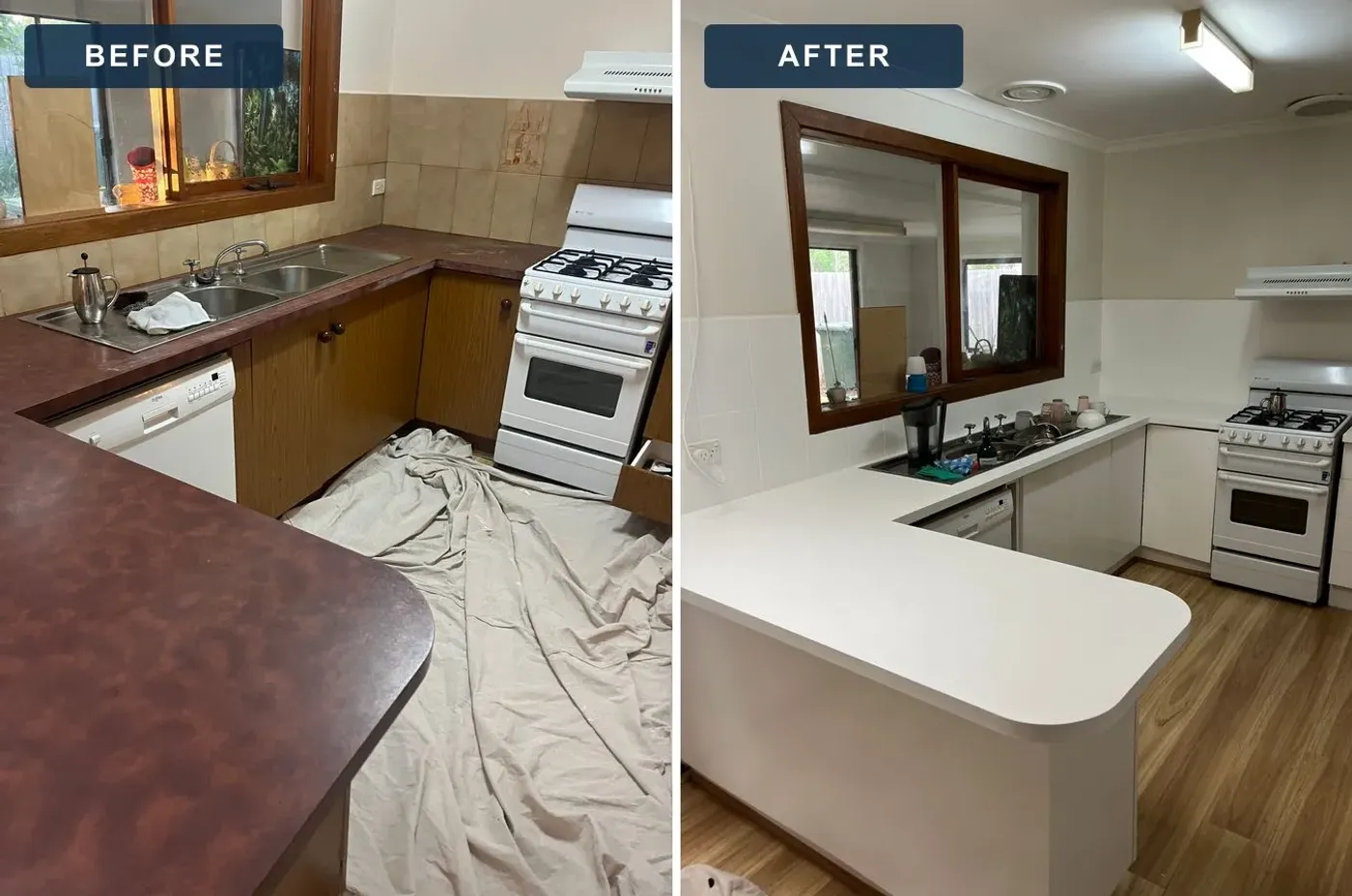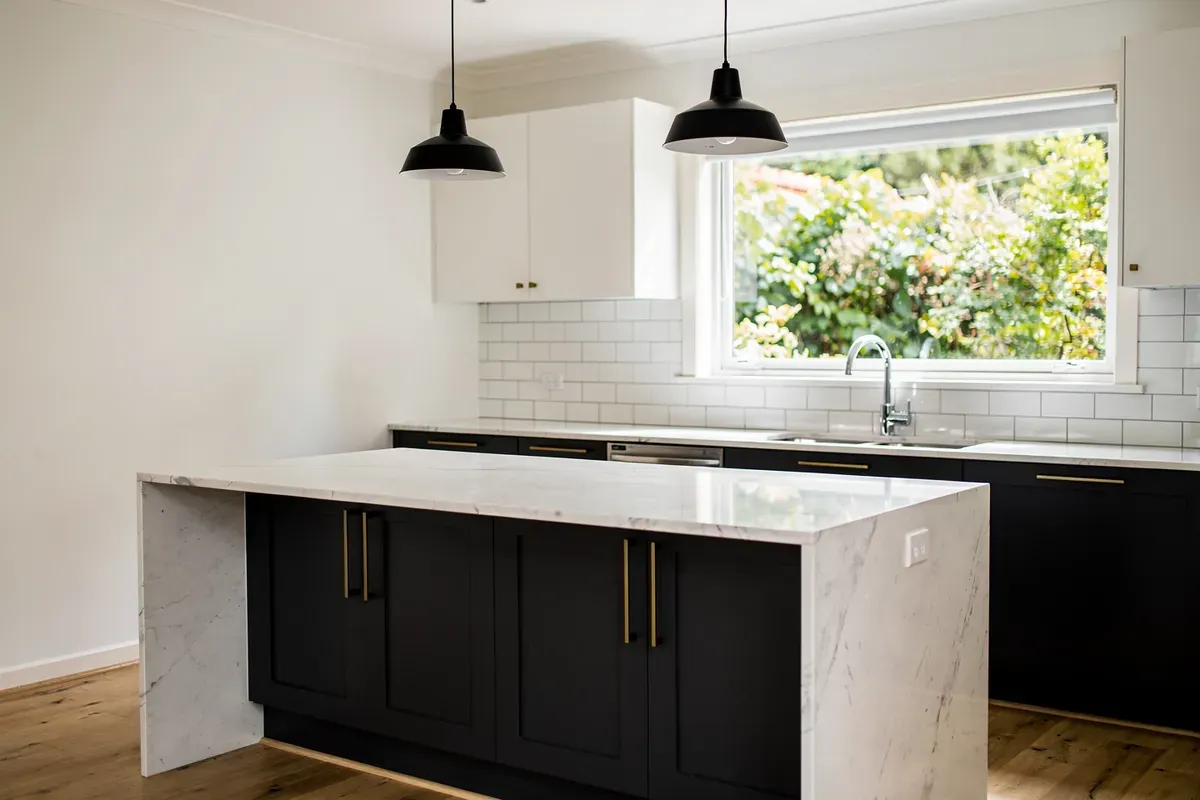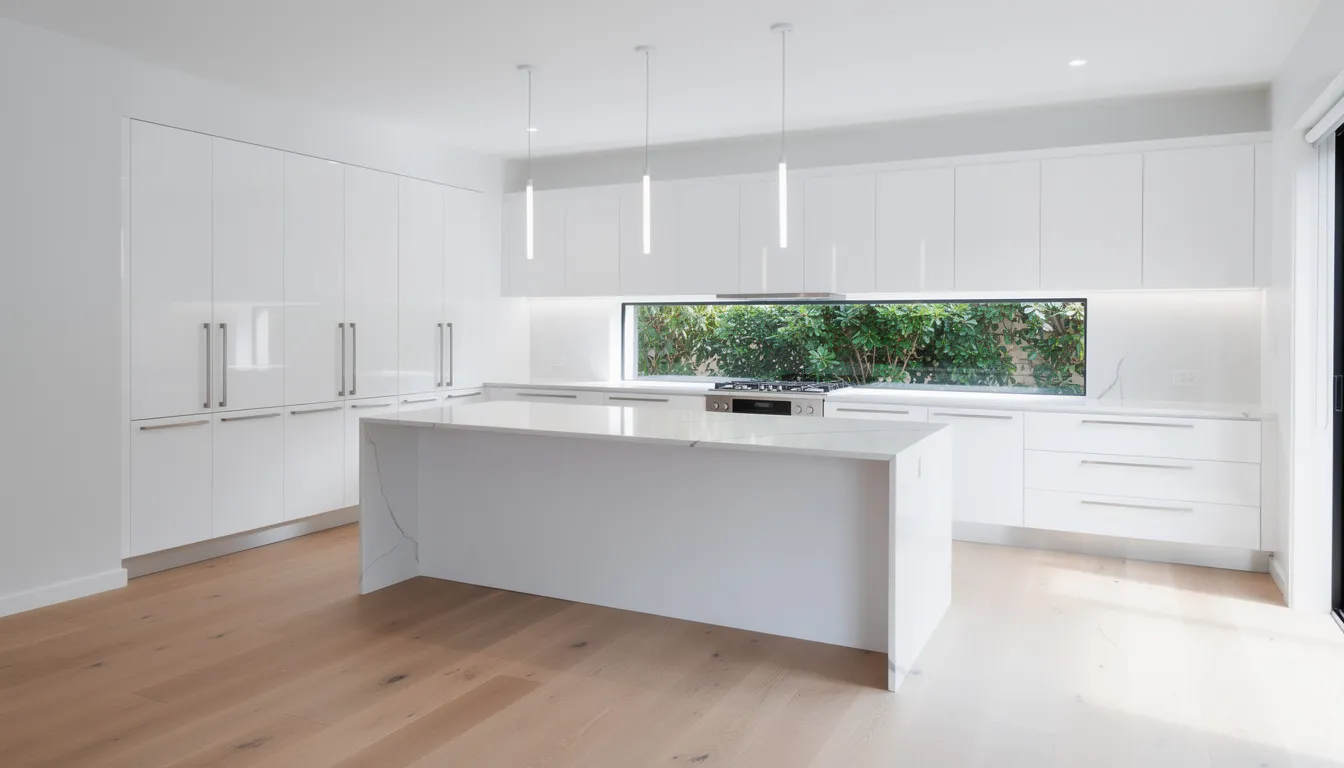
A professional kitchen cabinet respray in Melbourne is priced per door and drawer front, then totalled across the whole kitchen, so the door count and the material matter far more than the size of the room. A respray is almost always a fraction of the cost of new cabinetry, because you are paying for prep, paint, and labour rather than a full rebuild. The honest answer on price is that you need an on-site count to get a real figure, two kitchens with the same footprint can have very different door counts, grease levels, and surfaces. What is certain is that a respray makes sense when the cabinet boxes and hinges are sound and you just want a new colour or finish.
Repainting kitchen cabinets is one of the highest-impact, lowest-cost ways to refresh a tired kitchen. Done properly, with a full degrease, sand, prime, and a hard-wearing topcoat, it changes the whole feel of the room without ripping anything out. Done as a quick coat over greasy doors, it peels at the handles within months. This guide covers what drives the price; see our full kitchen cabinet painting process guide for what a professional respray actually involves, and spray versus brush for how the application method changes the finish and the price.
Want a real price for your kitchen, not just a range?
Free on-site inspection and a fixed-price written quote, no obligation. Painting Melbourne's west and inner suburbs since 1987.
How is the cost of painting kitchen cabinets worked out?
Cabinet painting is priced per door and drawer front, then totalled for the whole kitchen, rather than by floor area like a room repaint. The short answer is that the number of pieces drives the price, so the first thing a painter does on site is count every door, drawer front, and exposed end panel.
That is why a phone quote on cabinets is close to meaningless. A compact galley kitchen might have ten or twelve doors, while a large kitchen with an island, overhead cupboards, and a walk-in pantry can have three or four times that. Two homes with the same kitchen footprint can land at very different totals purely on door count.
The main things that move a cabinet quote up or down are:
- Door and drawer count. More pieces means more prep, more masking, more handling, and more coats.
- Material. Laminate and melamine need more careful prep and a bonding primer. Timber and MDF are more forgiving.
- Condition. Heavy grease, chips, swelling around the sink, or old failing paint all add prep time.
- Finish method. A sprayed finish costs more than brush and roller because of the extra masking and setup.
- Colour change. Going from a dark stained timber to a light colour can need an extra coat for full coverage.
The honest move is to ask for a per-door rate and a fixed written total after an on-site count. That way you can see exactly what you are paying for, and compare quotes on a like-for-like basis.
Is it cheaper to respray cabinets or replace the kitchen?
In almost every case, respraying your existing cabinets is far cheaper than new joinery. New kitchen cabinetry in Melbourne runs into the tens of thousands once you add up doors, carcasses, benchtops, and installation. A respray reuses the doors, drawer fronts, and panels you already have, so you are paying for prep, paint, and labour, not a full rebuild.
A respray is the right call when:
- The cabinet boxes (carcasses) are structurally sound and not water-damaged or swollen.
- The hinges, runners, and layout still work for how you use the kitchen.
- You mainly want to change the colour or freshen a dated finish.
Replacement makes more sense when:
- The carcasses are swollen or rotting, usually around the sink and dishwasher.
- You want to change the layout, add an island, or move appliances.
- The doors are a profile or material you simply do not want to keep.
If the bones of the kitchen are good, a respray gives you most of the visual change of a new kitchen for a small share of the cost. For the full picture on where painting sits against other home painting costs, see our house painting cost guide for Melbourne.
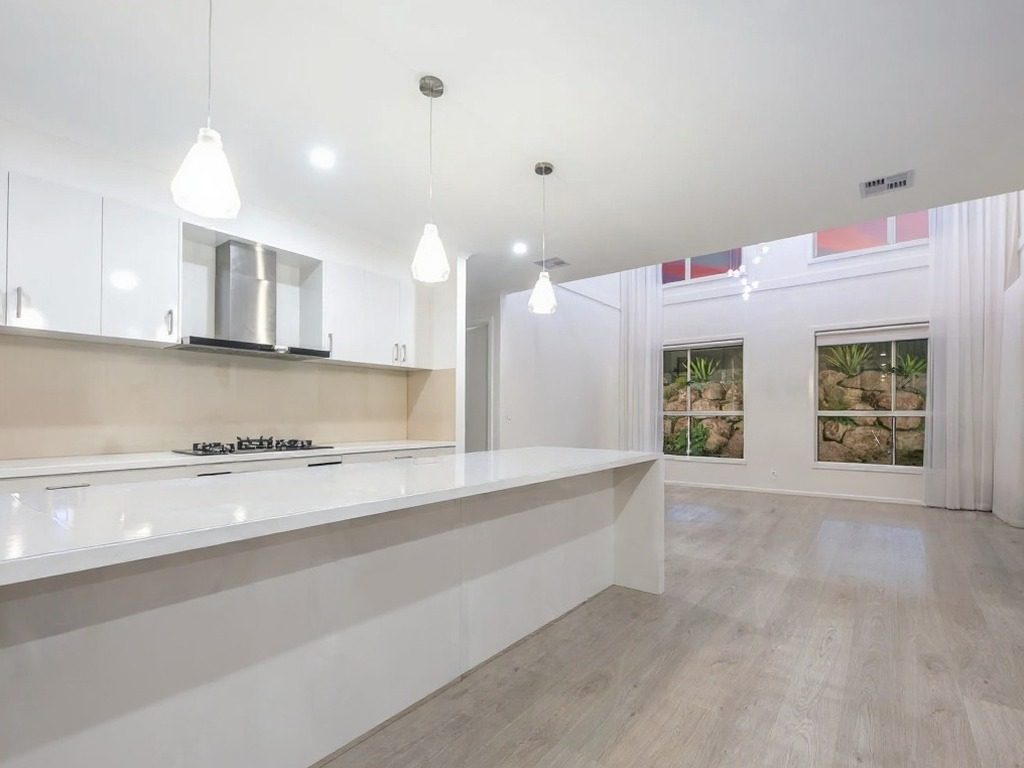
A respray refreshes the doors, drawer fronts, and panels you already have, for a fraction of the cost of new joinery.
Should kitchen cabinets be sprayed or brushed?
Spraying gives the smoothest, most factory-like finish on cabinet doors, with no brush marks or roller texture. It is the finish most people picture when they imagine a fresh kitchen, and for doors and drawer fronts that get touched every day, that smooth surface is usually worth the extra cost.
The trade-off is setup. A clean sprayed finish needs the doors removed, careful masking of everything that is staying, and a controlled space free of dust and overspray. That extra labour is the main reason spraying costs more than brushing.
Brushing and rolling still produce a tidy, durable result, and it is often the practical choice for the fixed cabinet frames and tight areas that are hard to mask for spraying. Up close it leaves a slightly more textured surface than spray, but on frames at the edge of the kitchen most people never notice.
A common approach is a hybrid: doors and drawer fronts are sprayed off-site or in a masked-off area for that glass-smooth look, while the fixed frames are brushed and rolled in place. You get the best finish where it shows most, without the cost of masking the entire kitchen for spray. The same brush-versus-spray logic applies to ordinary trim too, which we cover in our door painting guide for Melbourne homes.
What prep do kitchen cabinets actually need?
Preparation is the single biggest factor in whether a cabinet respray lasts years or fails in months. Kitchen cabinets cop grease, steam, and constant handling, and paint will not bond to a greasy, glossy surface no matter how good it is.
A proper cabinet prep runs in this order:
- Degrease. Every door, drawer front, and frame is cleaned with a degreaser to strip cooking film, especially around the cooktop and handles. This step is skipped most often and causes most failures.
- Sand to a key. Smooth, glossy surfaces are sanded to give the primer something to grip. On laminate and melamine this is non-negotiable.
- Fill and repair. Chips, dents, and old handle holes (if you are changing handles) are filled and sanded flush.
- Prime. A bonding primer suited to the surface goes on first. This is what makes the topcoat stick to non-porous materials.
- Topcoat. Two coats of a hard-wearing cabinet coating, cured properly between coats.
There are no shortcuts here. A quick coat straight over greasy, glossy doors looks fine for a few weeks, then chips and peels at the edges and handles where hands touch it most.
Key takeaway
Degrease, sand, and prime is what makes a cabinet respray last. If a quote does not spell out this prep, it is probably a quick coat that will peel at the handles.
Can you paint laminate and melamine cabinets, or only timber?
You can paint laminate, melamine, and MDF cabinets, not just timber. The difference is in the prep. Laminate and melamine are smooth and non-porous, so they need careful sanding and a bonding primer designed for those surfaces to get the paint to grip. Get that right and they hold up well. Get it wrong and the finish peels.
Timber and MDF doors are more forgiving because they take paint more readily, but they still need the same degrease, sand, and prime routine to last in a working kitchen. Raw or water-swollen MDF edges, common around the sink, need sealing or repair before painting or they will keep absorbing moisture.
For the products built specifically for this job, Dulux makes a dedicated cabinet and surface range. We cover what each product does and where it works in our Dulux Renovation Range guide for Melbourne homeowners. As an exclusive Dulux specialist, we run Dulux systems on every project, with no budget substitutes, because cabinet coatings live or die on adhesion and the right primer.
When does a respray beat replacement?
A respray wins when the kitchen’s bones are good and the problem is mostly how it looks. If you are staring at a structurally sound kitchen in a dated colour, painting the cabinets is the fastest, cheapest way to a fresh result. You keep the layout, the carcasses, the hinges, and the benchtop if you like it, and change the part that dates the room most: the door colour and finish.
Replacement is the better spend when the cabinets are failing or the layout no longer works. Swollen particleboard around the sink, broken runners, or a kitchen you want to reconfigure are all signs that paint is putting lipstick on a problem. In those cases the money is better going into new joinery.
For pre-sale and presentation work, a cabinet respray is often the standout value: a relatively small spend that lifts the look of the most-photographed room in the house. Our kitchen cabinet painting service covers the doors, drawer fronts, and frames, and it can run alongside a wider interior repaint so a tired kitchen comes back as part of the whole house.
How long will the kitchen be out of action?
Plan for the kitchen to be partly out of action for a few days. The doors and drawer fronts are usually removed, labelled, degreased, prepped, and finished in a controlled space, then rehung once the coats have cured. The fixed frames are prepped and painted in place with everything around them masked off.
You will need to empty the cupboards and drawers being painted so we can access and remove the fronts. Benchtops, splashbacks, floors, and appliances are masked and protected throughout. We give you a clear timeline at the quote stage so you can plan around it, including how long to wait before loading the cupboards back up, because coatings keep hardening for a while after they feel dry.
Frequently asked questions
How much does it cost to professionally respray kitchen cabinets in Melbourne?
Cabinet painting is priced per door and drawer front, then totalled for the whole kitchen. A small galley kitchen sits at the lower end and a large kitchen with an island, overheads, and a pantry sits well above that. Price depends on door count, material, condition, and whether the finish is sprayed or brushed. The only honest figure comes from an on-site count, so ask for a per-door rate and a fixed written total.
Is it cheaper to respray kitchen cabinets or replace them?
A respray is almost always far cheaper than new cabinetry. New joinery in Melbourne runs into the tens of thousands once you add doors, carcasses, benchtops, and installation. A respray reuses what you have, so you pay for prep, paint, and labour. It makes sense when the boxes and hinges are sound and you want a new colour. Replacement wins when the carcasses are water-damaged or the layout needs to change.
Can you paint laminate and melamine kitchen cabinets, or only timber?
Yes, laminate, melamine, and MDF can all be painted, not just timber. The smooth, non-porous surfaces need careful sanding and a bonding primer so the paint grips. We degrease, sand to a key, prime, then apply a hard-wearing cabinet topcoat. Skip that prep and the finish chips and peels at the handles. Timber and MDF are more forgiving but still need the same routine.
Should kitchen cabinets be sprayed or brushed?
Spraying gives the smoothest, most factory-like finish on doors, with no brush marks. It costs more because of the extra masking and setup. Brushing and rolling still give a tidy, durable result and suit fixed frames and hard-to-mask areas, but leave a slightly more textured surface up close. A common approach is to spray the doors and brush the frames.
How long does a professional cabinet respray last?
A properly degreased, sanded, and primed respray, using a hard-wearing cabinet coating, holds up for many years of normal kitchen use. Preparation matters more than the paint itself. Wiping spills promptly and using handles rather than grabbing the painted edge will both extend the life of the finish.
Rather have a professional handle it?
Free on-site inspection and a fixed-price written quote, no obligation. Painting Melbourne homes since 1987.
Related service: Interior Painting.
We paint across Seddon, Maribyrnong, Sunshine, Niddrie, Glenroy, Spotswood and more — see our painting services in St Albans, or the house painters in Melbourne families have trusted since 1987.