Every exterior paint job in Melbourne comes down to three things: the condition of your surfaces, the products applied to them, and whether the painter did the preparation properly. I have been painting houses across Melbourne since founding Modernize Solutions in Footscray in 1987 — over 35 years of weatherboard, brick, rendered, and heritage exteriors across every suburb from Williamstown to Essendon and beyond. This guide covers everything you need to know about exterior painting in Melbourne: real costs, the right products, when to paint, what preparation involves, and how to avoid the mistakes that lead to premature failure.
This is a long, detailed guide. Use the table of contents to jump to the section that matters most to you.
How Much Does Exterior Painting Cost in Melbourne?
Exterior painting costs in Melbourne depend primarily on your home’s cladding type, its condition, and whether you need scaffolding for upper levels. Here are the real 2026 costs based on our project records — not generic national averages.
| Home Type | Exterior Cost Range (2026) | What's Included |
|---|---|---|
| Weatherboard (3-bed, single-storey) | $12,000–$20,000 | Full prep, prime, 2 topcoats all surfaces |
| Brick veneer (trim only) | $3,000–$7,000 | Fascias, eaves, windows, doors, verandah |
| Rendered / cement sheet | $6,000–$12,000 | Full wall surfaces, all trim |
| Heritage Victorian / Edwardian | $15,000–$35,000 | Detailed restoration, heritage colours, possible permits |
| Modern townhouse | $6,000–$12,000 | Rendered walls, minimal trim detail |
| Two-storey exterior | $18,000–$30,000 | Includes scaffolding ($2,000–$5,000) |
These prices include all surface preparation, primer where needed, two coats of premium Dulux Weathershield topcoat, and full cleanup. They do not include structural timber repairs, which are quoted separately based on the extent of damage.
For a full breakdown of interior and exterior costs combined, see our complete house painting cost guide for Melbourne.
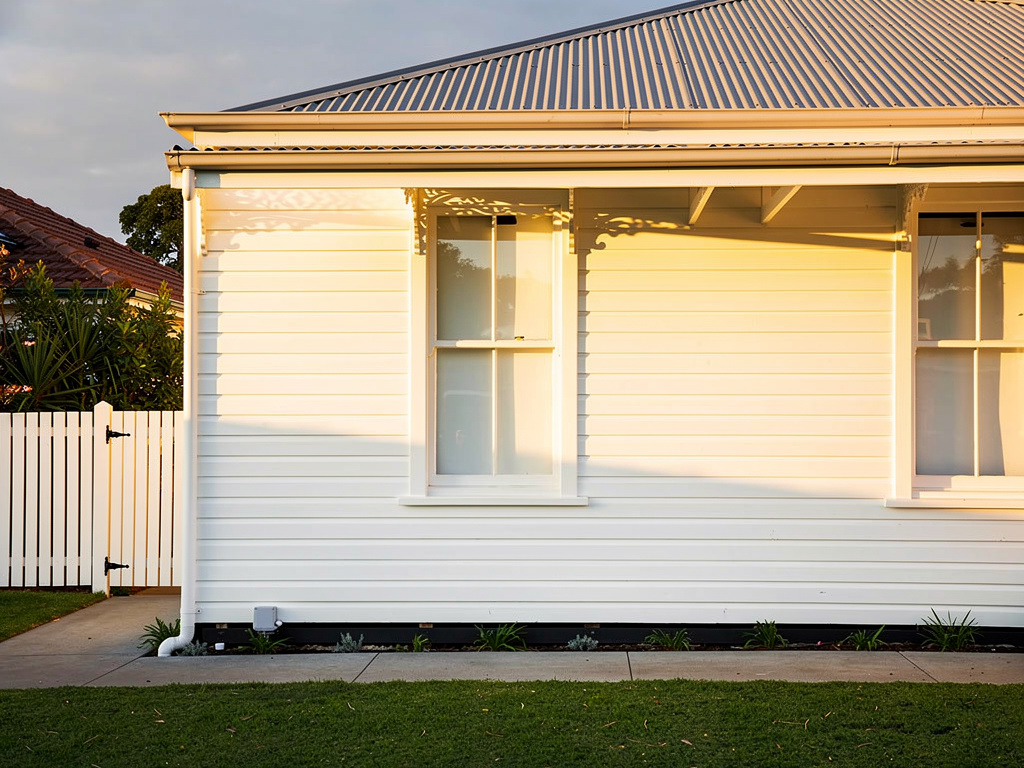
A completed weatherboard exterior repaint in Footscray — full preparation, primer, and two coats of Dulux Weathershield.
What Affects Exterior Painting Price?
Understanding what drives the cost helps you evaluate quotes and understand why prices vary between painters. Here are the seven main factors.
House Size and Total Surface Area
Larger homes have more surface area to prepare and paint. A 150m² single-storey weatherboard has approximately 200–250m² of paintable exterior surface once you account for walls, fascias, eaves, window frames, doors, and trim. A 250m² two-storey has 350–450m² of paintable surface. More surface area means more paint, more labour, and more time.
Cladding Type
Weatherboard is the most labour-intensive cladding to paint. Every board has a top edge, face, and bottom edge that must be scraped, sanded, and painted individually. Rendered walls are faster because they present large, flat surfaces. Brick veneer homes where only the trim is painted are the least expensive because the total paintable area is significantly smaller.
Surface Condition
A home that was last painted 8 years ago with minor chalking requires far less preparation than one with 30-year-old paint that is peeling across 60% of the surface. Extensive peeling means hours of additional scraping, sanding, filling, and priming. Timber rot adds carpentry repairs to the scope. The worse the condition, the higher the cost — and the more critical it is that the preparation is done thoroughly.
Access and Scaffolding
Single-storey homes accessible from ladders cost less than two-storey homes requiring scaffolding. Scaffolding hire adds $2,000–$5,000 to the project cost. Difficult access — narrow side passages, steep blocks, or overhanging trees — also increases time and cost.
Number of Colours
A single-colour exterior with white trim is the most efficient to paint. Each additional colour requires separate masking, separate colour mixing, and separate application passes. A heritage scheme with four or five colours across body, trim, windows, and feature details takes significantly longer than a two-colour scheme.
Paint Quality
Premium exterior paints like Dulux Weathershield cost $60–$90 per 4L tin. Budget paints cost $30–$40 per 4L. On a typical 3-bedroom weatherboard exterior, you will use 40–60 litres of topcoat. The cost difference between budget and premium paint is roughly $500–$800 for the entire project — but the premium product lasts twice as long. Every professional painter will recommend premium paint because it is better value over the life of the coating.
Heritage Requirements
Properties within a Heritage Overlay zone may require council-approved colour schemes, heritage-specific paint products like Dulux Heritage, and detailed restoration of period features. Heritage projects cost $15,000–$35,000 for a standard Victorian or Edwardian exterior because of the additional detail work, compliance requirements, and specialist knowledge involved. Read our full heritage house painting guide for more detail.
Best Exterior Paint Products for Melbourne
Melbourne’s climate is harsh on exterior paint. Summer UV regularly exceeds UV Index 12. Winter brings cold, damp conditions. The western suburbs cop salt-laden winds off Port Phillip Bay. Coastal areas from Williamstown to Altona face direct salt spray. The paint you use must handle all of it.
Dulux Weathershield — The Industry Standard
Dulux Weathershield is the exterior paint we use on the majority of our projects, and it is the standard across the professional painting industry in Australia. It is specifically formulated for Australian conditions with:
- UV resistance — Advanced UV absorbers and stabilisers that prevent premature fading and chalking
- Flexibility — Binders that expand and contract with timber movement through seasonal temperature changes
- Adhesion — Superior adhesion to properly prepared and primed surfaces
- Mould resistance — Anti-mould additives that prevent black mould growth in shaded areas
For walls and large surfaces, we use Dulux Weathershield Low Sheen — it hides surface imperfections while still being washable. For trim, fascias, window frames, and doors, we use Dulux Weathershield in Gloss or Semi-Gloss for maximum durability and a clean finish that is easy to wipe down.
Why Premium Paint Matters
The difference between a $35 budget paint and a $75 premium paint is not marketing. Premium paints contain higher concentrations of binder resin (the component that creates adhesion and film integrity), more pigment (which provides coverage and colour retention), and purpose-engineered additives (UV stabilisers, anti-mould agents, flexibility modifiers). Budget paints use fillers like calcium carbonate in place of these functional components.
The practical result: premium paint maintains colour and adhesion for 10–15 years. Budget paint fades noticeably within 2–3 years and starts peeling within 5. Given that preparation and labour account for 70–80% of the total project cost, it makes no sense to save $500 on paint and then need to repaint 5 years sooner — paying for all that labour again.
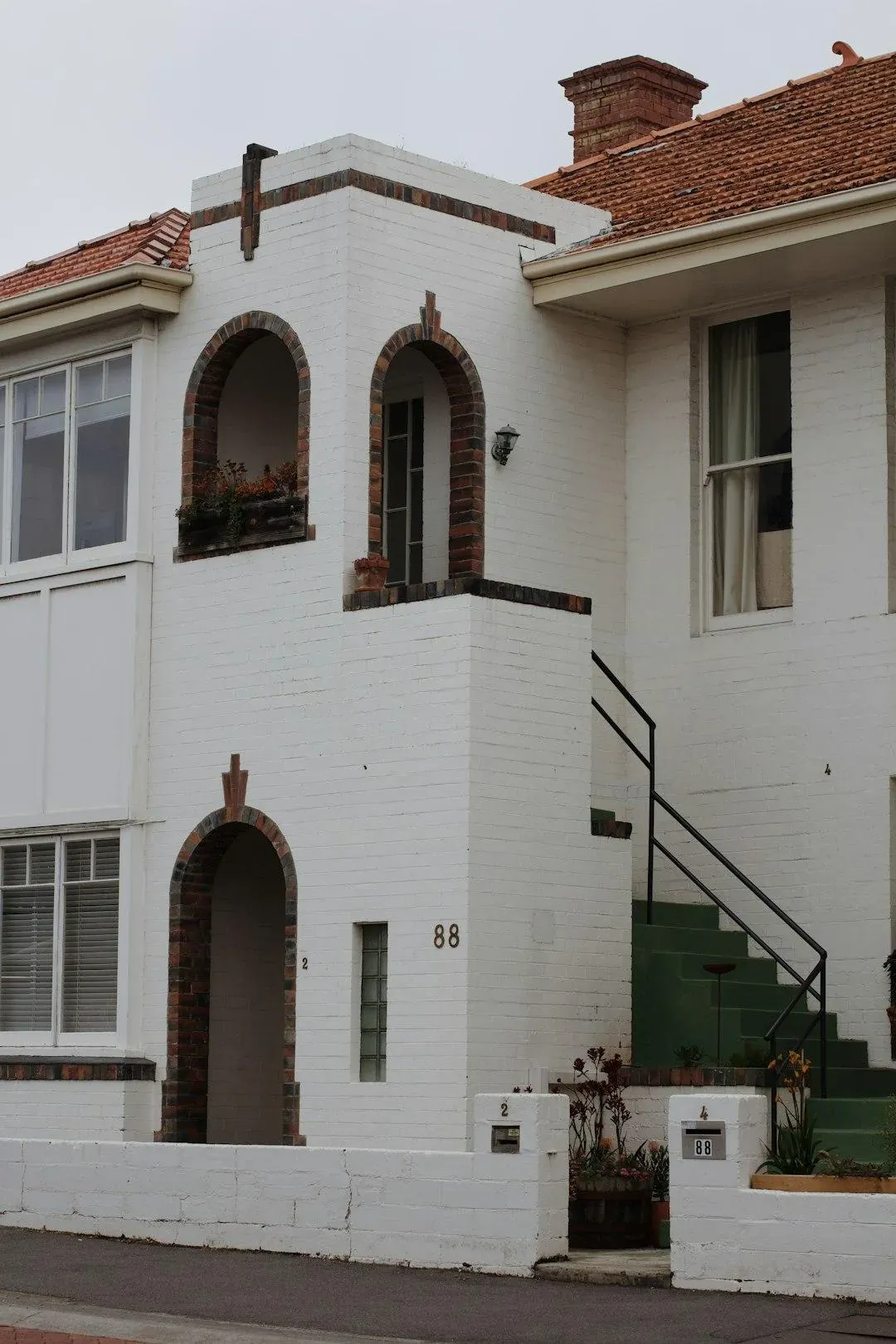
Choosing the right exterior paint product is critical for Melbourne's harsh UV and variable climate conditions.
Product Recommendations by Surface
- Timber weatherboard — Dulux Weathershield Low Sheen (walls), Dulux Weathershield Gloss (trim). Always over Dulux 1 Step Acrylic Primer on bare timber.
- Rendered walls — Dulux Weathershield Low Sheen. Hairline render cracks can be bridged by the paint’s flexibility. Larger cracks need filling first.
- Metal surfaces (gutters, downpipes, window frames) — Dulux Super Enamel or Dulux Weathershield Gloss over a metal primer. Rust must be removed and treated before painting.
- Previously painted brick — Dulux Weathershield Low Sheen. Previously unpainted brick that you want to paint should first be sealed with Dulux Masonry Primer.
- Heritage homes — Dulux Heritage colour range for historically accurate colours that meet council heritage requirements.
When Is the Best Time to Paint a House Exterior in Melbourne?
Melbourne’s weather dictates when exterior painting can happen and when it cannot. The ideal conditions for exterior paint application are temperatures between 10°C and 35°C with humidity below 85%. Outside these parameters, paint does not cure properly — and a coating that cures incorrectly will fail regardless of how good the preparation was.
Autumn: March to May — The Best Season
Autumn is the ideal painting season in Melbourne. According to Bureau of Meteorology Melbourne climate data, March and April average daytime temperatures of 20–25°C with lower humidity and less rainfall than summer. These conditions allow paint to cure at an optimal rate — not too fast (which causes cracking) and not too slow (which allows moisture damage).
Autumn also gives you the longest consecutive dry windows. A 3–5 day exterior job can often be completed without a single rain delay in April.
Spring: September to November — Second Best
Spring brings warming temperatures and longer days, making it the second-best exterior painting season. September can still produce cold mornings and unpredictable weather — Melbourne’s “four seasons in one day” reputation is most accurate in early spring. October and November are more reliable.
Spring is also the busiest season for painters. Book 4–6 weeks ahead if you want a spring start date.
Summer: December to February — Possible With Precautions
Summer works for exterior painting, but Melbourne’s extreme heat days (35°C+) create problems. When surface temperatures exceed 35°C, paint dries too fast, resulting in lap marks, poor flow, and reduced adhesion. Professional painters manage this by starting at 7am and following the shade around the house.
Winter: June to August — Not Recommended
Winter is the most difficult season for exterior painting. Average daytime temperatures of 10–14°C leave a narrow application window. Short days reduce productive hours. Frequent rain causes delays that can stretch a 5-day project to 2–3 weeks. Paint cures very slowly in cold conditions, leaving it vulnerable to moisture damage for days after application.
If your project is urgent, winter painting is possible — but expect it to take 30–50% longer and cost more due to the inefficiency. For a full seasonal breakdown, read our guide on the best time to paint a house in Melbourne.
Exterior Painting by House Type
Every cladding type presents different challenges. Here is what to expect for the most common Melbourne home types.
Weatherboard Homes — The Most Complex Exterior
Weatherboard is Melbourne’s most common cladding in the inner and western suburbs, and it is the most complex exterior to paint properly. Each individual board must be scraped, sanded, and painted on its face, top edge, and underside. Old paint builds up in layers that crack and peel — particularly on west-facing walls where afternoon UV is most intense.
The preparation on a weatherboard home accounts for 60–70% of the total project time. A typical 3-bedroom weatherboard exterior requires 2–3 full days of preparation before a single coat of paint is applied. This preparation includes pressure washing, scraping all loose and flaking paint, sanding all surfaces to a smooth profile, filling gaps and nail holes with exterior-grade filler, and spot-priming all bare timber with acrylic primer.
Weatherboard exteriors cost $12,000–$20,000 for a standard 3-bedroom single-storey in Melbourne. For a detailed walkthrough of the entire process, read our weatherboard repainting guide.
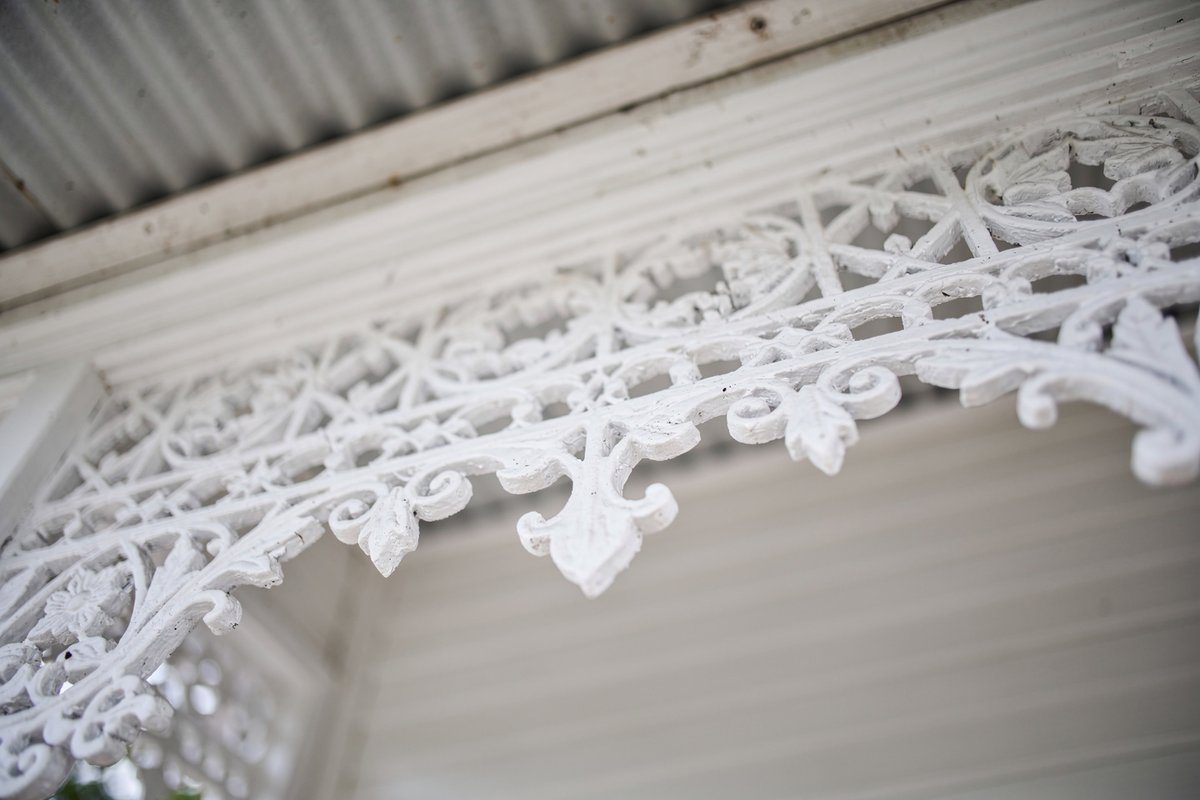
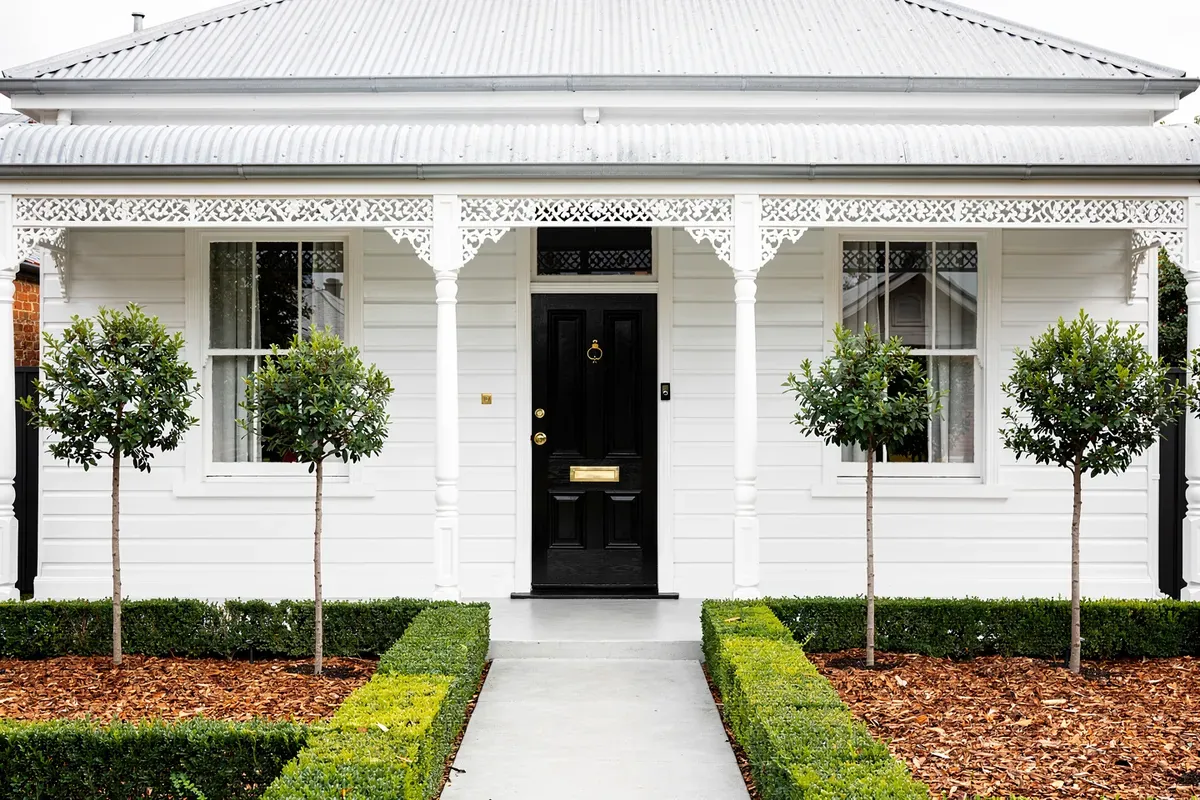
Exterior trim detail on a Footscray weatherboard — precision cutting-in on verandah fretwork is what separates professional results from DIY.
Brick Veneer Homes — Trim Focus
Brick veneer is Melbourne’s most common construction type in suburbs from the 1950s onwards. On most brick veneer homes, you are painting the trim only: fascias, eaves, window frames, doors, verandah posts, and any rendered sections. The brickwork itself is typically left unpainted.
Trim-only painting on a brick veneer home costs $3,000–$7,000 — significantly less than a full weatherboard or rendered exterior because the total paintable surface area is much smaller. The preparation is also less intensive: trim surfaces are typically timber or metal, and the total area of preparation is a fraction of a full-clad home.
If you do choose to paint the brick walls, be aware that this is a one-way decision. Once brick is painted, it must be repainted every 10–15 years. The cost jumps to $6,000–$12,000 because you are now painting the entire wall surface area.
Rendered and Cement Sheet Homes
Rendered homes — common in newer Melbourne suburbs and renovated period homes — present large, flat surfaces that are relatively straightforward to paint. The main preparation tasks are cleaning, filling any cracks, and priming bare or patched areas. Rendered walls do not require the board-by-board scraping that weatherboard demands.
Rendered exteriors cost $6,000–$12,000 for a standard single-storey home. Modern townhouses with rendered facades sit within this range. The primary cost variable is the total surface area and the condition of the render — cracked or damaged render needs repair before painting.
Heritage Victorian and Edwardian Homes
Heritage homes are Melbourne’s most expensive and most detailed exterior painting projects. A Victorian terrace or Edwardian weatherboard in suburbs like Williamstown, Yarraville, Carlton, Fitzroy, or South Melbourne can cost $15,000–$35,000 for a full exterior repaint.
The cost reflects several unique requirements:
- Heritage colour schemes — Councils with Heritage Overlays often require historically appropriate colour palettes. The Dulux Heritage range provides approved colours.
- Detailed period features — Ornate fretwork, verandah lacework, turned posts, and decorative mouldings all require careful hand-painting.
- Multiple colour schemes — Heritage homes typically use 4–5 colours across body, trim, windows, doors, and decorative features.
- Lead paint — Most pre-1970 heritage homes contain lead paint that must be safely managed during preparation.
- Council permits — If you are changing colours within a Heritage Overlay, you need planning approval from your local council.
For a comprehensive guide, read our article on painting a heritage house in Melbourne.
Scaffolding and Access
Any exterior work above 2 metres requires safe access. For single-storey homes, professional painters typically work from ladders and planks for most of the facade, with scaffold sections for tricky areas. Two-storey homes require full scaffolding.
When Scaffolding Is Required
WorkSafe Victoria requires scaffolding or an equivalent fall prevention system for any work at height above 2 metres. For a standard two-storey home, this means the entire upper level facade must be scaffolded. A licensed scaffolder erects the scaffold, it is inspected, and it remains in place for the duration of the upper-level work.
Scaffolding Costs
Scaffolding for house painting in Melbourne costs $2,000–$5,000. The cost depends on:
- House perimeter — More linear metres of scaffold = higher cost
- Height — Standard two-storey is cheaper than three-storey or homes on steep blocks
- Access difficulty — Narrow side passages, sloping ground, or obstacles increase setup time
- Duration — Scaffold is typically hired for a fixed period. Extended projects may incur additional hire fees.
Scaffolding is typically quoted as a separate line item within the overall painting quote. For a full cost breakdown of two-storey projects, see our two-storey house painting cost guide.
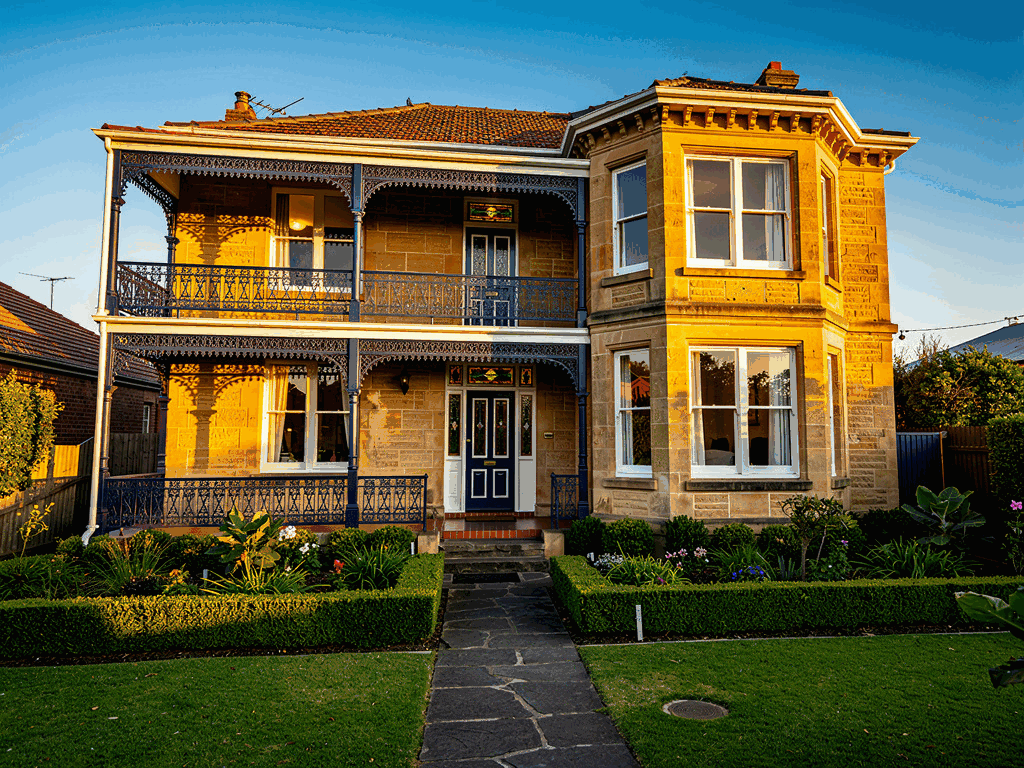
A completed exterior project in Essendon — scaffolding was used for upper-level access on this two-storey home.
Elevated Work Platforms as an Alternative
For some two-storey projects, an elevated work platform (EWP or cherry picker) is a viable alternative to scaffolding. EWPs are particularly useful for spot access — reaching a single high section or gutter line without scaffolding the entire perimeter. They are not practical for full facade work where the painter needs to move along the wall continuously.
The Exterior Preparation Process
Preparation is 60–70% of a painter’s time on any exterior project. It is the most important phase of the job and the part most commonly rushed by painters trying to keep costs low. Every failure I see on exteriors — peeling, cracking, bubbling, adhesion loss — traces back to inadequate preparation.
Step 1: Pressure Washing
The entire exterior is pressure washed to remove dirt, dust, cobwebs, mould, mildew, and loose surface contaminants. This gives us a clean surface to assess the condition of the existing paint. It also removes mould spores that would otherwise grow back under the new paint.
Pressure washing must be done at the right pressure — too high and it damages timber and blasts mortar out of brickwork. Too low and it does not clean the surface effectively. Most exterior surfaces are washed at 1,500–2,000 PSI.
Step 2: Scraping and Sanding
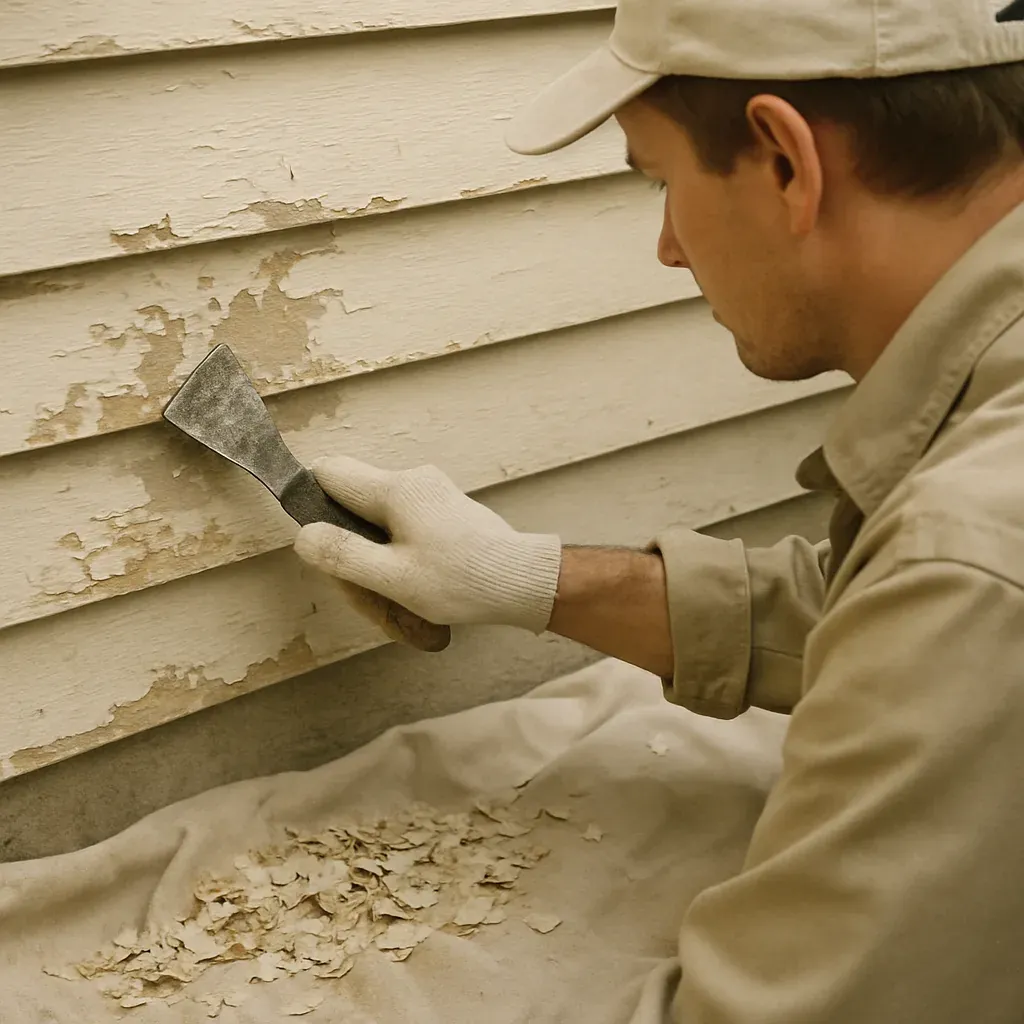
All loose, flaking, peeling, and cracking paint is scraped back to a sound surface. On weatherboard homes, this can involve hours of hand scraping with paint scrapers and detail tools. The goal is to remove any paint that has lost adhesion — if it comes off with a scraper, it would eventually come off on its own and take the new paint with it.
After scraping, all surfaces are sanded to create a smooth profile and a mechanical key for the new paint to grip. This step is what makes the difference between paint that lasts 5 years and paint that lasts 15.
Step 3: Filling and Repairs
Cracks, gaps, nail holes, and any damaged areas are filled with exterior-grade filler. On weatherboard homes, gaps between boards are filled to prevent moisture entry. Damaged timber is cut out and replaced or consolidated with timber hardener. Window putty is checked and replaced where it has cracked or fallen out.
Step 4: Lead Paint Testing and Management
Any home built before 1970 is likely to contain lead paint on exterior surfaces. Lead paint that is intact and stable is not an immediate hazard — but the moment you start scraping, sanding, or disturbing it, it becomes a serious health risk. Fine lead dust is invisible and extremely toxic when inhaled.
Before any scraping begins on a pre-1970 home, we test for lead paint. If lead is present, all preparation must follow EPA Victoria guidelines for safe lead paint management: wet sanding only (never dry), full containment of debris, and disposal as hazardous waste. These requirements add cost and time to the project, but they are non-negotiable for the safety of everyone on site and in the home.
Step 5: Priming
All bare timber, patched areas, and bare surfaces receive a coat of acrylic primer. Primer serves two functions: it seals the surface to prevent moisture penetration and tannin bleed, and it provides a uniform base for the topcoat to adhere to. On heavily weathered or bare exteriors, a full coat of primer is applied to every surface before topcoats begin.
Spot-priming is used where the existing paint is sound and only small areas have been taken back to bare timber. Full priming is used when more than 30–40% of the surface has been scraped back.
Step 6: Topcoats
Two coats of premium topcoat are applied after the primer has cured. This is the standard for professional exterior painting — one coat does not provide adequate coverage, UV protection, or film thickness for a durable result. The first coat builds the foundation. The second coat provides the finished film thickness needed for long-term performance.
For more detail on how long the complete process takes, see our timeline guide.
Heritage Overlays and Council Permits
Melbourne has extensive Heritage Overlay zones across its inner, western, and northern suburbs. If your property falls within one, there are rules about what you can and cannot do to the exterior — including paint colours.
Which Melbourne Suburbs Have Heritage Overlays?
Heritage Overlays are concentrated in Melbourne’s oldest suburbs. Common areas include:
- Inner west — Williamstown, Yarraville, Seddon, Footscray, Newport
- Inner north — Carlton, Fitzroy, Collingwood, Brunswick, Northcote
- Inner south — South Melbourne, Albert Park, St Kilda, Middle Park
- Western suburbs — parts of Essendon, Moonee Ponds, Ascot Vale
- Eastern — Hawthorn, Kew, Camberwell
Not every property in these suburbs is covered — Heritage Overlays apply to specific properties and precincts. The easiest way to check is the VicPlan mapping tool, which shows all overlays on a property-by-property basis.
When Do You Need a Permit?
You DO need a permit if you want to change your exterior colour scheme and your property is within a Heritage Overlay. This means changing body colour, trim colour, or any visible exterior element to a different colour.
You DO NOT need a permit if you are repainting in the same colour scheme (like-for-like repaint), even within a Heritage Overlay. A like-for-like repaint is maintenance, not an alteration.
You DO NOT need a permit if your property is outside a Heritage Overlay — you can paint it any colour you choose.
Working Within Heritage Colour Requirements
Councils with Heritage Overlays typically require colours that are sympathetic to the period of the home. For Victorian-era homes (1850s–1900s), this means deep, rich tones — dark reds, greens, creams, and ochres. For Edwardian homes (1900s–1920s), lighter colour palettes with white or cream trim are typical.
The Dulux Heritage colour range is specifically designed for heritage properties and is recognised by most Victorian councils. Using colours from this range simplifies the permit process.
For a comprehensive walkthrough of the heritage painting process, including permit applications and colour selection, read our heritage house painting guide.
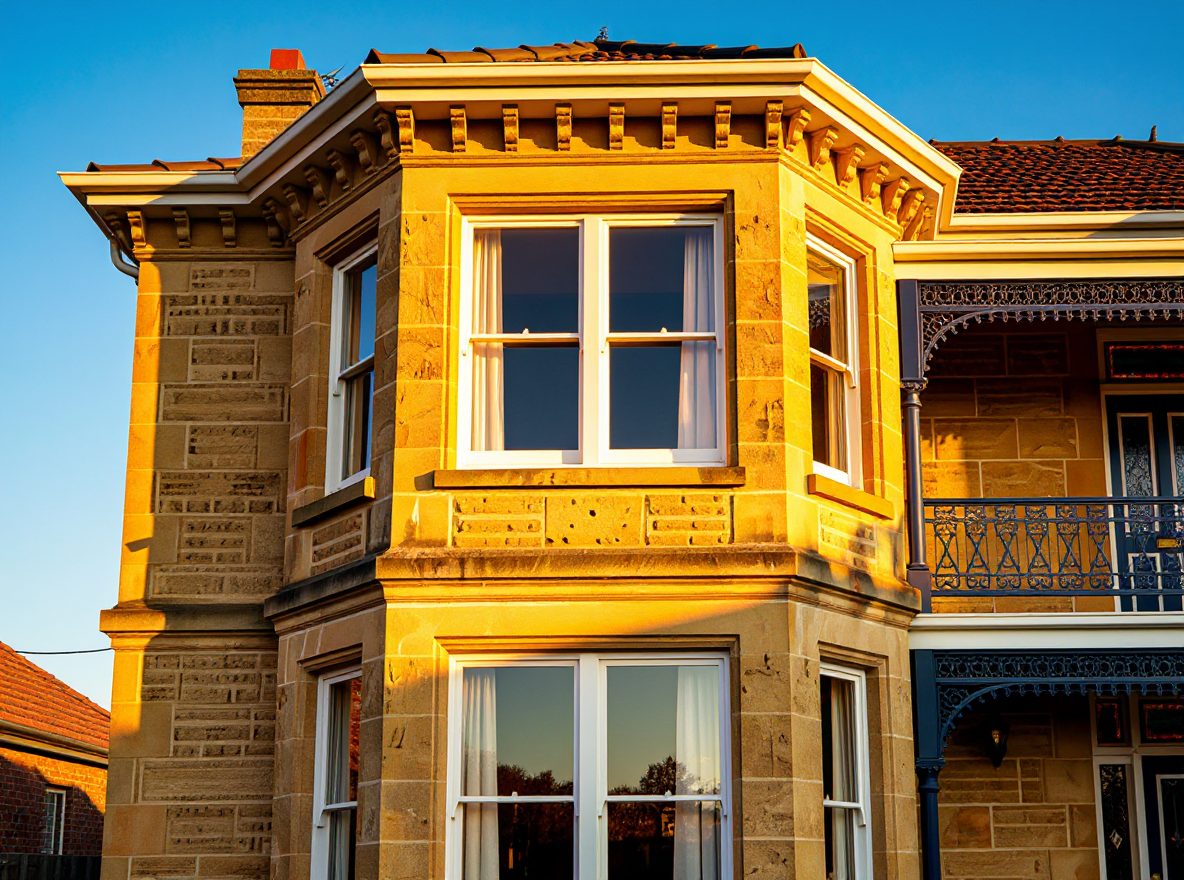
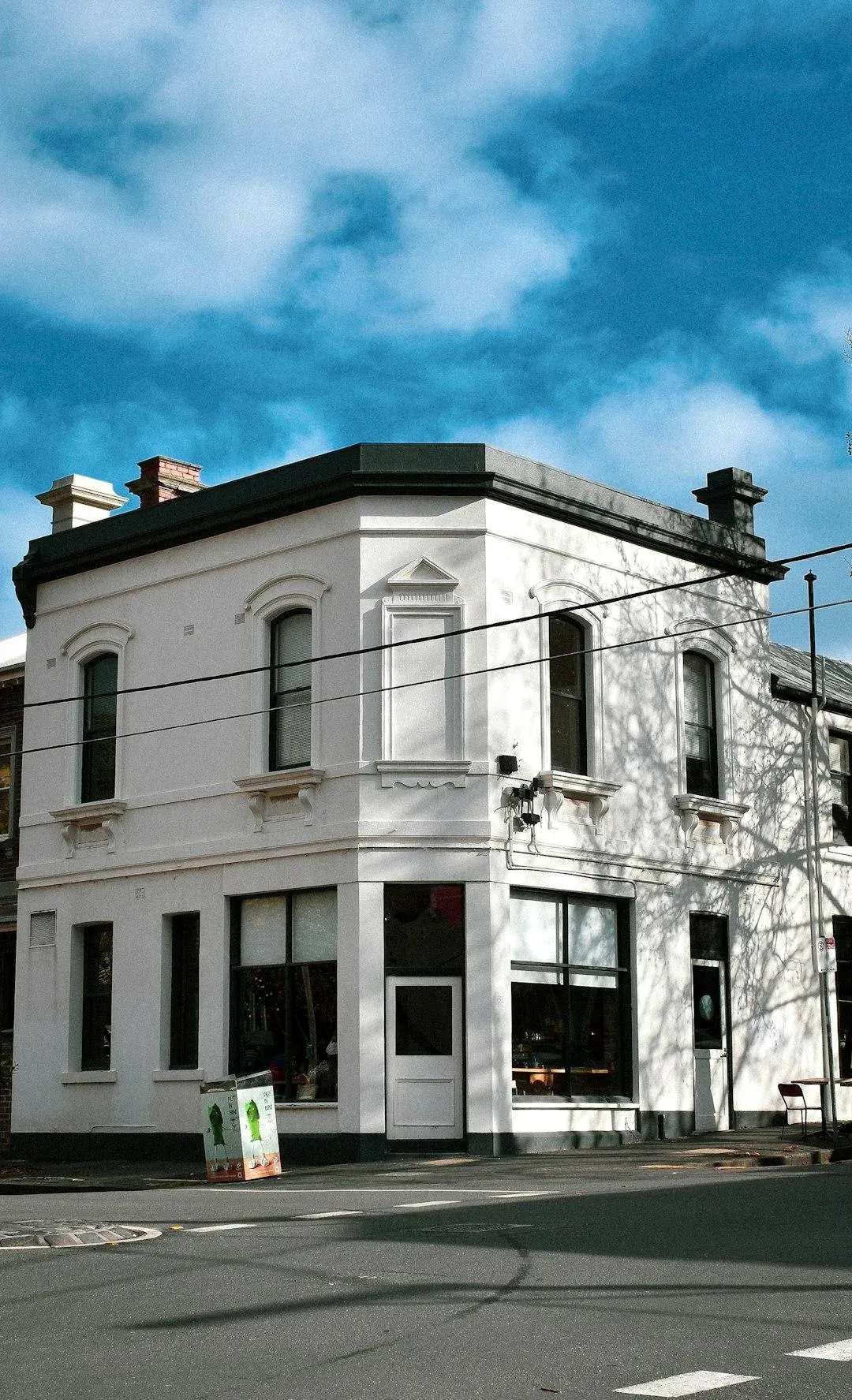
Heritage bay window detail in Essendon — multi-colour schemes require precise cutting-in and additional time for each colour.
How Long Does an Exterior Repaint Last?
A quality exterior repaint using premium products over proper preparation lasts 10–15 years in Melbourne. This is not a guess — it is a consistently observed lifespan across thousands of projects we have completed since 1987.
Factors That Shorten Lifespan
UV exposure is the primary cause of exterior paint degradation in Melbourne. West-facing walls receive intense afternoon sun and typically show signs of chalking and fading 7–10 years after painting — 3–5 years sooner than south-facing walls on the same home.
Salt spray affects coastal properties from Williamstown through to Altona and down the Bellarine. Salt corrodes paint films and accelerates fading. Homes within 500 metres of the coast may need repainting every 7–10 years.
Moisture — either from rain penetration, rising damp, or internal moisture escaping through walls — is the leading cause of peeling. Bathrooms and laundries that vent moisture into wall cavities cause paint to lift from the outside. This is not a paint failure — it is a building defect that needs to be fixed before repainting. For more on this, see our article on why weatherboard paint peels in Melbourne.
Poor preparation — if the previous painter did not scrape, sand, and prime properly, the topcoat is sitting on an unstable base. No topcoat can outlast a poor primer system.
Maintenance Tips to Extend Your Paint’s Life
- Annual wash — Hose down the exterior once a year to remove dust, dirt, and mould spores before they take hold
- Address mould early — Black mould on south-facing walls should be treated with a mould killer and rinsed off. Left untreated, it grows under the paint film and causes adhesion failure.
- Fix moisture sources — Leaking gutters, blocked downpipes, and condensation from bathrooms should be addressed immediately. Water is paint’s worst enemy.
- Touch up damage — If paint chips or is damaged (from a ladder, tree branch, or accidental impact), touch it up promptly to prevent moisture reaching the bare surface underneath.
Common Exterior Paint Problems
Understanding why paint fails helps you prevent it — and helps you assess whether a painter’s quote includes the right preparation to fix existing issues.
Peeling and Flaking
Peeling is the most common exterior paint problem on Melbourne homes. The causes are: moisture behind the coating (the most frequent cause on weatherboard), inadequate preparation before the last repaint, incompatible paint layers (such as acrylic applied over old oil-based paint without proper priming), and lead paint breakdown on pre-1970 homes. The fix is always the same: remove all loose material, identify the root cause, fix it, prime bare surfaces, and recoat. Learn more in our guide on why weatherboard paint peels.
Chalking
Chalking is a fine, powdery residue on the paint surface — run your hand across the wall and it comes away white or coloured. It is caused by UV breakdown of the paint binder, exposing the pigment particles. Mild chalking is normal on aged paint. Heavy chalking indicates the paint has reached end-of-life. The surface must be washed thoroughly and primed before repainting to ensure the new coat adheres.
Cracking and Alligatoring
Cracking appears as fine lines or deep fissures in the paint film. Alligatoring is a pattern of cracking that resembles crocodile skin. Both are caused by paint that has lost its flexibility — either because it is old, because too many layers have built up over decades, or because a rigid paint was applied over a flexible one. The repair involves scraping back to a sound surface, sanding, and recoating.
Bubbling and Blistering
Bubbles or blisters under the paint surface indicate trapped moisture or air. Moisture blisters appear on surfaces where water has penetrated from behind — common near bathrooms, under eaves with gutter leaks, and on walls with rising damp. Heat blisters appear when paint is applied in direct sun on a hot surface. For a detailed guide on diagnosing and fixing bubbling, see our article on how to fix paint bubbling.
Mould and Mildew
Black mould on exterior surfaces — particularly south-facing walls and areas under eaves that stay damp — is common in Melbourne’s climate. Mould is a surface contaminant, not a paint defect, but it must be killed and removed before repainting. If you paint over mould, it grows back underneath the new coating and pushes it off. A mould treatment with a bleach-based solution or commercial mould killer, followed by pressure washing, is the correct preparation.
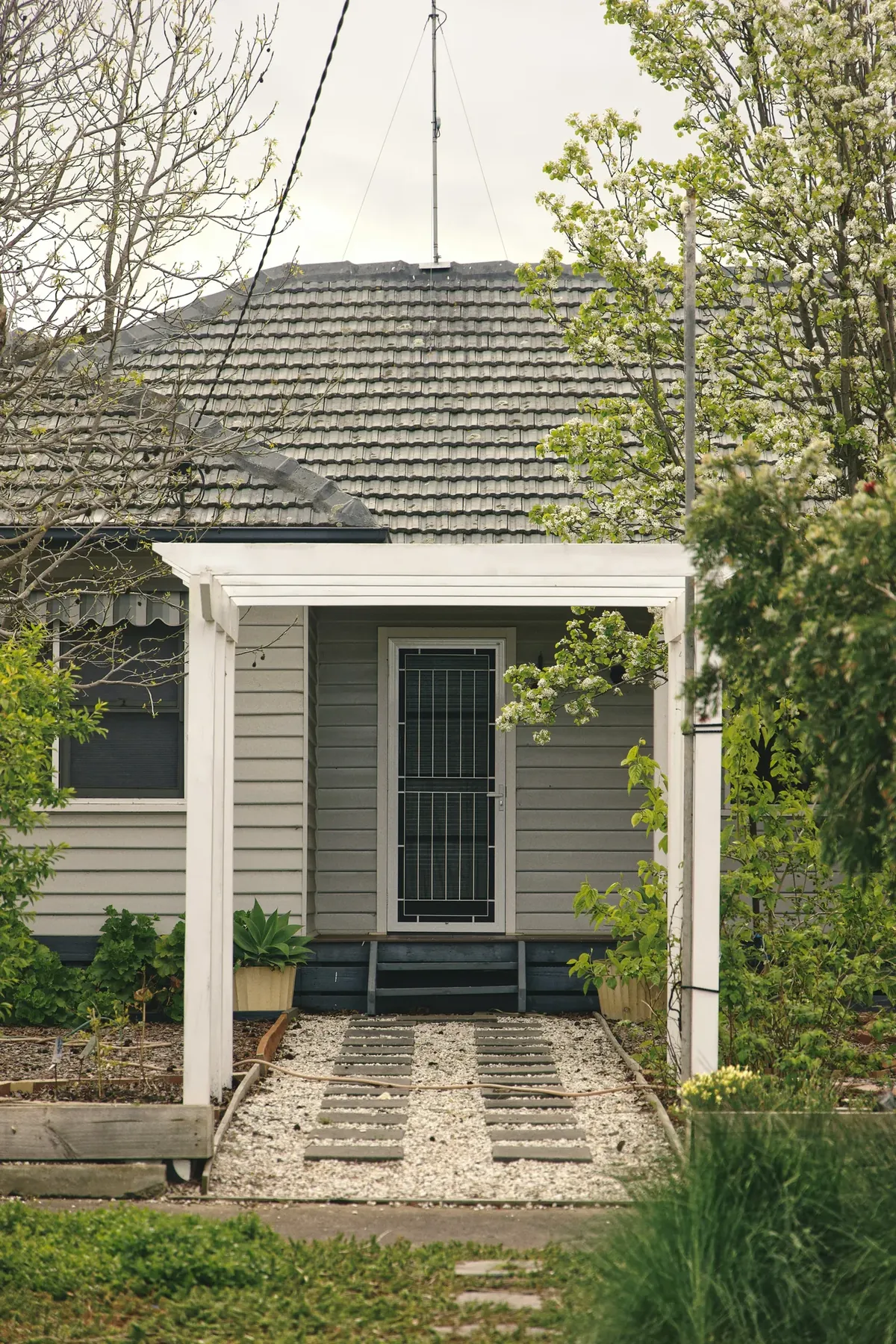
A completed exterior repaint on a Melbourne weatherboard — clean lines, even coverage, and proper preparation make all the difference.
How to Get an Accurate Exterior Painting Quote
An accurate quote requires a physical inspection of your property. Any painter who quotes an exterior over the phone or from a photo alone is guessing — and that guess will either be too high (and you overpay) or too low (and they cut corners to stay profitable).
What a Good Quote Should Include
A detailed, professional exterior painting quote should specify:
- Preparation scope — Exactly what preparation is included: pressure washing, scraping, sanding, filling, priming
- Paint products — Brand, product name, and finish for primer and topcoats
- Number of coats — Two topcoats is the professional standard
- Surfaces included — Which surfaces are being painted (walls, trim, fascias, eaves, doors, windows, gutters)
- Surfaces excluded — What is NOT included (roof, fence, deck, interior)
- Access method — Ladders, scaffolding, or EWP — and whether scaffolding cost is included
- Timeline — Expected start date and duration
- Insurance and registration — Public liability insurance amount and VBA registration number (required for jobs over $10,000)
For a full guide on evaluating painting quotes, read our article on how to get a painting quote in Melbourne.
Red Flags in Exterior Painting Quotes
- No physical inspection — A quote without a site visit is not a quote, it is a guess
- No paint products specified — “Premium paint” means nothing without a brand and product name
- One coat offered — One coat is never enough for an exterior
- No preparation detail — If the quote does not mention scraping, sanding, and priming, those tasks are either not included or being skimmed
- Significantly below market rate — If a quote is 40–50% below others, preparation or paint quality is being compromised
- No insurance documentation — Ask for a certificate of currency, not just a verbal claim
Why Modernize Solutions for Your Exterior Painting
We have been painting Melbourne homes since 1987 — over 35 years of exterior painting experience across every suburb in the west and inner city. Our credentials are straightforward:
- 35+ years operating from Footscray
- $20 million public liability insurance
- Rated 4.8 stars on Google (154 reviews)
- Premium Dulux products on every project — we use Dulux Weathershield, Wash&Wear, and other premium systems as standard
- Written workmanship warranty on every project
We use Dulux Weathershield as our standard exterior product, provide detailed written quotes with full scope documentation, and guarantee our work.
If you are considering an exterior repaint, request a quote or call us directly on 0451 040 396. We inspect every property before quoting and provide a written scope of works so you know exactly what you are getting.
For a comparison of interior versus exterior painting — including when it makes sense to combine both — read our guide. And for homeowners in the western suburbs specifically, we have a dedicated guide covering the unique conditions in suburbs from Footscray to Werribee.
Frequently Asked Questions
How much does it cost to paint the exterior of a house in Melbourne?
Exterior painting costs in Melbourne range from $3,000 to $35,000 depending on your home type. A weatherboard 3-bedroom single-storey costs $12,000–$20,000. Brick veneer trim only runs $3,000–$7,000. Rendered homes cost $6,000–$12,000. Heritage Victorian or Edwardian homes cost $15,000–$35,000. Two-storey homes cost $18,000–$30,000 including scaffolding. These are 2026 prices based on premium products like Dulux Weathershield and full surface preparation. See our complete cost guide for more detail.
What is the best exterior paint for a weatherboard house in Melbourne?
Dulux Weathershield is the best exterior paint for Melbourne weatherboard homes. It is specifically formulated for Australian conditions with advanced UV resistance, flexibility to move with timber expansion and contraction, and excellent adhesion to properly prepared surfaces. For trim and fascias, use Dulux Weathershield in Low Sheen or Gloss finish for maximum durability and washability. Avoid budget paints on exteriors — they fade faster and lose adhesion within 3–5 years in Melbourne’s UV conditions.
How long does exterior house paint last in Melbourne?
A quality exterior paint job in Melbourne lasts 10–15 years when premium products like Dulux Weathershield are used over proper preparation. West-facing walls last 7–10 years due to intense afternoon UV exposure. Coastal properties near Port Phillip Bay may see reduced lifespan from salt spray. The biggest factor in paint longevity is preparation quality — a well-prepared surface with the correct primer system will always outlast a poorly prepared one, regardless of the topcoat used.
When is the best time of year to paint the outside of a house in Melbourne?
Autumn (March to May) is the best time to paint a house exterior in Melbourne, followed by spring (September to November). These seasons offer ideal painting conditions: temperatures between 10°C and 35°C and humidity below 85%. According to Bureau of Meteorology climate data, March and April deliver the most consistent dry weather for exterior painting. Summer works but requires early morning starts. Winter is the most difficult season. For a full seasonal breakdown, see our best time to paint guide.
How much does scaffolding cost for house painting in Melbourne?
Scaffolding for house painting in Melbourne costs $2,000–$5,000 depending on the house size, height, and configuration. A standard two-storey home with straightforward access sits at the lower end. Complex builds with multiple roof lines or limited access push costs higher. Scaffolding is required by WorkSafe Victoria for any work above 2 metres and must be erected by a licensed scaffolder. The cost is typically included in your painting quote as a line item.
Why is my weatherboard house paint peeling?
Weatherboard paint peels for five main reasons: moisture trapped behind the boards (the most common cause), inadequate surface preparation before the last paint job, incompatible paint layers, UV degradation from sun exposure (especially west-facing walls), and lead paint breakdown on pre-1970 homes. Peeling on the west side only is almost always UV damage. Peeling near bathrooms or laundries points to moisture issues. Read our full guide on why weatherboard paint peels in Melbourne.
Do I need a council permit to change my house colour in Melbourne?
You need a council permit to change your house colour only if your property falls within a Heritage Overlay zone. Check using the VicPlan mapping tool. Heritage overlays are common in suburbs like Williamstown, Yarraville, Seddon, Carlton, Fitzroy, South Melbourne, and parts of Essendon. If you are repainting in the same colour scheme (like-for-like), no permit is required even within a heritage overlay. If your home is outside a heritage overlay, you can paint it any colour you choose without council approval.
How long does it take to paint the exterior of a house in Melbourne?
A single-storey exterior takes 3–5 days for a professional crew. A two-storey exterior takes 5–7 days including scaffolding setup. A combined interior and exterior repaint takes 2–4 weeks. These timelines assume dry weather — rain delays can add 1–3 days. Heritage homes with detailed restoration work can take 2–3 weeks for the exterior alone. For detailed timelines, see our guide on how long it takes to paint a house in Melbourne.
How much does it cost to paint a two-storey house exterior in Melbourne?
A two-storey exterior repaint in Melbourne costs $18,000–$30,000 including scaffolding. Scaffolding alone adds $2,000–$5,000. The higher cost compared to single-storey reflects the scaffolding requirement, slower working rates at height, and typically larger total surface area. Two-storey weatherboard homes sit at the top of this range. For a full breakdown, read our two-storey house painting cost guide.
What preparation is needed before painting a house exterior?
Proper exterior preparation includes pressure washing, scraping all flaking or peeling areas, sanding to create a key for new paint, filling cracks and damaged areas, and priming all bare surfaces. Preparation accounts for 60–70% of a professional painter’s time on an exterior job. Skipping or rushing preparation is the single biggest reason paint fails prematurely. For a step-by-step walkthrough, see our guide on how to prepare walls for painting.
Does my old house have lead paint and how do I deal with it?
Any house built before 1970 in Australia is likely to contain lead paint, particularly on exterior surfaces and window frames. You can test with a DIY lead test kit or have a professional assessment. If lead paint is present, it must be removed using wet-sanding methods with full containment — dry sanding is prohibited due to the toxic dust it creates. All waste must be disposed of as hazardous material. The EPA Victoria website has detailed guidance on safe lead paint management.
How much does it cost to paint a brick house exterior in Melbourne?
Painting a brick veneer exterior in Melbourne costs $3,000–$7,000 when painting trim only — fascias, eaves, window frames, doors, and verandah posts. If you want the brick walls themselves painted, expect $6,000–$12,000 as the cost is comparable to a rendered home. Painting brick is a one-way decision — once painted, brick requires repainting every 10–15 years.
What exterior paint colours are popular in Melbourne right now?
Melbourne’s most popular exterior colours in 2026 are muted, heritage-inspired tones. Warm whites like Dulux Natural White and Dulux Lexicon Quarter dominate walls. Deep charcoals like Dulux Domino are popular for front doors and trim. Deep greens are trending for weatherboard homes in the inner suburbs. For heritage homes, the Dulux Heritage colour range offers historically accurate palettes. For help choosing colours, see our guide on how to choose paint colours in Melbourne.
Should I paint my house exterior before selling?
Yes. A fresh exterior paint job is one of the highest-ROI improvements before selling a Melbourne home. First impressions are formed in seconds, and the exterior is the first thing buyers see — in person and in listing photos. A well-painted exterior signals a maintained home and removes a negotiation point. Neutral, contemporary colours appeal to the broadest buyer pool. Budget $12,000–$20,000 for a full weatherboard exterior or $3,000–$7,000 for trim-only on brick veneer. For more detail, read our guide on painting a house before selling in Melbourne.
How do I find a good exterior painter in Melbourne?
Look for painters who are registered with the Victorian Building Authority (required for jobs over $10,000), carry adequate insurance ($20M public liability is the industry standard), use premium brand-name paints like Dulux, and provide detailed written quotes specifying preparation scope, paint products, and number of coats. Avoid painters who quote over the phone without inspecting the property. For a complete guide on evaluating painters, see how to hire a painter in Melbourne.
Can you paint a house exterior in winter in Melbourne?
You can paint a house exterior in winter in Melbourne, but it is not ideal. Most exterior paints require a minimum application temperature of 10°C, and Melbourne winter days regularly sit between 10°C and 14°C — leaving a narrow working window. Short daylight hours reduce productive time. Frequent rain causes delays. Paint cures slower in cold conditions, increasing the risk of moisture damage before the film hardens. Expect the job to take 30–50% longer than in autumn or spring. Read our seasonal painting guide for more detail.
What’s the difference between cheap and premium exterior paint?
The difference between cheap ($30–$40 per 4L) and premium ($60–$90 per 4L) exterior paint is significant. Premium paints like Dulux Weathershield contain higher resin content for better adhesion, more pigment for superior colour retention, advanced UV stabilisers, and flexible binders that move with timber. Budget paints fade within 2–3 years and peel within 5. Premium paints maintain colour and adhesion for 10–15 years. The paint cost difference on a typical exterior is $500–$800 — but the result lasts twice as long. Comparing interior vs exterior painting differences also helps understand why exterior products need to be tougher.
Related Service: Exterior Painting
Protect and beautify your home with professional exterior painting built to last.
Learn more about our Exterior Painting service →
Modernize Solutions
Melbourne's most experienced residential painters since 1987.