A kitchen repaint in Melbourne typically costs $2,000–$4,000 and a small bathroom costs $1,500–$2,500 in 2026, reflecting the specialist products, extended prep, and longer drying times these moisture-prone rooms require. According to Dulux Australia, using purpose-built wet-area paints like Wash&Wear and Aquanamel extends paint life in kitchens and bathrooms to 8–10 years compared to 2–3 years for standard interior paint.
“Purpose-built wet-area paints like Dulux Wash&Wear and Aquanamel are specifically formulated to resist moisture, grease, and steam, extending paint life to 8–10 years in kitchens and bathrooms compared to 2–3 years for standard interior paint.”, Dulux Australia, dulux.com.au
Kitchens and bathrooms are the hardest-working rooms in your house. They deal with heat, moisture, steam, splashing, and humidity that’d wreck paint in any other room. You can’t paint them the same way you’d paint a bedroom. The paint needs to be tougher, the prep needs to be more thorough, and the painter needs to understand how moisture behaves.
Most painters can handle a standard bedroom repaint. But kitchen and bathroom repaints separate the pros from the rest. This is where product knowledge, technique, and experience actually matter.
Why does kitchen and bathroom paint fail so quickly?
Paint failure in wet rooms is almost always caused by moisture, grease buildup, or using the wrong product, not poor application technique.
Paint failure in these rooms almost always comes down to moisture. In a kitchen, you get steam from boiling water, heat from cooking, and grease particles in the air. In a bathroom, you get high humidity, condensation on walls and ceilings, and splashing around the shower.
If you use standard interior paint in these spaces, the paint will bubble, peel, and start failing within 18 months. The paint can’t cope with the moisture. It’s not the painter’s fault if the wrong product was chosen, it’s the specifier’s fault.
The second issue is surface preparation. In kitchens especially, grease builds up on walls over time. If you don’t properly degrease the walls before painting, new paint won’t adhere properly. It’ll look fine for a week, then start to bubble and peel because there’s a barrier of grease between the paint and the wall.
The third issue is the finish. A high-gloss finish works great for durability, but it looks institutional and dated in a modern home. A semi-gloss or low-sheen finish is better for aesthetics, but it’s less durable. The right painter will understand the trade-off and help you choose the finish that works for your space and your lifestyle.
What paint should you use in a kitchen?
Dulux Wash&Wear is the gold standard for kitchens, it’s washable, grease-resistant, and formulated specifically for high-moisture, high-traffic areas.
In a kitchen, we almost exclusively use Dulux Wash&Wear. It’s specifically formulated for high-moisture, high-traffic areas. It’s washable (you can actually wipe the walls clean without damaging the paint), it resists staining from grease and steam, and it lasts.
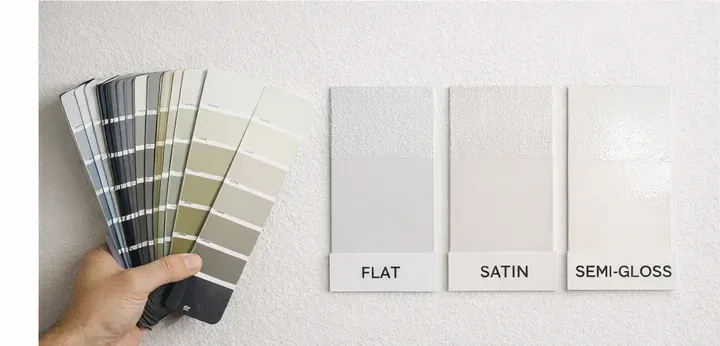
Wash&Wear comes in various finishes: semi-gloss, satin, and low-sheen. For a feature wall or an accent colour in a kitchen, low-sheen gives you that modern look. For splashback areas and high-wear zones, semi-gloss is more practical because it’s easier to clean and more resistant to moisture damage.
The difference between a cheap paint and Dulux Wash&Wear is substantial. Cheap paint might cost $15 per litre. Wash&Wear costs three times that. But it lasts three times longer. Over a 10-year span, you’re not paying more, you’re saving money because you’re not repainting as often.
We’ve never painted a kitchen or bathroom with anything other than Dulux products. When you use a quality paint designed for the job, it holds up. When you use cheap paint or generic interior paint, it fails, and then you’re hiring someone to redo the job in two years.
Key takeaway: Dulux Wash&Wear costs roughly three times more per litre than budget kitchen paint, but lasts three times longer, making it cheaper over a 10-year span while delivering superior washability and stain resistance.
What paint works best in a bathroom?
Dulux Aquanamel is purpose-built for wet areas, it resists moisture damage, won’t yellow in damp conditions, and adheres well to bathroom surfaces.
Bathrooms are even trickier than kitchens because the moisture level is higher and more sustained. If you have an ensuite with a shower, the humidity is constant.
For bathroom walls, we use Dulux Aquanamel. It’s a water-based paint specifically designed for wet areas. It has excellent adhesion, it resists moisture damage, and it doesn’t yellow over time the way some paints do in damp environments.
For bathroom ceilings (which cop the most condensation), Aquanamel also works well. Some painters prefer to use a ceiling-specific paint, but we’ve found Aquanamel holds up better in bathrooms specifically because it’s designed for wet areas.
If there’s tiling in the bathroom (which there usually is), the wall-to-tile junction is critical. Paint will fail at that junction if moisture gets behind the tile. This is where prep work comes in. We use a quality grout sealant and ensure the junction is completely sealed before we paint. It takes time, but it’s the difference between paint lasting 3 years and lasting 10 years.
What preparation do kitchens and bathrooms need before painting?
Degreasing, moisture testing, stain blocking, surface repair, and specialist primer are all essential, skip any step and the paint will fail early.
This is where you’ll see the biggest difference between a rushed job and a professional job.
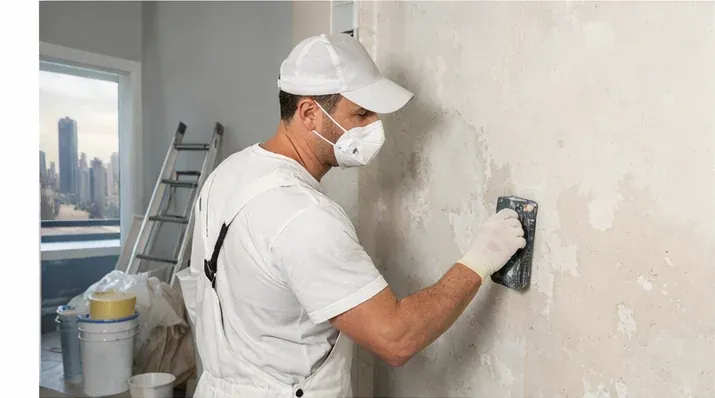
Degreasing: In a kitchen, the walls need to be fully degreased. We use a degreaser specifically designed for painting prep. Some painters just wipe walls with a wet cloth. That’s not enough. Grease particles sit on the surface and prevent paint adhesion.
Moisture testing: Before we start, we test the walls for moisture. If there’s moisture already trapped in the plaster or wall structure, painting over it will cause failure. If we find moisture, we identify the source. Is it a plumbing leak? Is it rising damp? Is it condensation? We address the root cause before we paint. You can’t paint over a moisture problem, you have to fix the moisture problem first.
Stain blocking: If there are stains from water damage, previous damage, or dark marks, we use a stain-blocking primer. This prevents the stain from bleeding through the new paint. Not all primers are equal. A quality stain blocker matters in bathrooms.
Surface repair: Any cracks, holes, or damage to the plaster gets filled and sanded smooth. In a bathroom, we use a moisture-resistant filler because standard filler can absorb moisture and fail.
Primer selection: Not all primers work in kitchens and bathrooms. We use Dulux primers designed for moisture-prone areas. A proper primer ensures the topcoat adheres properly and lasts.
Which paint finish is best for kitchens and bathrooms?
Satin is the best all-round choice for most Melbourne kitchens and bathrooms, it balances durability and washability with a modern, non-institutional look.
| Finish | Durability | Washability | Aesthetic | Best for | Shows imperfections? |
|---|---|---|---|---|---|
| Semi-gloss | Excellent | Excellent | Institutional/shiny | Splashbacks, high-moisture zones | Yes, highlights every dent |
| Satin | Very good | Very good | Modern, balanced sheen | Most kitchens and bathrooms | Moderate |
| Low-sheen | Good | Moderate | Matte, contemporary | Powder rooms, low-use bathrooms | Minimal |
| Eggshell | Moderate | Moderate | Subtle sheen | Low-traffic kitchen areas | Minimal |
| Matte/flat | Poor in wet areas | Poor | Sophisticated | Not recommended for wet areas | Minimal |
The finish of the paint (gloss level) changes how the room looks and feels, and it affects durability.
Semi-gloss is the most durable. It’s easy to clean, highly resistant to moisture damage, and it reflects light. The downside is that it looks a bit institutional, and it shows imperfections in the wall surface more clearly. If your walls aren’t perfectly smooth, semi-gloss will highlight every dent and inconsistency.
Satin (low-gloss) is a middle ground. It’s more durable than flat or matte finishes, it cleans reasonably well, and it looks more modern than semi-gloss. It’s the finish we recommend for most kitchens and bathrooms because it strikes the balance between durability and aesthetics.
Low-sheen looks matte and modern, but it’s harder to clean and slightly less durable in very wet areas like directly above or beside a shower. It’s better for powder rooms or less-used bathrooms.
Most homeowners in Melbourne prefer a satin or low-sheen finish over semi-gloss. But you need to go in with your eyes open: the better it looks, the more careful you have to be with maintenance. Satin finish kitchen walls need to be wiped down regularly. If you let grease build up, it becomes harder to clean.
Key takeaway: Satin finish is the best all-round choice for Melbourne kitchens and bathrooms, balancing durability and washability with a modern aesthetic that avoids the institutional look of semi-gloss.
How do painters handle tiled areas and splashbacks?
The tile-to-wall junction is the most failure-prone area in a kitchen or bathroom, proper sealing and precise cutting-in prevent moisture damage.
If you have a tiled splashback in the kitchen or tiling in the bathroom, the area between and around the tiles needs special attention.
Paint won’t stick to glazed tile, so we don’t paint tiles. But we do paint the grout lines and the wall areas adjacent to tiles. The grout itself can be sealed (not painted), and the wall area should be painted with a high-quality paint.
The critical point is the junction where the tile meets the wall. This is where moisture and steam get behind the tile if the seal isn’t right. We ensure the grout is properly sealed or filled, and we use a quality paint right up to the tile edge.
Some painters get lazy here and paint awkwardly around tiles, leaving gaps. This causes moisture to get behind the tile, which causes the paint to fail. We take the time to get it right.
How long does it take to paint a kitchen or bathroom?
Kitchens and bathrooms take longer than standard rooms because humidity slows drying, expect 8 hours between coats and multiple days for a quality finish.
Moisture-prone areas take longer to paint than regular rooms because drying times are longer and humidity affects the drying process.
In a standard bedroom, paint typically dries to the touch in 2-4 hours and is ready for a second coat in 4-6 hours. In a kitchen or bathroom, you need to allow extra time because humidity slows evaporation. We typically wait 8 hours between coats in these rooms, even if the paint says it’s dry sooner.
Temperature and humidity also matter. If you paint a bathroom in winter when it’s 15 degrees and humid, drying takes longer than if you paint in a warm, dry summer day. We factor this into our timeline and don’t rush drying times just to get the job done faster.
If the painter is pushing to complete a bathroom job in a single day, that’s a red flag. Quality work in a moisture-prone room takes time.
How much does a kitchen or bathroom repaint cost?
A small bathroom costs $1,500–$2,500 and a standard kitchen costs $2,000–$4,000 in Melbourne, reflecting premium products and extended prep and drying time.
A kitchen or bathroom repaint costs more than a bedroom for several reasons: the products cost more, the prep work takes longer, and the drying time extends the timeline.
For a small bathroom (3m x 2m), expect to pay $1,500–$2,500 depending on the condition of the walls, the amount of surface prep needed, and the paint finish chosen.
For a kitchen, costs are typically $2,000–$4,000 for a standard kitchen because of the larger wall area and the degreasing work involved.
These aren’t cheap jobs, but they’re worth doing properly. A cheap painter might quote $800 for a bathroom. That’s a signal they’re cutting corners on product or prep, and the paint will fail within 18 months.
What should you ask your painter before a kitchen or bathroom job?
Ask about primer choice, paint product suitability, wall preparation method, drying time between coats, and warranty, vague answers are a red flag.
When you contact painters about a kitchen or bathroom project, ask these specific questions:
- What primer will you use, and why?
- What paint product will you use, and why is it suitable for a kitchen/bathroom?
- How will you prepare the walls?
- How long will you allow between coats?
- What warranty do you provide on this work?
A professional painter will have clear answers to all of these. If they’re vague or defensive, they’re not the right person for the job.
Ready to get your kitchen or bathroom repainted?
We use Dulux Wash&Wear and Aquanamel with full surface prep and proper drying protocols, backed by a workmanship guarantee on every kitchen and bathroom job.
Kitchen and bathroom repaints are specialist work. You need a painter who understands the products, understands moisture, and won’t cut corners on prep or drying time.
Modernize Solutions has repainted hundreds of kitchens and bathrooms across Melbourne since 1987, completing over 1,000 residential painting projects in total. The company carries $20M public liability insurance, maintains a 5.0-star Google rating, and uses Dulux Australia Wash&Wear and Aquanamel exclusively for all wet-area work. Every kitchen and bathroom project comes with a workmanship guarantee, any issue with the work is fixed at no cost, meeting Master Painters Australia quality standards. All work complies with ACCC consumer guarantee requirements and Consumer Affairs Victoria recommendations for obtaining written quotes.
“Homeowners should always confirm that painters specify the exact paint product, number of coats, and preparation method in writing, particularly for kitchens and bathrooms where incorrect product selection leads to premature paint failure.”, Master Painters Australia, masterpainters.com.au
Key takeaway: A cheap painter quoting $800 for a bathroom is almost certainly cutting corners on product or prep, paint failure within 18 months is the typical result, costing more than a quality job done right the first time.
What are the 5 most common kitchen and bathroom painting mistakes?
Using standard interior paint, skipping degreasing, rushing drying time, ignoring moisture sources, and choosing the wrong finish are the costliest wet-area painting errors.
- Using standard interior paint, generic interior paint cannot withstand kitchen grease and bathroom humidity. It bubbles, peels, and fails within 18 months.
- Skipping degreasing in kitchens, painting over grease buildup prevents adhesion. The paint looks fine for a week, then bubbles and peels because grease acts as a barrier.
- Rushing drying time, humidity in kitchens and bathrooms slows evaporation. Applying the second coat before the first is fully dry causes adhesion failure.
- Ignoring active moisture sources, painting over a wall with an active plumbing leak or rising damp guarantees paint failure. Fix the moisture source first.
- Choosing the wrong finish, matte paint in a bathroom looks beautiful but cannot be cleaned without leaving marks. Satin or semi-gloss is essential in wet areas.
Frequently asked questions
What is the best paint for kitchens in Melbourne?
Dulux Wash&Wear is the gold standard for kitchens, it is specifically formulated for high-moisture, high-traffic areas. It is washable, resists staining from grease and steam, and lasts 8–10 years with proper application. For splashback zones, semi-gloss finish provides maximum durability.
What is the best paint for bathrooms in Melbourne?
Dulux Aquanamel is purpose-built for wet areas, it resists moisture damage, does not yellow in damp conditions, and adheres well to bathroom surfaces. It works equally well on walls and ceilings where condensation is constant.
How much does a kitchen repaint cost in Melbourne?
A standard kitchen repaint in Melbourne costs $2,000–$4,000 in 2026, reflecting the specialist products, extended prep (including degreasing), and longer drying times moisture-prone rooms require.
Which paint finish is best for kitchens and bathrooms?
Satin finish is the best all-round choice for most Melbourne kitchens and bathrooms. It balances durability and washability with a modern aesthetic that avoids the institutional look of semi-gloss. For high-splash zones directly beside showers, semi-gloss is more practical.
Want to discuss your kitchen or bathroom repaint? Call us on 0433 803 841 or visit /contact to request a free quote. We’ll assess the current condition, recommend the right products, and give you a clear timeline and price upfront.
Rather have a professional handle it?
Free on-site inspection and a fixed-price written quote, no obligation. Painting Melbourne homes since 1987.
Related service: Wall Painting
Flawless wall painting for every room in your home, from feature walls to full repaints.
Learn more about our Wall Painting service →Painters in Melton
Professional painters in Melton. New estate repaints, family home upgrades and Colorbond refreshes across the growth corridor. Dulux premium paints. Free quotes.
Painting services in Melton →Painters in your area

Owner & Lead Painter, Modernize Solutions · Painting Melbourne homes since 1987