Last updated: 15 July 2026
The best paint finish for most interior walls in Melbourne homes is low sheen, the local equivalent of what overseas guides call satin. It offers the ideal balance of durability, washability, and appearance for living areas, bedrooms, and hallways. For kitchens and bathrooms, a kitchen/bathroom-specific low sheen or semi-gloss finish provides the moisture resistance and cleaning durability these high-use rooms require. The right call comes down to matching the finish to the room’s function and the condition of the surface.
Key takeaway
Quick guide: Matte or low sheen for most walls. Satin (sold as low sheen in most Australian wall ranges) for kitchens and high-traffic spaces. Kitchen/bathroom-specific low sheen or semi-gloss for wet areas. Semi-gloss or gloss for trims and doors.
Which paint should you buy for kitchens, bathrooms and walls?
If you just want the product a professional would buy: Dulux Wash&Wear +Plus Kitchen & Bathroom for kitchen and bathroom walls, standard Dulux Wash&Wear Low Sheen for every other wall, and Dulux Aquanamel for trim and doors. This is what goes on the truck for the large majority of Melbourne interior repaints.
| Room / surface | Paint a professional buys | Finish |
|---|---|---|
| Kitchen walls | Dulux Wash&Wear +Plus Kitchen & Bathroom | Low sheen |
| Bathroom walls | Dulux Wash&Wear +Plus Kitchen & Bathroom | Semi-gloss (low sheen if you prefer a flatter look) |
| Living areas, bedrooms, hallways | Dulux Wash&Wear | Low sheen |
| Trim, doors, skirting boards | Dulux Aquanamel | Satin, semi-gloss or gloss |
| Ceilings | Dulux Ceiling White | Flat |
The rest of this guide explains why those are the right calls, and where the exceptions are.
What does paint finish actually mean?
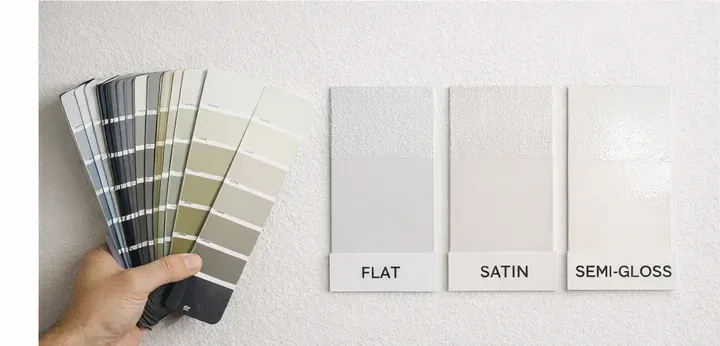
Paint finish, sometimes called sheen level, refers to how much light the dried coating reflects, and it affects durability, washability, and how visible surface imperfections appear once the paint dries. Matte reflects very little light. Low sheen has a soft, subtle reflectivity. Satin sits a step above low sheen. Semi-gloss is noticeably smoother and shinier. Gloss reflects the most light and highlights surface detail the most.
This matters because sheen affects more than appearance. It also affects how easy the surface is to wipe down, how strongly marks show, and how much wall texture or patching becomes visible once the paint dries.
What is a satin paint finish?
A satin paint finish is a mid-sheen coating that sits between low sheen and semi-gloss, with enough light reflection to wipe clean easily but none of the hard shine of gloss. In Australia the satin label mostly appears on enamel trim paints, such as Dulux Aquanamel Satin at roughly $95 to $105 for 4L at Bunnings. For walls, Australian brands like Dulux, Haymes and Taubmans sell low sheen instead, which is the local near-equivalent of what American and British guides call satin or eggshell.
That naming gap trips up plenty of homeowners. If an overseas guide or a colour consultant recommends satin walls, ask for low sheen at the trade counter and you’ll get the finish they mean.
Satin vs matte: which is better?
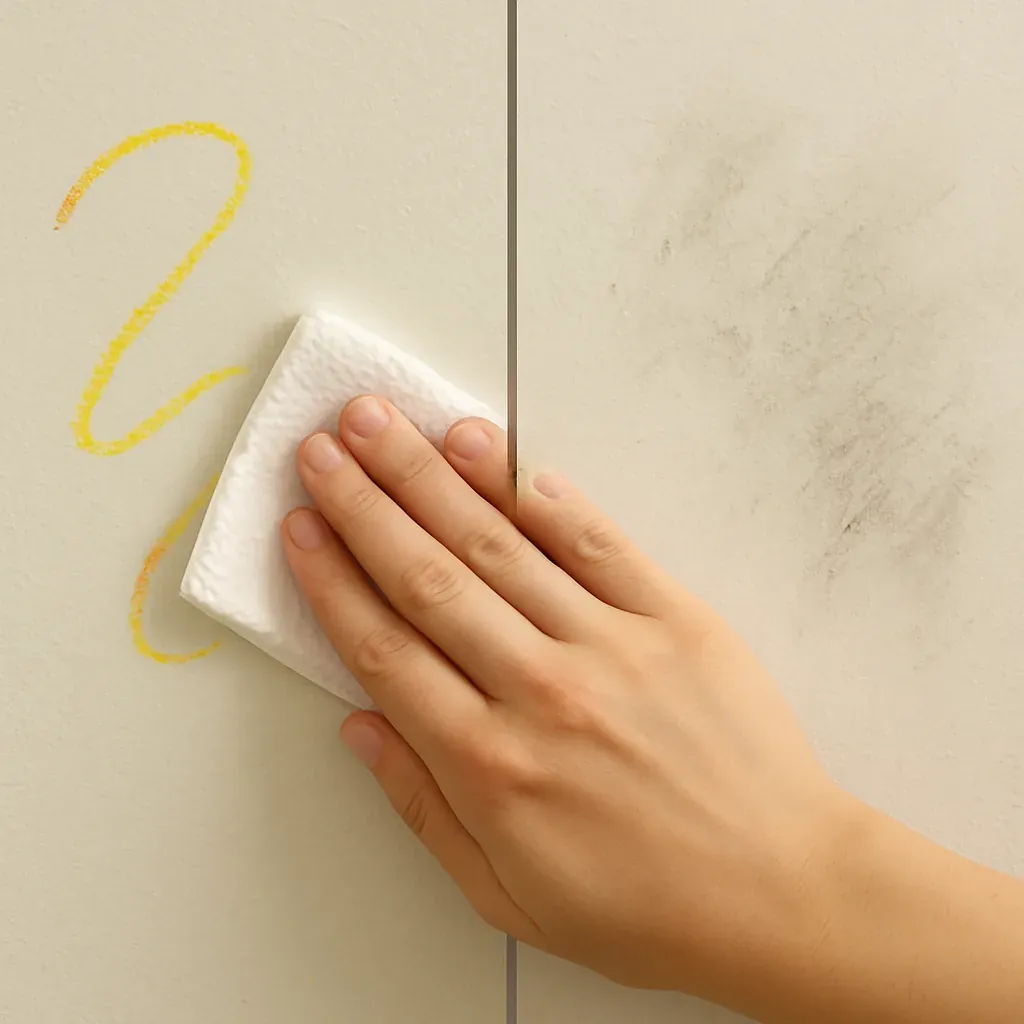
Satin wins on washability, moisture resistance and durability. Matte wins on hiding imperfections and giving a softer, flatter look. For hallways, kitchens, kids’ rooms and any wall that gets wiped down regularly, satin (or low sheen in Australian wall ranges) is the safer choice. For bedrooms, ceilings and the uneven plaster common in older Melbourne weatherboard and brick homes, matte hides patching and surface flaws that satin would highlight.
| Satin | Matte | |
|---|---|---|
| Washability | Good, wipes clean without polishing up | Poor, scrubbing leaves shiny marks |
| Hides imperfections | Moderate | Excellent |
| Moisture resistance | Good | Poor |
| Best rooms | Kitchens, hallways, kids’ rooms | Bedrooms, ceilings, older uneven walls |
Satin versus gloss: what’s the difference?
Satin has a soft, low-key sheen that suits broad wall areas and hides minor flaws. Gloss has a hard, high shine that shows every bump but wipes clean the easiest and wears the hardest. Keep gloss for doors, skirting boards and architraves, where durability matters more than forgiveness. Gloss also demands the most preparation, because every filler line, brush mark and dent shows once light rakes across it. On trim, Dulux Aquanamel Satin and Gloss cost about the same, so the choice comes down to the look you want and how much prep you’re willing to do.
How do matte and low sheen compare for normal walls?
Matte paint finish
Matte is often chosen when the priority is a softer look and better hiding power, making it ideal for bedrooms, formal living areas, and older homes with uneven surfaces. It can help reduce the visibility of minor surface imperfections, patching lines, or uneven older walls. Matte usually works well in bedrooms, formal living areas, ceilings, and older homes where the walls are not perfectly flat.
The downside is that some matte coatings are less forgiving when it comes to repeated cleaning, especially in high-traffic family areas. The Master Painters Association recommends matching the finish to the room’s function and wear level to avoid premature paint deterioration.
Low sheen paint finish
Low sheen is often the most balanced choice for internal walls because it combines a clean, modern look with better durability and washability than flatter finishes. Low sheen usually works well in living rooms, hallways, family rooms, children’s rooms, open-plan areas, kitchens, and laundries.
In practical terms, low sheen is often the safest all-round choice when a homeowner wants one consistent wall finish across most of the property.
According to Dulux Australia, Wash&Wear Low Sheen is the most widely used interior wall paint in the professional painting industry across Victoria, offering a Light Reflectance Value (LRV) that creates a clean, modern look without highlighting surface imperfections the way higher-sheen finishes do.
Key takeaway: Low sheen is the most versatile interior wall finish for Melbourne homes, it combines good washability with imperfection-hiding properties, making it the standard choice for living rooms, hallways, bedrooms, and open-plan areas.
What is the best paint finish for kitchen walls?
In most cases, low sheen is the best paint finish for kitchen walls. Kitchen walls deal with cooking residue, regular wiping and cleaning, hand marks around switches and entries, occasional moisture and condensation, and more daily wear than a standard bedroom wall.
A quality low-sheen wall paint such as Dulux Wash&Wear or a kitchen-specific low-sheen system like Dulux Kitchen & Bathroom is usually the most practical choice. If the kitchen includes painted trims, doors, or cabinetry, those surfaces often perform better in semi-gloss or gloss, see our cost to paint kitchen cabinets in Melbourne guide for pricing.
Key takeaway: Low sheen or a dedicated kitchen-specific paint system like Dulux Wash&Wear Kitchen & Bathroom is the best paint finish for kitchen walls, it withstands cooking residue, condensation, and regular cleaning without deteriorating.
What is the best paint for bathroom walls?
The best paint for bathroom walls is a mould-resistant bathroom formula in semi-gloss, such as Dulux Wash&Wear +Plus Kitchen & Bathroom. Semi-gloss gives the best moisture resistance and wipes clean easily, low sheen works too if you prefer a flatter look. Standard interior wall paint deteriorates in consistently moist conditions, so a dedicated bathroom product is worth it. Bathrooms cope with regular steam and condensation, limited ventilation, more frequent cleaning, and a higher risk of mould or mildew.
The finish matters as much as the product. Semi-gloss sheds water and resists mould better than flatter finishes because there is less texture for moisture and spores to sit in. If your bathroom has good ventilation and you want a softer look, a bathroom-specific low sheen is a reasonable middle ground.
For older Melbourne homes, it is also important to deal with peeling, mould, and ventilation issues before repainting. Painting straight over mould without treating it first is a common mistake, see our guide on how to treat mould before painting for the right process.
Key takeaway: Bathroom walls require a moisture-resistant paint system, standard interior wall paint deteriorates in consistently humid conditions, so always use a dedicated bathroom formulation like Dulux Wash&Wear Kitchen & Bathroom in semi-gloss or low sheen.
What finish is best for trims, doors, and skirting boards?
For trims, doors, architraves, and skirting boards, satin, semi-gloss or gloss enamel is usually the most practical option. These surfaces take more knocks, fingerprints, and cleaning than standard walls. A harder, smoother finish is generally easier to maintain and gives more definition to the trim line. For a deeper look at enamel options for doors and trim, see our door painting Melbourne guide and our water-based vs oil-based enamel verdict.
Which paint finish suits each room?
One line each: low sheen on walls, flat on ceilings, semi-gloss in bathrooms, enamel on trim. The full room-by-room picture:
| Room Type | Recommended Finish | Why |
|---|---|---|
| Living rooms, bedrooms, hallways | Low sheen | Balanced washability and imperfection hiding |
| Ceilings | Flat / matte | Minimises light reflection, hides surface flaws |
| Kitchen walls | Low sheen or kitchen-specific | Resists grease, condensation, and regular cleaning |
| Bathroom walls | Semi-gloss or bathroom-specific | Moisture resistance and mould prevention |
| Doors, skirting, trim | Satin, semi-gloss or gloss | Hard-wearing, easy to clean, crisp definition |
How do the 5 paint finishes compare side by side?
| Finish | Sheen Level | Durability | Washability | Hides Imperfections | Best Use |
|---|---|---|---|---|---|
| Flat / Matte | No sheen | Low | Poor | Excellent | Ceilings, low-traffic bedrooms |
| Low Sheen | Subtle glow | Good | Good | Good | Walls, hallways, living areas |
| Satin | Soft sheen | Good | Good | Moderate | Kitchens, bathrooms, children’s rooms |
| Semi-Gloss | Noticeable shine | Very good | Very good | Low | Trims, doors, wet areas |
| Gloss | High shine | Excellent | Excellent | Very low | Doors, skirting boards, architraves |
Under the ACCC consumer guarantees, paint products must be fit for purpose, choosing the right finish for each room ensures the product performs as intended and lasts its expected lifespan.
Common mistakes when choosing paint finishes
- Using the same finish everywhere without thinking about how each room is used
- Choosing a flatter finish in a high-traffic kitchen or family area
- Using gloss on broad walls where imperfections are visible
- Painting over bathroom moisture problems without fixing ventilation, see our wall preparation guide for the right approach
- Using standard wall paint where a kitchen and bathroom system is more appropriate
The bottom line: low sheen is the most practical wall finish for most Melbourne homes, matte works where softness and hiding power matter, and kitchen or bathroom-specific systems are the safe choice in humid rooms. Match the finish to the room, the wear level, and the condition of the surface before work begins, and the paint performs the way the tin promises.
Rather have a professional handle it?
Free on-site inspection and a fixed-price written quote, no obligation. Painting Melbourne homes since 1987.
Related service: Interior painting.
We paint across Sunshine, Niddrie, Glenroy, Spotswood, St Albans, Maidstone and more, see our painting services in Werribee, or the house painters in Melbourne families have trusted since 1987.