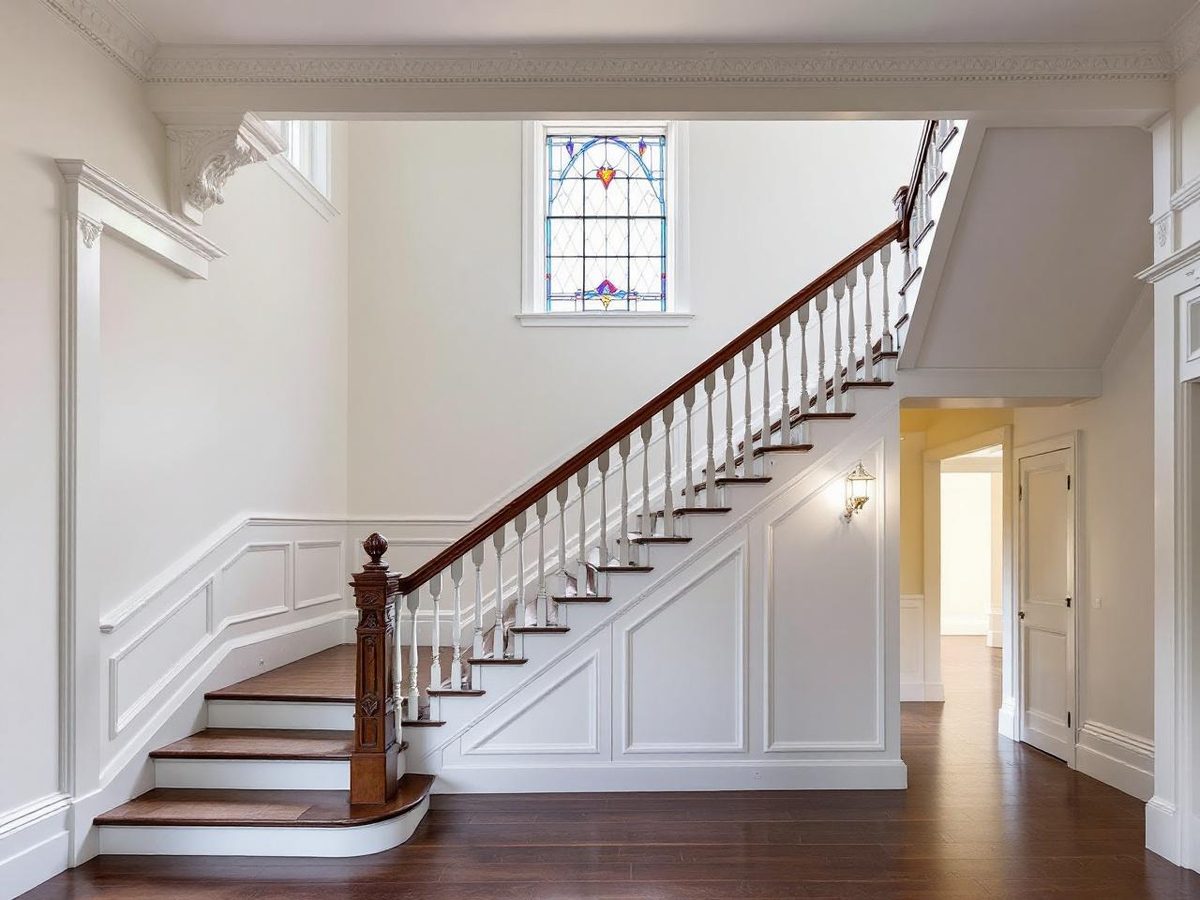
The factors that push a Melbourne house painting quote up the most in 2026 are access (high or raked ceilings and two-storey scaffolding), a dark-to-light colour change, the number of coats, and surface preparation, not the paint brand, which is a comparatively minor line item. According to the Airtasker house painting cost guide, labour and access requirements are the largest variables in any painting quote, far outweighing the choice of paint product.
We’ve been painting Melbourne homes for more than three decades and completed residential projects. This guide breaks down exactly what adds to a house painting cost, with realistic 2026 AUD figures, so you can read a quote properly and understand why two painters can price the same house hundreds, or thousands, of dollars apart. For full price ranges by home type, see our Melbourne house painting cost guide.
What adds the most to a house painting quote?
The biggest cost movers are access (height and scaffolding), colour change, coat count, and surface preparation, paint brand barely registers by comparison.
When homeowners compare quotes, they often fixate on the paint brand. In reality, the brand is one of the smallest variables. The figures that swing a quote by hundreds or thousands of dollars are almost always about labour and access: how high the surfaces are, how many coats are needed, whether scaffolding is required, and how much preparation the surfaces need before a brush touches them.
Here’s a quick reference table of the main cost factors before we work through each one.
| Cost factor | Typical added cost | Why it adds cost |
|---|---|---|
| High / raked ceilings (3m+) | +30–40% to labour | Access equipment plus slower, more careful cutting-in at height |
| Dark-to-light colour change | +$800–$1,500 per job ($100–$400 per room) | Needs a primer/blocking coat plus extra top coats, often 3+ coats |
| Extra coats | +25–40% per additional coat | More paint and more labour time per surface |
| Render crack / surface repair | +$500–$2,000 | Filling, patching and making good before painting |
| Scaffolding (two-storey) | +$500–$2,000 to the quote | Hire and erection of $1,500–$4,000 of scaffold for safe access |
| Lead paint (pre-1970 homes) | Specialist cost, varies | Safe removal/management is a licensed, slower job |
| Heavy prep / failed old paint | Varies with extent | Stripping, sanding and sealing failed surfaces takes time |
Key takeaway: The biggest swings in a Melbourne painting quote come from access (height and scaffold), colour change, coat count, and preparation, not the paint brand. Two honest quotes can differ by thousands purely because of how they handle these factors.
How much do high ceilings add?
High or raked ceilings over 3 metres add roughly 30–40% to labour because of access equipment and slower cutting-in.
A standard Melbourne home has ceilings around 2.4–2.7 metres, which a painter can reach from a small step platform. Once ceilings pass 3 metres, common in renovated Victorians, raked living-room ceilings, double-height entries and stairwell voids, the job changes. The painter now needs trestles, taller platforms or a scaffold tower, and every cut-in line along the cornice has to be done carefully from height. That careful, slower work is where the cost lives.
Importantly, the extra cost is almost entirely labour and equipment, not paint. The wall and ceiling area doesn’t grow much, but the time to paint it safely does. A raked ceiling or a tall stairwell void can easily add 30–40% to the labour component for those specific areas.
“People are surprised that a tall stairwell void can cost more than a whole bedroom to paint. It’s a small surface, but reaching it safely takes scaffold and slow, careful work, and that’s labour, not paint.”, Modernize Solutions, painting Melbourne homes since 1987
How much does a dark-to-light colour change cost?
A dark-to-light colour change typically adds about $800–$1,500 to a job, roughly $100–$400 per room, because it needs a primer or blocking coat plus extra top coats.
This is one of the most underestimated cost drivers. If your walls are currently a deep charcoal, navy or feature-wall red and you want a light grey or white, the dark colour will bleed through a standard two-coat job. To cover it properly, a painter applies a primer or stain-blocking coat first, then the top coats, often three coats in total rather than two.
That extra coat (or coats) adds both paint and labour across every affected room. Across a whole house, a dark-to-light change commonly adds $800–$1,500 to the quote. Going the other way, light walls to a darker colour, is usually cheaper because the new colour covers more easily.
Dulux Australia recommends an undercoat or sealer when making a dramatic colour change to achieve full, even coverage, which is exactly the step that adds to the cost but prevents the old colour ghosting through.
Key takeaway: A dark-to-light colour change adds about $100–$400 per room because it forces an extra primer or blocking coat plus additional top coats. If you’re choosing colours, this is one of the few cost drivers you can control directly.
How much do extra coats add?
Each additional coat adds roughly 25–40% to the paint cost and labour time for the affected surfaces.
Most quality interior work is two coats over a prepared surface. Some situations need a third: covering a dark colour, painting over patchy or repaired plaster, achieving full depth on a strong colour, or sealing a porous new surface. Every extra coat is more paint and another full pass with the brush and roller across every wall, so it adds about 25–40% to both materials and labour for those surfaces.
This is also why “number of coats” should always be written on your quote. A two-coat quote and a three-coat quote on the same house aren’t comparable, and a painter who doesn’t specify coats has left themselves room to apply one thin coat and call it done.
How much does render or surface repair cost?
Repairing render cracks and damaged surfaces before painting commonly adds $500–$2,000 to a Melbourne job.
Paint is only as good as what’s underneath it. Cracked render on an exterior wall, lifting or drummy patches, and damaged plaster inside all need to be cut out, filled, patched and made good before painting, otherwise the new paint simply cracks again along the same lines within a year or two. Depending on the extent, this remedial work commonly adds $500–$2,000 to a quote.
This is a line item that separates honest quotes from cheap ones. A painter who notices render cracks and budgets to repair them properly will look more expensive than one who plans to paint straight over them. The second quote isn’t cheaper, it just defers the cost to you when the paint fails.
How much does water damage or failed old paint add?
Water-damaged surfaces and failed old paint add cost because they need stripping, sealing or repair before any new coat goes on, the amount varies with the extent.
If there’s a water stain on a ceiling, the cause has to be fixed first, the area sealed with a stain blocker, and sometimes the plaster replaced. If old paint is peeling, blistering or flaking, common on older Melbourne exteriors and in bathrooms, it has to be scraped back, sanded and sealed before repainting. Both jobs add labour, and the cost scales with how much of the surface is affected. A single stained ceiling is minor; a whole exterior with widely failed paint is a major prep job.
“We’d rather quote the prep honestly than win the job on a low number and watch the paint fail. Stripping failed paint and fixing water damage isn’t glamorous, but it’s the difference between a finish that lasts ten years and one that peels in twelve months.”, Modernize Solutions
How much does scaffolding add for a two-storey house?
Scaffolding for two-storey access costs $1,500–$4,000 to hire and erect, which adds roughly $500–$2,000 to the overall quote versus a single-storey job.
A single-storey home can usually be painted off ladders and platforms. A two-storey or split-level home, or a home on a steep Melbourne block where one side drops away, often needs scaffolding for the painters to work safely and produce a clean finish on the upper walls, eaves and gables. Scaffold hire and erection typically runs $1,500–$4,000 depending on the size and complexity of the home, which translates to roughly $500–$2,000 added to the overall quote compared with an equivalent single-storey job.
It’s worth understanding this is a safety and quality cost, not a luxury. Working at height off ladders for an entire exterior is slow, risky and produces inconsistent lines. Scaffolding is also why you should never accept an exterior quote that conveniently “forgets” how the upper level will be reached, that omission usually reappears as a variation halfway through the job.
Key takeaway: Scaffolding for a two-storey home adds $500–$2,000 to the quote. If you’re comparing exterior quotes, check that each one actually includes safe access to the upper level, a quote without it isn’t really cheaper.
How much does lead paint add in older homes?
Lead paint in pre-1970 Melbourne homes adds cost because safe removal and management is a specialist, licensed job, the figures depend on the home.
Homes built before 1970 frequently contain lead-based paint in older layers, particularly on exterior weatherboards, window frames and doors. Disturbing it through sanding or stripping releases lead dust, so it must be removed or managed under strict safety controls by trained painters. This adds time, containment and disposal costs to a job. Because the figures depend heavily on the home’s age, condition and how much disturbance is involved, we cover the specifics in a dedicated guide, see our article on lead paint in pre-1970 Melbourne homes for the detail.
The key point here is simply that an older home is a legitimate reason for a higher exterior quote, and a painter who raises lead paint is doing the right thing, not padding the bill.
What other factors push a quote up?
Intricate trim and detail, difficult access, tight timelines and extensive prep all add cost on top of the major drivers.
Beyond the big movers, several smaller factors add up:
- Intricate trim and detail: Ornate Victorian fretwork, lots of windows, panelled doors and decorative cornices all slow down cutting-in and add labour.
- Difficult access: Tight side passages, steep blocks, overhanging gardens and limited parking all make a job slower and more awkward.
- Tight timelines: Needing a job finished by a fixed date (before a settlement, an event or a tenant moving in) can mean extra painters or overtime.
- Heavy prep on failed paint: Already covered above, but worth repeating, extensive stripping and sanding is one of the largest variable costs on older homes.
None of these are “rip-offs.” They’re real labour, and a detailed quote will name them rather than burying them.
Does the paint brand really affect the price much?
No, the paint brand is a minor part of the total cost compared with access, colour change, coat count and preparation.
The difference between premium and budget paint on a typical job is far smaller than the swings caused by scaffolding, high ceilings or heavy prep. Premium paint costs a little more per litre but covers better, lasts longer and often needs fewer coats, which can make it cheaper over the life of the finish. At Modernize Solutions we use Dulux premium paint exclusively, and we’d never recommend chasing a cheaper quote by downgrading the paint. The savings are small and the finish suffers.
Key takeaway: If one quote is dramatically cheaper than another, the paint brand almost never explains the gap. Look instead at coats, prep, access and scaffolding, that’s where the real difference hides.
How do you compare quotes fairly?
Get three written quotes on identical scope, same rooms, same coats, same prep and same access, so you’re comparing like with like.
Because so many factors move the price, the only fair way to compare painters is to have them all quote the exact same scope. Tell each painter the same thing: which rooms and surfaces, what colour change (if any), how many coats you expect, and that you want all prep and access included and itemised. Then the differences in their numbers reflect real differences in approach, not different assumptions.
Consumer Affairs Victoria advises homeowners to get several written quotes that itemise inclusions and exclusions, so you can see exactly what each price covers. Master Painters Australia similarly recommends a detailed on-site assessment and a written quote before any work begins. A single verbal figure tells you nothing about what’s included.
Frequently asked questions
What adds the most to a house painting quote in Melbourne?
The biggest cost drivers are access (high ceilings and two-storey scaffolding), a dark-to-light colour change, the number of coats, and surface preparation, not the paint brand. High or raked ceilings can add 30–40% to labour, scaffolding can add $500–$2,000, and a colour change can add $800–$1,500 to a Melbourne job.
How much does a dark-to-light colour change add to a painting job?
A dark-to-light colour change typically adds about $800–$1,500 to a Melbourne house painting job, or roughly $100–$400 per room. Covering a dark colour with a light one needs a primer or blocking coat plus extra top coats, often three coats in total, which increases both paint cost and labour time.
Do high ceilings cost more to paint?
Yes. Ceilings over 3 metres, raked ceilings, and stairwell voids add roughly 30–40% to labour because they require access equipment like platforms, trestles or scaffold towers, and the cutting-in is slower and more careful at height. The paint volume barely changes, the extra cost is almost entirely labour and equipment.
Does the paint brand make a big difference to the price?
No. The paint brand is a minor part of a quote compared with access, colour change, coat count and prep. At Modernize Solutions we use Dulux premium paint exclusively, and the difference between premium and budget paint is far smaller than the swings caused by scaffolding, high ceilings or heavy surface repairs.
Related service: Interior Painting.
We paint across Brunswick, Essendon, Richmond, Williamstown, Yarraville, Newport and more — see our painting services in Moonee Ponds, or the house painters in Melbourne families have trusted since 1987.