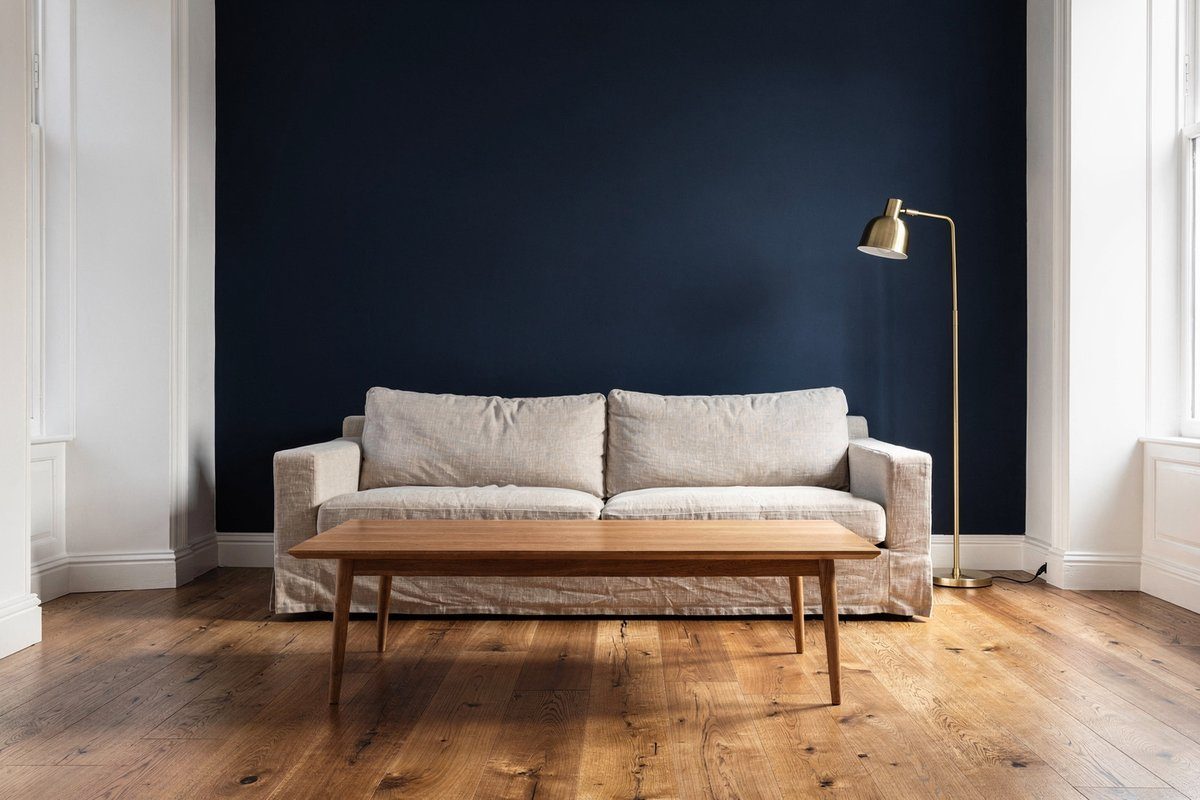
A dark-to-light room colour change in Melbourne typically costs $2,000–$2,500 per room in 2026, roughly double a standard repaint, because it requires 4–5 coats including a tinted primer, compared to the standard two coats. According to Dulux Australia, using a tinted primer as an intermediate step between dark and light colours reduces the number of topcoats needed by up to 40%.
“Using a tinted primer as an intermediate step between dark and light colours is the most effective way to reduce the total number of topcoats needed while achieving true, even colour.”, Dulux Australia, dulux.com.au
A dark feature wall looked great two years ago. But now you want bright, airy rooms that feel spacious. So you pick a light colour, maybe a soft grey, a warm cream, or a pale blue, and you call a painter expecting a straightforward repaint.
Then the painter gives you a quote that’s double what you expected, or says the job will take twice as long, or warns you that covering the dark colour completely is harder than you think. You’re left wondering: what’s the big deal? It’s just paint, right?
Wrong. Going from dark to light is genuinely different from most painting jobs. The dark colour has serious coverage power, and light paint is transparent by comparison. Covering dark walls with light paint isn’t the same as repainting a light room with another light colour.
This guide explains what actually happens when you try to cover a dark colour with a light one, why it costs more, and what you need to do to get a proper finish.
Why doesn’t light paint cover dark colour effectively?
Light paint is more transparent than dark paint, so the dark shows through. You typically need 3-5 coats instead of the standard two.
Light paint is formulated to reflect light, which gives it that bright, airy appearance. But the flip side of that formulation is that it’s more transparent. You can see through it more easily than you can see through a dark paint.
When you apply light paint over a dark colour, the dark shows through. You need multiple coats, often three, four, or even five coats, to fully cover the dark colour with a light finish. If you try to do it in two coats (the standard), you’ll see the dark colour shadowing through, and the result will look blotchy and uneven.
Each additional coat takes time and labour. A standard repaint is typically two coats. A dark-to-light colour change requires double the paint, double the labour hours, and longer drying time between coats.
Key takeaway: Light paint is more transparent than dark paint by formulation, which means dark colours show through light topcoats and typically require 4–5 coats total to achieve full, even coverage.
Why is the primer stage so critical for dark-to-light?
A tinted primer reduces the contrast between dark and light, meaning fewer topcoats are needed and the final colour looks even and true.
Most painters will recommend using a primer before the topcoat, especially when going dark to light. A primer is a base layer that improves adhesion and helps block the underlying colour from showing through.
But not all primers are equal. A standard white primer helps, but a tinted primer is better. If you’re painting over dark navy blue with a light grey, we might use a grey-tinted primer as an intermediate step. It reduces the contrast and means the topcoat doesn’t have to work as hard to cover.
Some painters skip the primer entirely to save time and cost. That’s a shortcut that shows in the final result. Without primer, you’ll either need more coats of the topcoat (which costs more anyway) or you’ll accept a patchy, uneven finish.
We use Dulux primers and tinted primer options, and we apply them properly because it’s the right way to do the job.
Key takeaway: A tinted primer matched to the target colour reduces the contrast between the dark base and the light topcoat, meaning fewer topcoats are needed and the final colour appears even and true to swatch.
How many coats does a dark-to-light colour change actually need?
Expect 4 coats total as a minimum: one tinted primer plus three topcoats. Some high-contrast changes need 5 coats for full coverage.
| Colour change | Contrast level | Primer coats | Topcoats | Total coats | Est. cost per room (2026) |
|---|---|---|---|---|---|
| Dark navy to pale white | Extreme | 1 tinted | 3–4 | 4–5 | $2,200–$2,500 |
| Dark charcoal to light grey | High | 1 tinted | 3 | 4 | $2,000–$2,300 |
| Dark green to soft cream | High | 1 tinted | 3 | 4 | $2,000–$2,300 |
| Medium grey to warm white | Moderate | 1 standard | 2 | 3 | $1,500–$1,800 |
| Dark red/burgundy to pale pink | Extreme | 1 tinted | 3–4 | 4–5 | $2,200–$2,500 |
Here’s what the actual process looks like:
Scenario: Dark navy feature wall, changing to pale grey
- Coat 1 (Primer): A quality tinted primer. The dark colour still shows through, but it’s toned down. Drying time: 4–6 hours.
- Coat 2 (Topcoat): First coat of the pale grey paint. The dark still shows through noticeably. Drying time: 6–8 hours.
- Coat 3 (Topcoat): Second coat of the pale grey. The dark is mostly covered, but depending on the dark colour and the light colour, you might still see some shadowing.
- Coat 4 (Topcoat): Third coat of the pale grey. Now it’s fully covered. The wall is the pale grey you wanted.
So you’re looking at 4 coats total: 1 primer + 3 topcoats. Some situations need 5 coats. We won’t claim it’s done in 3 when it needs 4, just to make the job cheaper.
If it’s an entire room (four walls) painted dark, the volume of paint and labour increases significantly.
How long does drying take between coats?
Allow 6-8 hours between coats minimum. A 4-coat dark-to-light job takes 2-3 days, longer in Melbourne’s cooler or humid conditions.
Each coat needs proper drying time before the next coat goes on. If you rush and apply coats before the previous coat is fully dry, you risk the paint not adhering properly or the colours blending together.
In a dark-to-light scenario, we typically allow 6–8 hours between coats minimum. That extends the timeline. A standard two-coat repaint might be done in a day (one coat in the morning, one in the afternoon, overnight drying). A dark-to-light job with 4 coats takes 2–3 days minimum, more if conditions are cool or humid.
Temperature and humidity affect drying time. If you’re painting in winter in Melbourne (cool, often humid), drying times extend. If you’re painting in summer (warm, dry), it goes faster. We plan our timeline around actual drying conditions, not just “what the paint tin says.”
Does surface preparation matter more for dark-to-light?
Yes. Light colours are less forgiving than dark ones, so every dent, rough patch, and imperfection shows clearly after four coats of paint.
The walls still need to be cleaned, any damage patched, and rough areas sanded smooth. These steps are standard for any repaint.
But here’s the thing: when you’re applying 4 coats of paint, any imperfections in the surface become more obvious. If there’s a dent or rough patch, by the time you’re on coat 4, you can see it clearly in the light colour. With a dark colour, imperfections hide better.
So surface prep is just as important, but the tolerance for imperfection is lower. We take extra care with the prep work on dark-to-light jobs because the finish is less forgiving.
How much does a dark-to-light repaint cost?
A standard room repaint costs around $1,200, but the same room going dark to light costs $2,000-$2,500 due to double the paint and labour hours.
A dark-to-light repaint costs more than a standard repaint. Here’s why:
- More paint: 4 coats instead of 2 means double the paint volume.
- More labour: Double the coats means double the painting time.
- Extended timeline: More coats and longer drying times mean the job takes more days.
A standard single-room repaint (light to light) might cost $1,200. The same room going dark to light might cost $2,000–$2,500. It depends on the room size, the colour contrast, and the quality of the prime work.
Some painters quote dark-to-light jobs at only a slight premium over standard repaints. That usually means they’re cutting corners, using cheaper primers, applying thinner coats, or not allowing proper drying time. You get what you pay for.
We quote dark-to-light jobs based on the actual number of coats required. If it needs 4 coats, we quote for 4. If it needs 5, we quote for 5. We won’t promise a job in 2 coats when it actually needs 4, just to make the price look attractive.
What products should you use for dark-to-light?
Premium Dulux interior paint has more concentrated pigments than budget paint, meaning better coverage per coat and fewer coats needed overall.
The paint you choose matters. A premium paint like Dulux has better coverage than a budget paint. The pigments are more concentrated and more opaque, so fewer coats might do the job. A cheap paint might require an extra coat because the pigment load is lower.
We use Dulux interior paints for all dark-to-light jobs. The finish (low-sheen, satin, semi-gloss) doesn’t change the coverage, but it does affect how the final colour looks. A light colour in a glossy finish looks brighter and more reflective. The same colour in a low-sheen finish looks softer and more understated.
For dark-to-light changes, we usually recommend a low-sheen or satin finish because it looks more modern, and the finish won’t highlight every variation in coverage.
Is it cheaper to paint one feature wall or the whole room?
One feature wall is simpler and cheaper. A full room means all four walls need the same 4-coat treatment, doubling paint volume and labour.
If you’re only painting one feature wall dark-to-light (and the other three walls are staying the original colour), the job is simpler and cheaper. You’re only dealing with one wall.
If you’re painting the entire room from dark to light, all four walls need the same treatment. The paint volume doubles, the labour hours double, and the drying time compounds because you’re working around the whole space.
Also, if the room has a dark ceiling and you want it light, that’s an additional variable. Ceilings are harder to paint than walls (you’re working overhead), and a dark-to-light ceiling takes just as many coats.
How do you get an accurate quote for dark-to-light work?
Show the painter both the current colour and the target colour, specify whether it is one wall or the whole room, and ask how many coats they expect.
When you contact a painter about a dark-to-light colour change, be specific:
- Show them the current colour (bring a paint chip or a photo).
- Show them the target colour you want (bring a paint chip or a photo).
- Tell them whether it’s one wall or the whole room.
- Tell them whether the ceiling needs doing too.
A good painter will assess the colour contrast and tell you realistically how many coats they expect to need. They’ll explain the primer strategy and the drying timeline.
If a painter quotes you a very low price for dark-to-light work, or promises to do it in one day, they’re either inexperienced or cutting corners.
What should you consider before committing to a dark-to-light change?
Light colours need more ongoing maintenance and look different depending on your room’s natural light. Test one wall first before doing all four.
Before you commit to a dark-to-light repaint, think about whether you really want to go that light. Light colours require more ongoing maintenance, they show dust, marks, and fingerprints more easily than darker colours.
Light colours also feel different depending on the room’s natural light. A pale grey in a north-facing room with lots of light looks completely different than the same grey in a south-facing room with minimal light. We can show you how colours look in your actual space before you commit.
If you’re genuinely unsure, you could paint a feature wall (one wall) first. That way you commit to one wall, not four, and you see how the colour actually works in your space and your life. Then if you love it, paint the rest of the room.
Ready to change from dark to light?
We quote based on the actual number of coats required, use Dulux primers and topcoats, and back every job with a workmanship guarantee.
A dark-to-light colour change is achievable and worth doing if you’re committed to the result. It just takes proper planning, realistic timelines, and quality products.
Modernize Solutions has completed hundreds of dark-to-light colour change projects across Melbourne since 1987, with over 1,000 residential painting projects in total. The company carries $20M public liability insurance, maintains a 5.0-star Google rating, uses Dulux Australia premium primers and topcoats exclusively, and backs every dark-to-light job with a workmanship guarantee covering coverage failure, any issue is fixed at no cost. All work meets Master Painters Australia quality standards and complies with ACCC consumer guarantee requirements. Consumer Affairs Victoria recommends obtaining written quotes that specify the number of coats included.
“Homeowners should always confirm the number of coats specified in a painting quote, a dark-to-light colour change quoted at the same price as a standard repaint typically means corners will be cut.”, Master Painters Australia, masterpainters.com.au
Key takeaway: A standard single-room repaint from light to light costs around $1,200 in Melbourne, while the same room going from dark to light costs $2,000–$2,500 due to the additional primer coat, extra topcoats, and extended drying time required.
What are the 4 most common dark-to-light painting mistakes?
Skipping primer, rushing drying time, applying too few coats, and choosing the wrong target colour are the mistakes that ruin dark-to-light results.
- Skipping the tinted primer, without a tinted primer, the dark colour bleeds through light topcoats regardless of how many coats you apply.
- Rushing drying time between coats, applying the next coat before the previous one is fully dry causes adhesion failure and colour blending.
- Applying too few coats, two coats will not cover a dark colour with a light one. The result is patchy, uneven, and visibly shadowed.
- Choosing a target colour that’s too light, very pale whites over very dark bases are the hardest to cover. A slightly warmer or deeper light colour achieves a better result with fewer coats.
Frequently asked questions
How many coats do you need to paint dark walls light?
Expect a minimum of 4 coats total, one tinted primer plus three topcoats. Some high-contrast changes (such as dark navy to pale white) may need 5 coats for full, even coverage. Each additional coat adds drying time and labour.
Why does dark-to-light painting cost more than a standard repaint?
Dark-to-light repaints cost roughly double a standard repaint because they require double the paint volume (4–5 coats versus 2), double the labour hours, and extended drying time between coats. A standard room costs $1,200 to repaint light-to-light, while dark-to-light costs $2,000–$2,500.
Do you need primer when painting dark walls light?
Yes, a tinted primer is essential for dark-to-light colour changes. It reduces the contrast between the dark base and the light topcoat, meaning fewer topcoats are needed and the final colour appears even and true to swatch. Skipping primer usually means needing an extra topcoat anyway.
How long does a dark-to-light room repaint take?
A dark-to-light job takes 2–3 days minimum due to the 4+ coats required and the 6–8 hours of drying time needed between each coat. Melbourne’s cooler or humid conditions can extend drying times further.
Want to plan a dark-to-light room repaint? Call us on 0433 803 841 or visit /contact to book a free colour consultation. We’ll assess your current colour, discuss the target colour, and give you a realistic quote and timeline.
Rather have a professional handle it?
Free on-site inspection and a fixed-price written quote, no obligation. Painting Melbourne homes since 1987.
Related service: Wall Painting
Flawless wall painting for every room in your home, from feature walls to full repaints.
Learn more about our Wall Painting service →Painters in Newport
Painters in Newport 3015. Period weatherboards protected with coastal-rated Dulux, since 1987. $20M insured, 5.0 star reviews, free quotes.
Painting services in Newport →Painters in your area
Right across the city, we are the house painters in Melbourne families have trusted since 1987.

Owner & Lead Painter, Modernize Solutions · Painting Melbourne homes since 1987