For most metal, a chemical paint stripper is the best method: a $30 to $60 tin of metal-safe gel from Bunnings strips a gate or a set of railings without scratching or warping the steel. Use a heat gun on flat doors, a wire wheel or sander on heavy rust, and the boiling water and baking soda trick on small hardware. We strip and repaint metal on Melbourne homes as part of exterior repaints, and the method always depends on the item, not the paint.
This guide covers each method, what it costs, which one suits gates, railings, doors, fences and roofs, and the one check you must do before touching anything painted before 1970.
Key takeaway
Chemical stripper for ornate or multi-layer work, heat gun for flat steel, sanding or wire wheel for rust and big flat areas, boiling water and baking soda for small hardware. Whatever the method, prime bare metal the same day you expose it, and lead test any pre-1970 paint before you start.
Which paint removal method suits which metal item?
Match the method to the item: stripper for detail, heat or abrasion for flat steel, boiling for anything that fits in a pot. Here is the honest verdict by job:
| Item | Best method | Rough cost (DIY) |
|---|---|---|
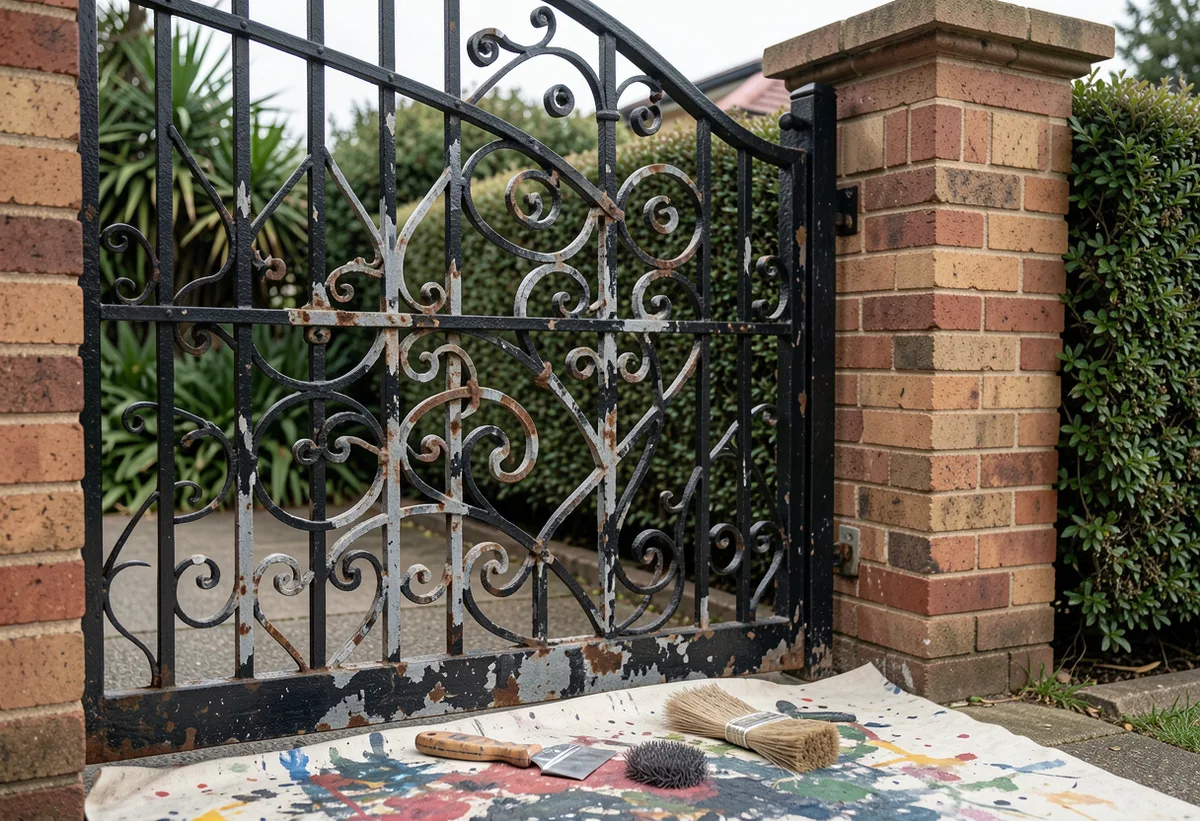
| Wrought iron gate or railings | Gel chemical stripper + wire brush | $30–$60 stripper, $15 brushes |
| Steel door or garage door | Heat gun or orbital sander | $40–$90 heat gun, $30 sanding discs |
| Hinges, knobs, small hardware | Boiling water + baking soda | Under $5 |
| Metal fence, long runs | Wire cup wheel on angle grinder | $15–$30 per wheel |
| Metal roof | Usually none, pressure wash + sand failing spots | Professional job, see below |
| Aluminium windows, brass, copper | Stripper only, no abrasion | $30–$60 stripper |
Soft metals are the trap in that table. Brass, copper and aluminium gouge and scratch under wire wheels and coarse sanding, so on those, chemical stripper is the only safe option.
Before you start: the lead paint check
Any metal painted before 1970 is likely to carry lead in its older layers, and gates, railings and window frames on Melbourne’s period homes are prime candidates. Dry-sanding, grinding or heat-gunning lead paint puts lead dust and fumes into the air and your garden. A lead test kit costs about $30 at any hardware store and takes minutes. If the test is positive, use a chemical stripper (a wet method that keeps dust down), bag the waste, and consider handing the job to a professional lead paint removal service.
How do you use a chemical paint stripper on metal?
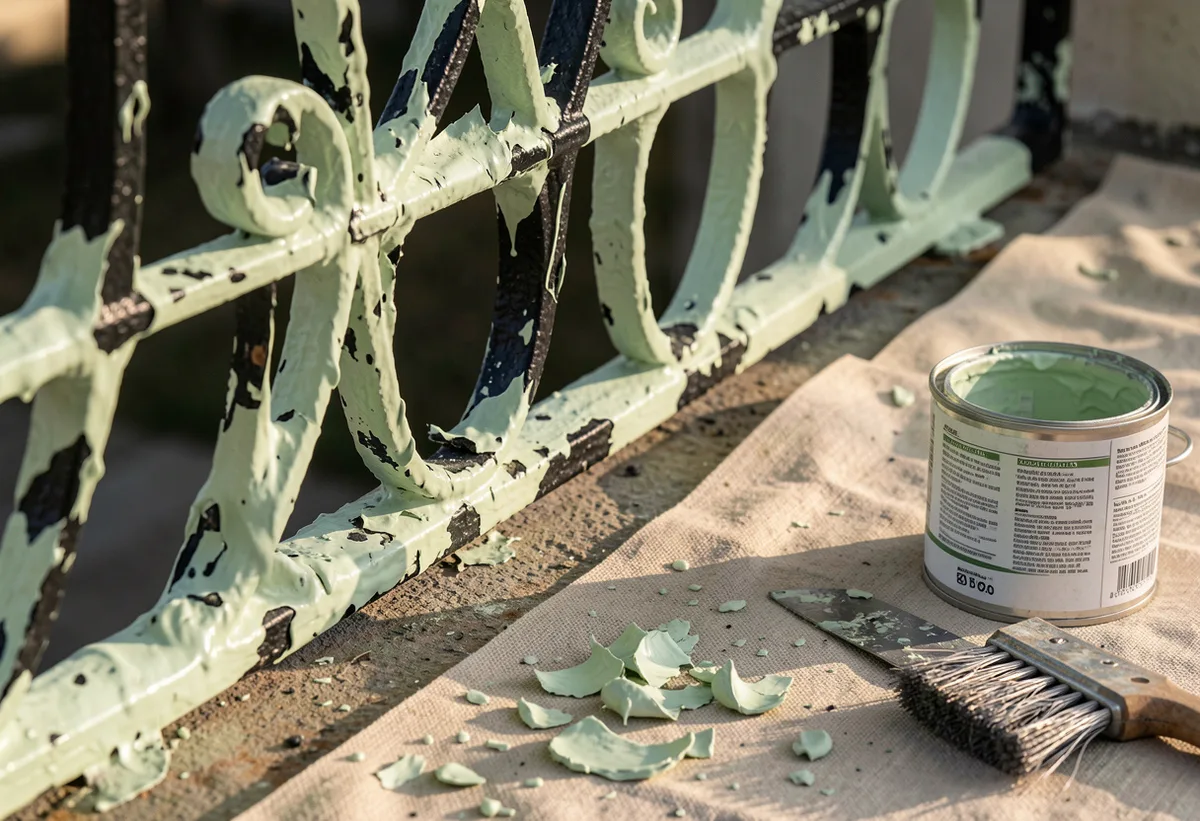
Brush on a thick coat of metal-safe gel stripper, wait 15 to 30 minutes until the paint bubbles and wrinkles, then scrape and wire brush it off. Gel and paste formulas cling to vertical surfaces and scrollwork, which is why they beat liquid strippers on gates and railings.
The full sequence:
- Lay a drop sheet under the work: stripper sludge kills grass and stains concrete.
- Brush the stripper on thick, working in sections about half a metre at a time.
- Wait until the paint visibly blisters. Cold days slow the reaction, so give it longer in winter.
- Scrape the softened paint with a putty knife, then chase the detail and crevices with a stiff wire brush. On brass or aluminium, use a brass or nylon brush so you do not scratch the surface.
- Repeat on stubborn multi-layer patches. Old gates often carry five or more coats and rarely strip in one pass.
- Wash the surface down as the product directs, and let it dry fully before priming.
Wear chemical-resistant gloves and eye protection, and work outdoors or with real ventilation. Modern strippers are less brutal than the old methylene chloride formulas but they still burn skin.
Can you remove paint from metal without chemicals?
Yes, three ways: heat, abrasion, or boiling water, and each has its lane.
- Heat gun. Metal conducts heat well, so paint softens fast. Hold the gun 5 to 8 centimetres off the surface, keep it moving until the paint bubbles, and scrape immediately. Good on flat doors and panels. Two warnings: the metal stays burn-hot well past where you pointed the gun, and heat on lead paint releases toxic fumes, so this method is banned until the lead test comes back clean.
- Sanding and wire wheels. The fastest option on big flat steel and anything rusty. A wire cup wheel on an angle grinder strips a fence panel in minutes; an orbital sander with 80-grit suits doors. Wear eye protection and a dust mask, and keep the grinder off brass, copper, aluminium and thin sheet metal, which it will gouge or warp.
- Boiling water and baking soda. The small-hardware favourite. Simmer hinges, knobs and screws in an old pot with about a quarter cup of baking soda per litre of water for 15 to 30 minutes. The heat difference between metal and paint breaks the bond and the paint peels off in sheets while warm. Costs nothing, works surprisingly well, does not scale past pot-sized items.
WD-40, rubbing alcohol and acetone also shift small fresh splatters and drips: dampen a cloth, rub until the spot dissolves. They will not move an old cured coating.
How do you remove paint from a metal roof?
Usually you do not: failing paint on a metal roof is pressure washed and spot-sanded, not fully stripped. Stripping an entire roof chemically is slow, expensive and hard on everything the runoff touches, so the practical sequence for a chalky or peeling colorbond or galvanised roof is a high-pressure wash to clear loose paint and chalk, hand or machine sanding of the failed patches, a rust converter on any corrosion, then a metal etch primer and two top coats. Roof work also brings height safety rules, and in Victoria anything involving a fall risk over two metres has WorkSafe requirements that make it a professional job rather than a weekend one.
What do you do straight after stripping metal?
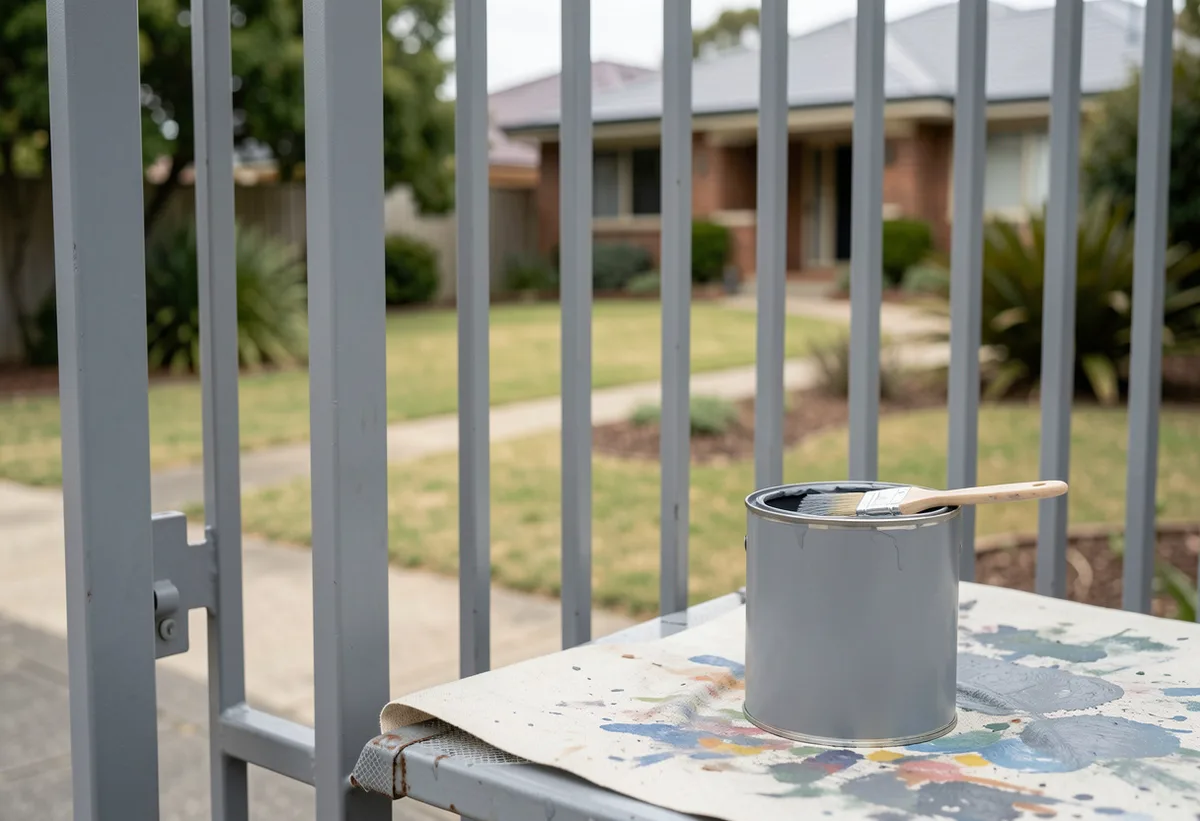
Prime bare metal the same day you expose it. This is the step that separates a strip-and-repaint that lasts from one that bubbles again in a year. Bare steel starts flash-rusting within hours outdoors, faster in humid or coastal air, and paint applied over that invisible rust layer fails early.
The sequence that holds:
- Treat any remaining rust with a rust converter, or sand back to bright metal.
- Wipe the surface down with mineral turps to lift dust and any stripper residue.
- Apply a metal etch primer or rust-inhibiting primer, covering every square centimetre of bare metal.
- Top coat with a proper metal enamel. Two coats of a quality enamel over sound primer is a 10-year system on gates and railings.
If the old paint was mostly sound and you only stripped the failing patches, feather the edges of the remaining paint with sandpaper so the repair does not telegraph through the new coat. Our guide to fixing peeling paint covers feathering in more detail.
Is it worth paying someone to strip and repaint metal?
For a single gate, DIY stripping is a reasonable weekend job. For full fence runs, roofs, or anything with lead, get quotes. Stripping is slow, repetitive work, and the materials are cheap while the labour is not, so professional pricing mostly reflects hours. As a guide, stripping and repainting a standard wrought iron gate and matching fence panels in Melbourne runs a few hundred dollars to around $1,500 depending on size and paint build-up, usually bundled into a wider exterior painting job rather than quoted alone.
We handle metal gates, railings, fences and window frames as part of exterior repaints across Melbourne, with the lead testing, stripping and same-day priming built into the job. The same family has run the crew since 1987, and every job carries $20M public liability.
Rusty gate or peeling railings?
We strip, prime and repaint metal as part of exterior repaints across Melbourne. Free on-site inspection and a fixed written quote, painting since 1987 with $20M public liability.
Removing paint from brick, concrete or tiles instead? The methods change completely by surface: see the full surface-by-surface paint removal guide.
Frequently asked questions
What is the best way to remove paint from metal?
A chemical paint stripper is the most reliable method for most metal: it lifts multiple layers without scratching or warping the surface. A tin of metal-safe gel stripper costs $30 to $60 and does a gate or a set of railings. Use a heat gun for flat steel, sanding or a wire wheel for heavy rust, and boiling water with baking soda for small hardware.
Does vinegar or baking soda remove paint from metal?
Yes, for small items only. Simmer hinges, handles or knobs in water with about a quarter cup of baking soda or vinegar per litre for 15 to 30 minutes and the paint peels off while warm. It costs almost nothing but you cannot boil a gate: anything pot-sized and up needs a stripper.
Will a heat gun remove paint from metal?
Yes, and quickly, because metal conducts heat well. Hold the gun 5 to 8 centimetres off the surface, keep it moving until the paint bubbles, then scrape straight away. The metal stays burn-hot beyond the heated spot, and heat guns are off-limits on pre-1970 paint until it passes a lead test.
How do you remove paint from a metal garage door or fence?
Mechanical methods win on large flat steel: an orbital sander or a wire cup wheel on an angle grinder strips square metres far faster than a stripper. Feather the edges of sound paint, convert any rust, and prime bare steel the same day.
Do you have to remove all the old paint before repainting metal?
No. Sound, well-stuck paint only needs a sand for grip before repainting. Full removal is for coatings failing across the whole surface, paint build-up hiding ornate detail, or rust spreading under the film. Otherwise spot-strip, feather, prime and repaint.
Rather have a professional handle it?
Free on-site inspection and a fixed-price written quote, no obligation. Painting Melbourne homes since 1987.
Related service: House painting in Braybrook.
We paint across Point Cook, North Melbourne, Seddon, Maribyrnong, Sunshine, Niddrie and more, see our painting services in Glenroy, or the house painters in Melbourne families have trusted since 1987.