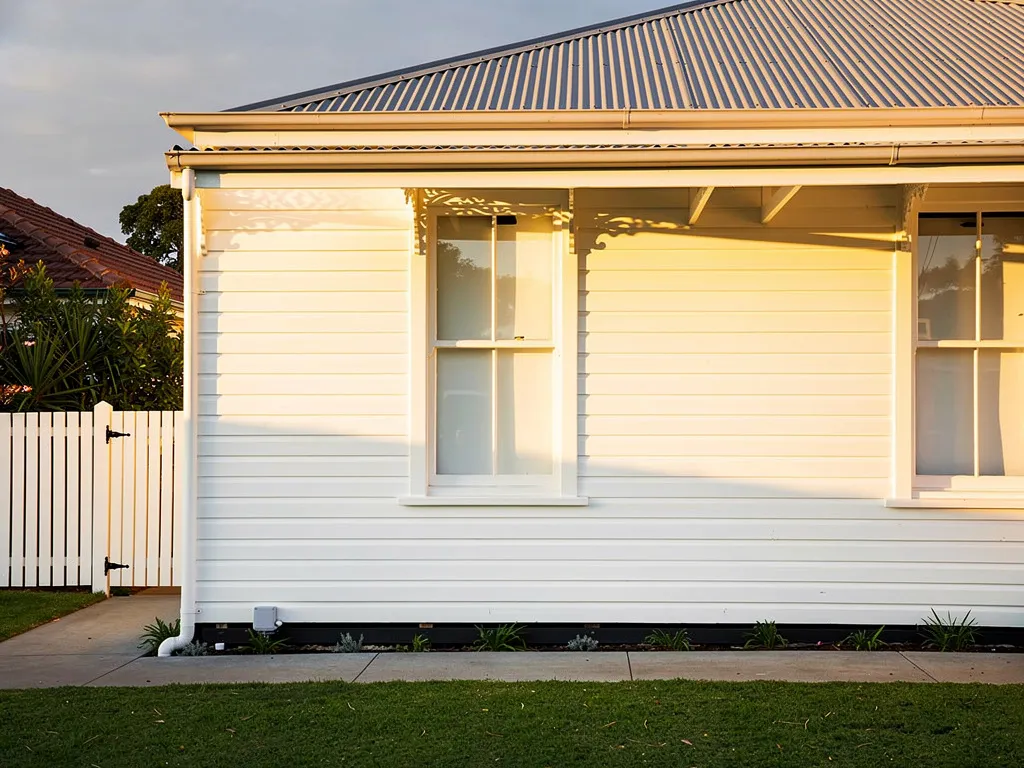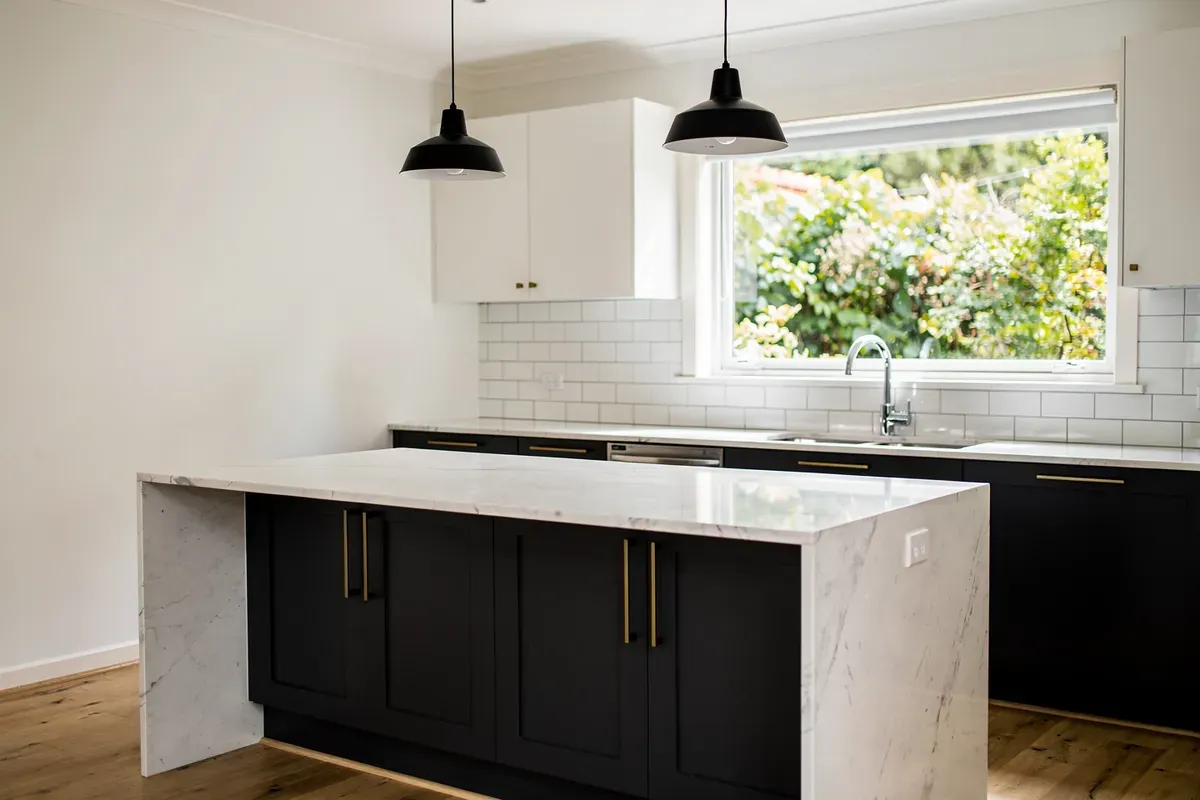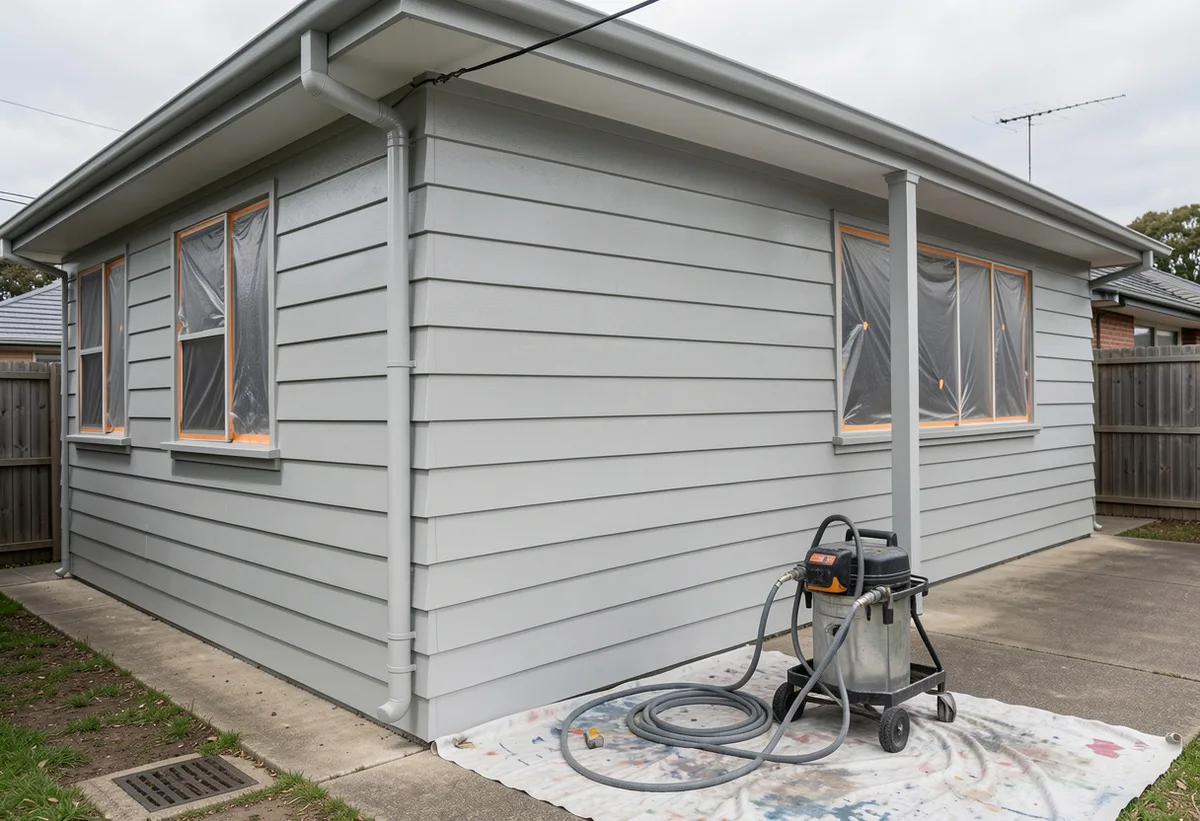
For a whole house, there is no single winner: spray applies paint three to four times faster than a roller, but on most occupied Melbourne homes brush and roller is still the cheaper, cleaner choice. A single-storey weatherboard exterior costs $10,000 to $18,000 to repaint either way, because the time spray saves on application gets eaten by masking, and it uses roughly a third more paint. Spray genuinely wins on empty homes, new builds, ceilings, and rough render. We have painted Melbourne homes since 1987 and use both methods, often on the same job.
Plenty of pages online will tell you spraying is simply better because it is faster and leaves no brush marks. That is true in a paint shed and misleading on a real street. This guide gives you the honest version: where spray wins, where it fails, what each method costs in Melbourne in 2026, and the questions to ask a painter who turns up with a sprayer.
Key takeaway
Spray suits empty homes, new builds, ceilings, and rough exteriors with a proper masking budget. Brush and roller suits occupied homes, windy days, detailed trim, and future touch-ups. On price, the two land within 10 per cent of each other for most occupied Melbourne homes, so choose on the job, not the tool.
Is spray painting better than brush and roller for a house?
Neither method is better across the board: spray is faster and smoother on big open surfaces, while brush and roller is cleaner, safer, and easier to touch up in lived-in homes. The right answer changes room by room and wall by wall, which is why a good painter owns both a sprayer and a full brush kit.
Here is the honest verdict by job type:
| Job | Better method | Why |
|---|---|---|
| New build or vacant home, interior | Spray | Nothing to mask, rooms are bare, speed savings are real |
| Occupied home, interior walls | Brush and roller | Masking furniture, floors and fittings costs more time than spraying saves |
| Ceilings in an empty house | Spray | Fastest way to lay an even coat overhead, no furniture below to protect |
| Weatherboard exterior | Spray plus back-roll, or brush and roller | Paint must be worked into board edges and laps either way |
| Rendered or bagged brick exterior | Spray plus back-roll | Rough texture drinks paint, spraying fills it far faster than rolling alone |
| Windows, doors, trim, fretwork | Brush | Control matters more than speed on detail work |
| Kitchen cabinet doors | Spray, doors off and done flat | Covered in our separate cabinets spray vs brush guide |
Cabinets are their own story. The finish stakes are higher and the doors come off the wall, so the trade-offs are different. If that is your job, read the spray vs brush kitchen cabinets guide instead of applying this page to your kitchen.
Where does spray painting a home genuinely win?
Spray wins wherever the surface is big, the rooms are empty, or the texture is rough: new builds, vacant pre-sale repaints, ceilings, render, and fences. In those settings the sprayer’s speed is not marketing, it is real. An airless unit lays paint three to four times faster than a roller and leaves a smooth, even film with no roller stipple.
The clearest cases we see across Melbourne:
- New builds and vacant homes. Estates around Tarneit, Truganina, and Point Cook are sprayed as standard. Bare rooms, no furniture, taped-off windows, done.
- Ceilings before carpet and furniture arrive. Spraying a ceiling in an empty room is quick and even. Doing the same over a furnished lounge is a masking exercise.
- Rendered and bagged brick exteriors. Rough render soaks up paint. A sprayed coat that is back-rolled into the texture covers in a fraction of the rolling time.
- Exteriors with a proper masking budget. On a calm day, with windows, paths, gardens, and the neighbour’s side properly protected, spraying a full exterior is efficient. The masking is the price of entry, not an optional extra.
- Fences, garage doors, and gutter runs. Long, plain surfaces with easy protection around them.
Where does spray painting fail?
Spray fails in occupied homes, on windy Melbourne days, and anywhere the masking effort outweighs the time saved. These are the three failure modes we see when someone has picked the tool before looking at the job.
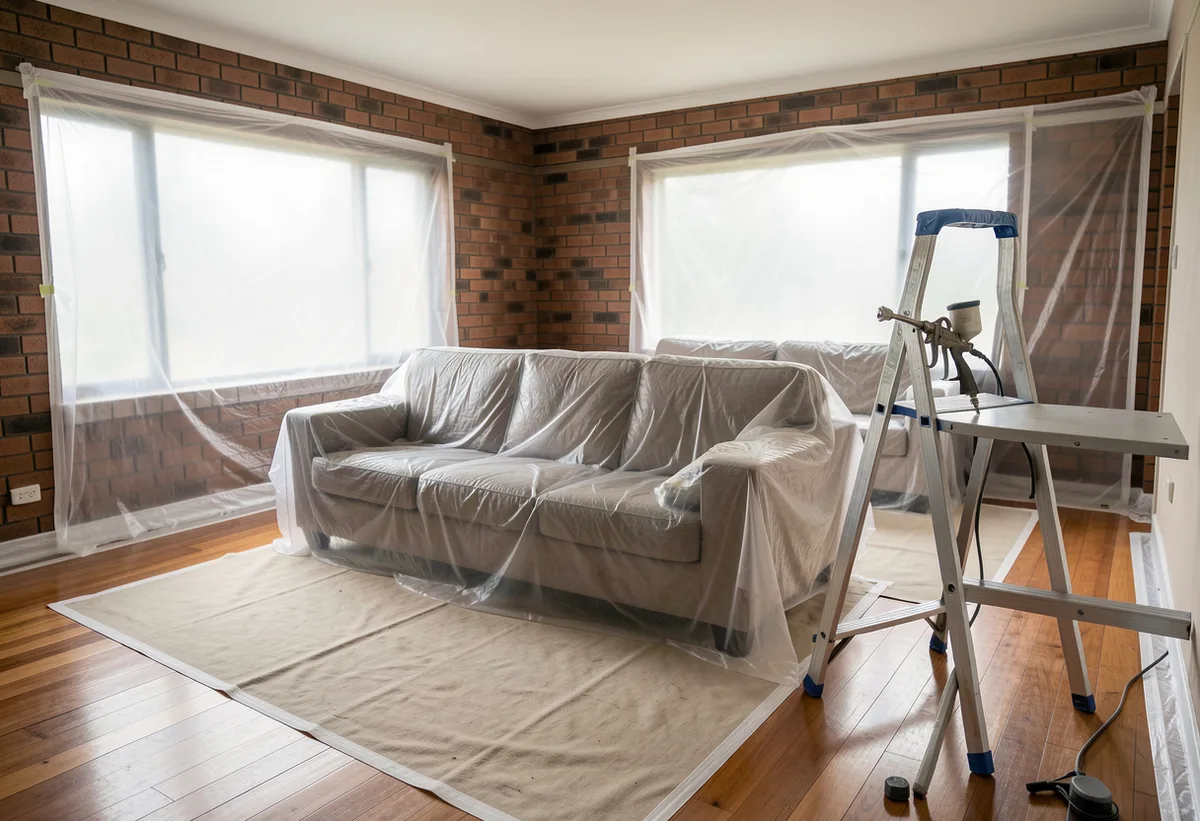
First, the occupied home. Airless overspray is a fine mist, and it settles on everything in the room: floors, benchtops, light fittings, window glass. Protecting a furnished house well enough to spray takes hours of plastic and tape per room. Brush and roller needs a drop sheet and some cutting-in tape, and you can live in the house while it happens.
Second, the weather. Melbourne throws windy days at every season, and spring especially. Wind carries overspray well past the fence line, and a drifting mist onto a neighbour’s car or windows becomes your problem fast. More on that below.
Third, touch-ups. A sprayed film has a slightly different surface texture to a rolled one. Touch up a sprayed wall with a brush in a year’s time and the patch can show in side light. Rolled walls take future touch-ups far more forgivingly, which matters in hallways and kids’ rooms.
What about overspray, wind, and the neighbours?
Overspray drift is the single biggest risk of exterior spraying, and it is the reason professionals stop spraying in winds above roughly 15 km/h. The mist from an airless tip is fine enough to float, and once it lands on glass or car duco it does not wipe off. Removing paint mist from a neighbour’s car is a detailing job, not a rag job.
A careful spray setup on a Melbourne block looks like this: cars moved off the street or covered, windows and meters masked, gardens and paths sheeted, the neighbour on the spray side given a heads-up, and the forecast checked before the compressor starts. On tight inner-west blocks in Footscray, Yarraville, and Seddon, the houses sit close enough that we often brush and roll the boundary wall even when the rest of the house is sprayed.
Insurance is the backstop, not the plan. Any painter spraying exteriors should carry genuine public liability cover and be willing to show the certificate. We carry $20M public liability on every project. If a quote is cheap because the operator is uninsured and spraying on a windy day, the saving is not real.
How much does spray painting a house cost in Melbourne?
For most occupied Melbourne homes, spraying and brush-and-roller land within about 10 per cent of each other, and the quotes often come out identical. The sprayer saves labour on application but spends it on masking, and it pushes through roughly a third more paint. A 10 litre pail of Dulux Weathershield retails around $250 to $330, so the extra material is not trivial on a full exterior.
| Job (2026 Melbourne prices) | Brush and roller | Spray | Honest note |
|---|---|---|---|
| 3-bed interior, occupied | $6,000–$11,000 | Same or more | Masking a furnished home erases the spray saving |
| 3-bed interior, vacant or new build | $6,000–$11,000 | 10–20% less | Empty rooms are where spray savings are real |
| Weatherboard exterior, single storey | $10,000–$18,000 | $10,000–$18,000 | Masking plus back-rolling absorbs the speed gain |
| Rendered exterior | $6,000–$12,000 | Lower end of that range | Rough texture is where spray beats the roller clearly |
| Ceilings only, empty house | Standard rates | Noticeably cheaper | Fast overhead coverage, nothing below to protect |
Be wary of a quote pitched well below these ranges because “we spray, so it’s cheaper”. On an occupied house that discount usually comes from somewhere: thin single coats, skipped prep, or minimal masking. Our guide to house painting costs in Melbourne breaks down what a fair quote includes line by line.
Can you spray paint interior walls in an occupied home?
You can spray interior walls in a furnished home, but the masking work almost always makes brush and roller the faster, cheaper option. This surprises people, because spraying sounds quicker by definition. The application is quicker. The job is not.
To spray one furnished living room properly you empty or centre-stack the furniture, sheet it in plastic, mask the windows, doors, floor edges, power points, and light fittings, and seal the doorways so mist does not drift into the rest of the house. That is two to three hours of protection for twenty minutes of spraying. A painter with a roller and a steady cutting-in hand is finished before the masking crew would be.
Where interior spraying earns its keep is vacant property: pre-sale repaints, end-of-lease refreshes, and new builds. Bare rooms flip the maths completely, which is why builders spray and repaint crews in occupied homes mostly roll.
Does sprayed paint last as long as brushed and rolled paint?
Yes. Durability comes from preparation and film thickness, not from the applicator, so a properly sprayed coat lasts as long as a properly rolled one. The qualifier matters, because the common spray shortcut is a coat that is too thin and never worked into the surface.
The fix is back-rolling, and it is the standard on quality exterior spray work. One painter sprays a wet coat, a second follows immediately with a roller, pushing the paint into weatherboard laps, render texture, and brick pores. You get the speed and evenness of spray with the mechanical grip of rolling. On weatherboards especially, paint that just sits on the surface instead of being worked in is the paint that peels first, something we cover in the weatherboard repainting guide.
Product matters more than method. Two coats of Dulux Weathershield, Haymes Solashield, or Taubmans All Weather over sound, primed surfaces is a 10 to 15 year exterior system however it is applied. One thin sprayed coat of anything is a five-year paint job wearing a fresh face.
Key takeaway: ask any painter quoting a sprayed exterior two questions. Do you back-roll, and how many coats. The answers you want are yes, and two.
Do professional painters spray or brush a house?
Most experienced crews use both on the same job: spray for the big open surfaces where it is safe and efficient, brush and roller for trim, tight boundaries, and occupied rooms. The tool comes off the truck to suit the wall in front of it, not the other way around.
That is how we run jobs across Melbourne’s west and inner suburbs. A rendered exterior in Point Cook gets sprayed and back-rolled on a calm morning. A furnished Edwardian in Yarraville gets brushed and rolled because the neighbour’s weatherboards are two metres away. Ceilings in an empty pre-sale house get sprayed before the carpet goes in. Window sashes and fretwork get a brush every time.
If you are weighing up a DIY spray, hire units run roughly $100 to $200 a day from Melbourne hire shops, and the machine is the easy part. Tip selection, pressure, keeping a wet edge, and masking discipline are where first-timers come unstuck, and overspray mistakes are expensive. For one room, a roller is the safer bet. For a whole exterior, get quotes before committing a long weekend, our exterior painting service page covers how we approach the full job.
Not sure if your house suits spray or brush?
We quote the method that suits your home, not the one that suits us. Free on-site inspection and a fixed written quote, painting Melbourne homes since 1987 with $20M public liability.
See how we handle full exteriors on our exterior painting service page, or our wider work as house painters in Melbourne.
Frequently asked questions
Is it better to spray paint or brush paint a house?
It depends on the house, not the tool. Spray wins on empty homes, new builds, ceilings before furniture arrives, and rough exteriors like render, because an airless sprayer applies paint three to four times faster than a roller. Brush and roller wins in occupied homes, on detailed trim, and on windy days. Most professional Melbourne painters use both on the one job.
How much does it cost to spray paint a house in Melbourne?
Roughly the same as brush and roller for most occupied homes. A single-storey weatherboard exterior repaint costs $10,000 to $18,000 in Melbourne either way, because spraying saves application time but adds masking time and uses around a third more paint. The real savings appear on empty properties, where a sprayed interior can come in 10 to 20 per cent under a rolled one.
Can you spray paint interior walls in an occupied home?
You can, but it is rarely worth it. Every window, floor, benchtop, light fitting, and piece of furniture has to be masked or removed, because airless overspray settles on everything in the room. In an occupied home that masking usually takes longer than the spraying saves. Spraying interior walls makes sense in empty homes, new builds, and pre-sale repaints.
Does spray painting last as long as brush painting?
Yes, when it is done properly. Durability comes from surface preparation and film thickness, not the applicator. The trap with spraying is a coat applied too thin and never worked into the surface, which is why professionals back-roll sprayed exteriors. A sprayed and back-rolled coat of Dulux Weathershield lasts as long as a brushed one.
Can spray painting damage my neighbour’s property?
Overspray drift is the biggest real risk of exterior spraying. Fine mist can carry over a fence line on a windy day and settle on a neighbour’s car, windows, or washing, and it is slow and costly to remove from glass and duco. Exterior spraying should stop in winds above roughly 15 km/h, and your painter should carry genuine public liability insurance. We carry $20M public liability on every job.
Rather have a professional handle it?
Free on-site inspection and a fixed-price written quote, no obligation. Painting Melbourne homes since 1987.
Related service: House painting in Braybrook.
We paint across West Melbourne, Parkville, Flemington, Kingsville, Strathmore, Aberfeldie and more, see our painting services in Craigieburn, or the house painters in Melbourne families have trusted since 1987.