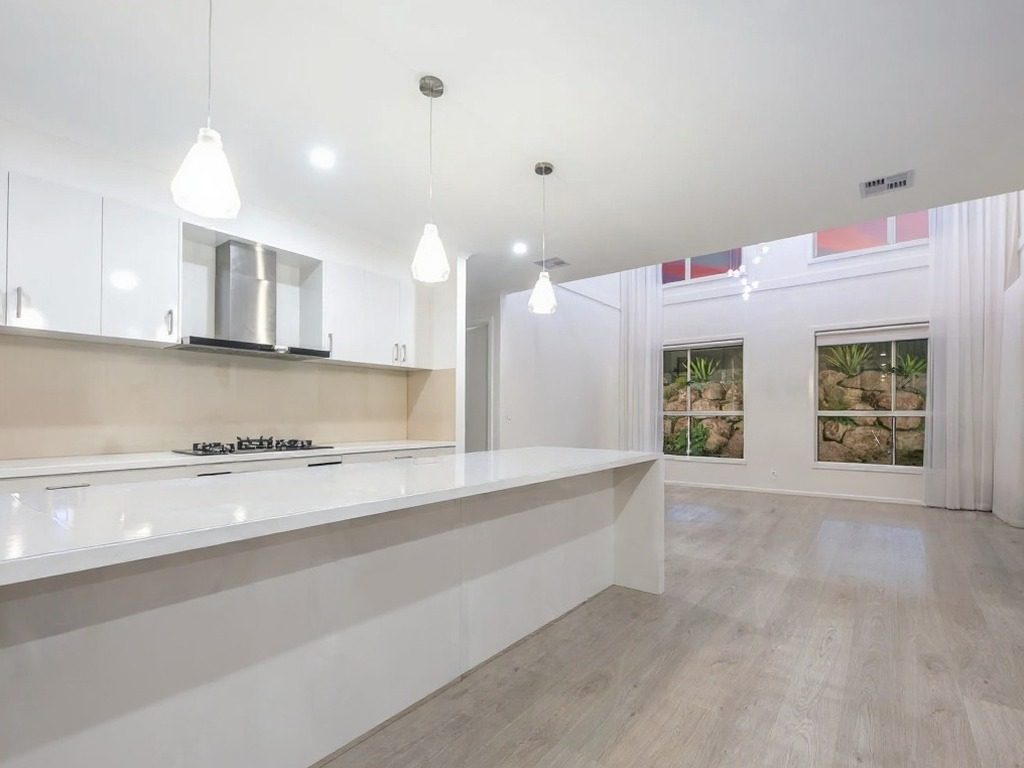
For kitchen cabinets, spraying gives the smoother, more factory-like finish, while brush-and-roll is far less hassle to set up and easier to touch up later. Professionals usually do both on the one job: they take the doors off and spray them flat in a controlled area, then brush and roll the fixed frames that stay on the wall. Spraying wins on finish quality, brushing wins on convenience and small repairs, and the right choice comes down to who is doing the work and how much disruption you can live with.
Kitchen cabinets are the hardest-working painted surface in the house. They get opened, wiped, knocked, and splashed every day, so the finish matters more here than on a wall. This guide covers how spray and brush-and-roll actually compare on finish, durability, mess, and cost, what we use on Melbourne kitchens, and the DIY traps that turn a weekend job into a redo.
Thinking about repainting your kitchen cabinets?
Free on-site inspection and a fixed-price written quote, no obligation. Painting Melbourne's west and inner suburbs since 1987.
Which gives the better finish, spray or brush?
The short answer: spray gives the smoother, more even finish on cabinet doors. A sprayer lays paint down as a fine, consistent film with no brush lines or roller stipple, which is exactly what makes a repainted door look like it came from a factory rather than a hand. On a flat or shaker-style door, that difference is easy to see in side light.
Brush-and-roll can still look very good in the right hands. A skilled painter using a quality cabinet enamel and a fine foam roller, tipping off with a soft brush, gets a tight, near-smooth finish. The grain of a roller is much finer than people expect once the right products are used.
The honest difference is in the last 10 per cent. Up close, in raking light, a sprayed door has an edge on glassiness and evenness. On the fixed frames and panels that stay on the wall, brushing is the practical choice anyway, so most quality kitchens end up as a sensible mix of both.
Which finish lasts longer on kitchen cabinets?
The short answer: durability comes from the paint system and the preparation, not from whether it was sprayed or brushed. A sprayed door and a brushed door using the same cabinet enamel over the same primer will wear at much the same rate. The application method changes how it looks, not how hard it is.
What actually drives durability is three things. First, the surface prep: cabinets must be degreased properly and sanded so the primer can grip, because kitchen surfaces carry years of cooking oil. Second, the right primer for the surface, since timber, laminate, and melamine each need a different bonding primer. Third, a hard cabinet and trim enamel rather than soft wall paint.
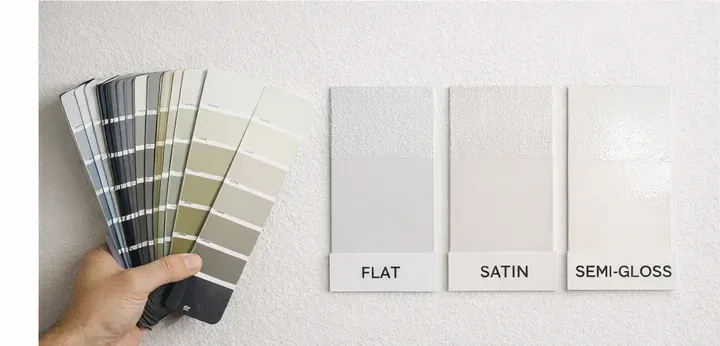
Get those three right and the finish handles daily wiping and knocks for years. Get them wrong, and it does not matter how it went on. We cover finish choice for kitchens in more detail in our guide to the best paint finish for kitchens and bathrooms.
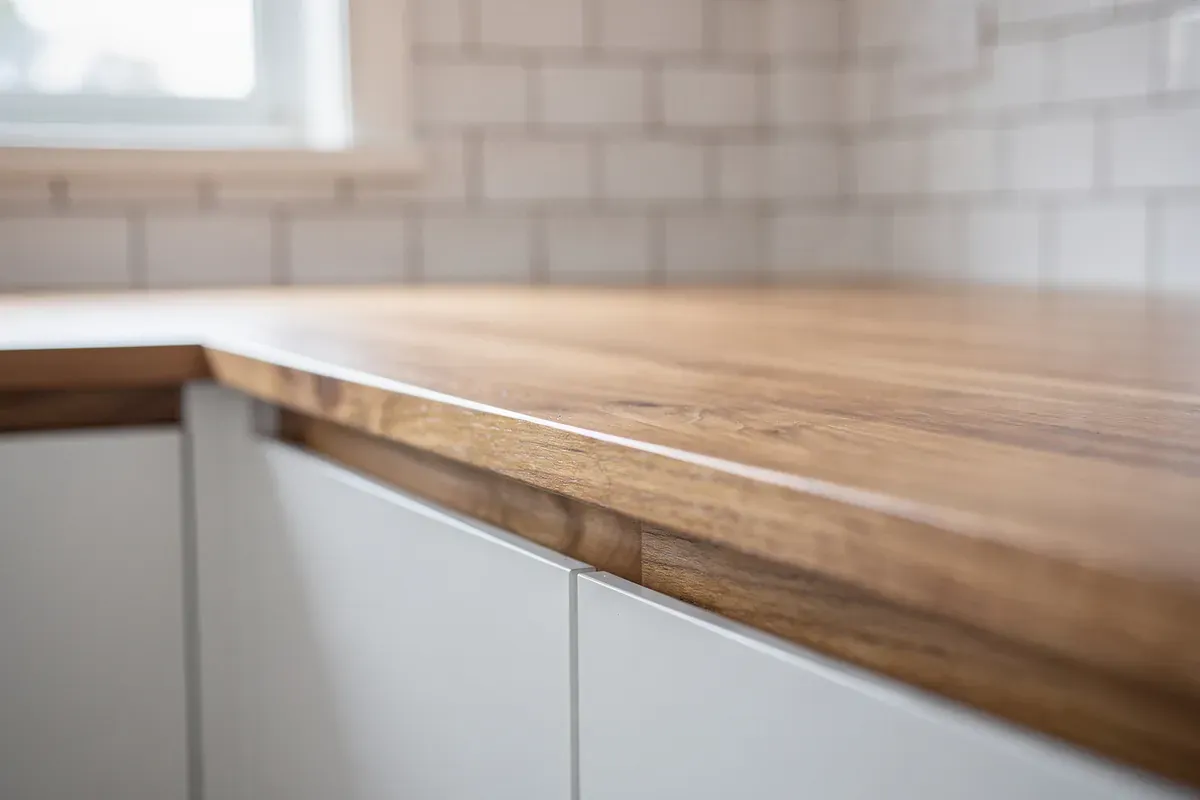
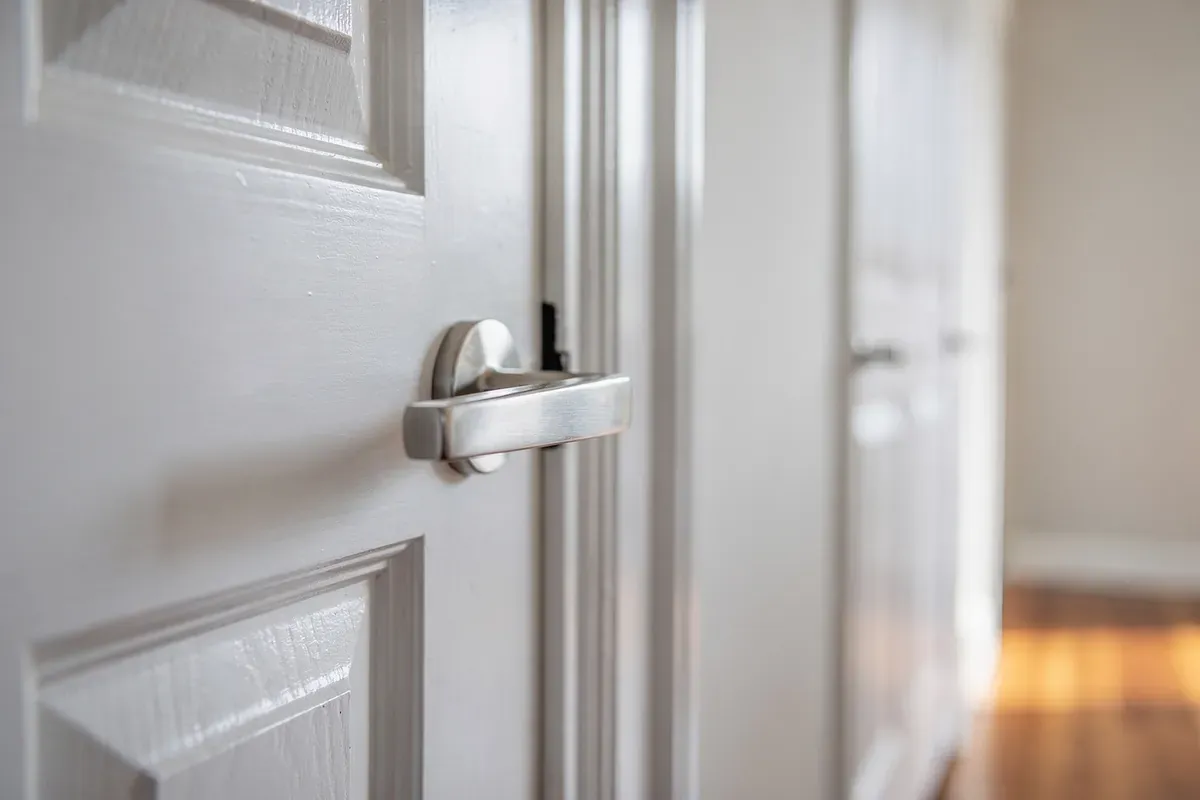
Painted cabinet fronts up close. The smoothness comes from prep and product as much as the method.
How much mess and masking does each method need?
The short answer: spraying needs far more setup and containment, brushing needs almost none. This is the trade-off people underestimate. Overspray is fine paint mist that drifts and settles on anything nearby, so spraying in a live kitchen means heavy masking of benchtops, splashbacks, appliances, floors, and often whole doorways.
That is why professionals take the doors and drawer fronts off and spray them flat in a separate, controlled area, well away from the kitchen. The doors get labelled, sprayed, left to cure, and rehung. The fixed frames are then cut in by hand because masking a whole kitchen to spray frames in place is rarely worth it.
Brush-and-roll is the tidy option for work that stays in the room. There is no mist, masking is limited to the edges you are cutting against, and you can work around a kitchen that is still in use. For a homeowner who cannot empty the kitchen, that matters.
What does spray vs brush cost for cabinets in Melbourne?
The short answer: spraying usually costs a little more in labour because of the extra setup, masking, door removal, and rehanging, even though the spraying itself is fast. Brush-and-roll has lower setup but slower application, so the two often land closer than people assume.
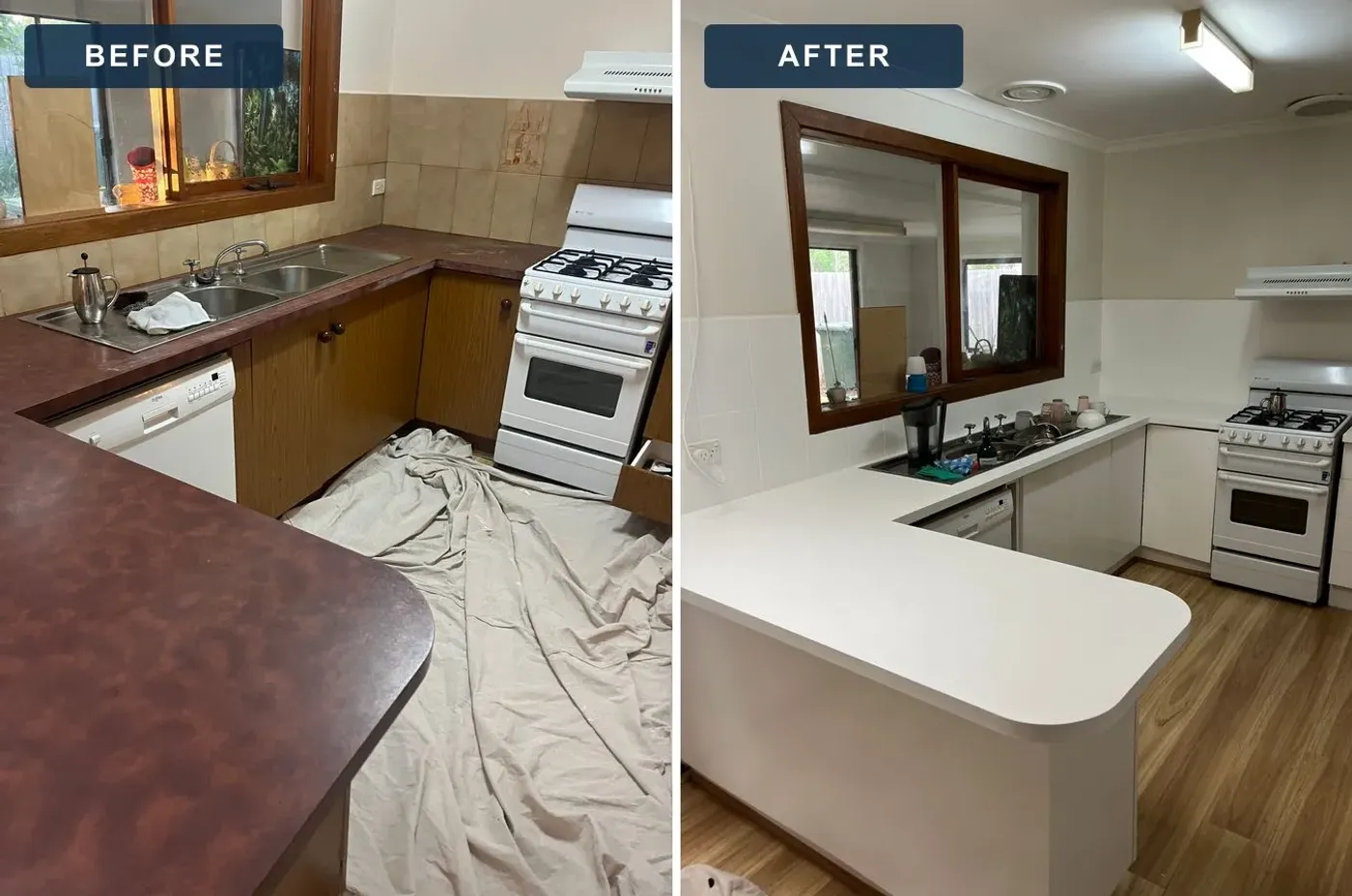
A cabinet repaint is still far cheaper than a new kitchen, which is the comparison that matters most. If the doors and carcasses are sound and only the colour or finish is dated, a repaint is one of the better-value updates in a Melbourne home. The price depends on door count, the surface (timber, laminate, or melamine), and how much prep the cabinets need.
For whole-home context on how trim and cabinet work fits into a wider budget, see our Melbourne house painting cost guide. Cabinets and doors fall under detailed trim work, which we explain on our door and trim painting service page. The only honest way to price your kitchen is an on-site look, because two kitchens with the same door count can need very different prep.
What do professional painters actually use on kitchens?
The short answer: most pros spray the doors and drawer fronts and brush-and-roll the fixed frames, using a hard cabinet enamel over a surface-specific bonding primer. It is the combination that delivers the best finish where it shows and the least disruption where it does not.
Our process on a kitchen repaint runs in a clear order:
- Remove and label every door and drawer front, and take off handles and hinges.
- Degrease all surfaces to lift cooking oils, then sand for adhesion.
- Prime with a bonding primer matched to the surface (timber, laminate, or melamine each get a different primer).
- Spray the doors flat in a controlled area with a Dulux enamel system, in light, even coats.
- Brush and roll the frames in place, cutting in cleanly against walls and benchtops.
- Cure, then rehang the doors and refit the hardware once the finish has hardened.
We use Dulux systems on every project, with no budget substitutes, because cabinet enamels are built to resist the chipping and wiping a kitchen dishes out. The method is chosen per surface, but the paint quality is constant.
What are the common DIY pitfalls with cabinets?
The short answer: the failures almost always come from prep and product, not from the brush or sprayer itself. Cabinets are unforgiving because they get handled constantly, so any shortcut shows up fast as peeling, chipping, or marks that will not wipe off.
The traps we see most often:
- Skipping the degrease and sand. Kitchen oil and a glossy factory finish stop paint bonding. Without proper prep, even good paint peels at the edges within months.
- Using wall paint instead of cabinet enamel. Wall paint stays soft, marks easily, and never hardens enough for a surface that gets touched all day.
- The wrong primer for the surface. Laminate and melamine need a bonding primer made to grip non-porous surfaces. A standard timber primer will let go.
- Rushing recoat and cure times. Enamel keeps hardening for two to three weeks. Stacking coats too fast, or putting the kitchen back to full use too early, leaves the finish soft and easy to mark.
- Underestimating overspray. First-time sprayers are shocked how far the mist travels. Without serious masking, it lands on benchtops, splashbacks, and floors.
If you are set on DIY and have never sprayed, a careful brush-and-roll with a proper cabinet enamel is the safer route. A good roller choice matters here, which we cover in our guide to choosing the right paint roller. When the kitchen is the centrepiece of a sale or a renovation, it is usually worth getting the finish right the first time rather than redoing it. For more on door and cabinet work specifically, see our guide to door painting in Melbourne.
Frequently asked questions
Is spray painting really better than brushing for kitchen cabinets?
For the finish itself, yes. Spraying lays an even film with no brush marks, which is what makes a door look factory-made. The trade-off is setup: doors off, a masked or separate spray area, and a sprayer the operator can control. A skilled brush-and-roll with a quality enamel and foam roller gets close, but a sprayed door is still smoother.
Do professional painters spray or brush kitchen cabinets?
Most pros do both. The doors and drawer fronts come off and get sprayed flat in a controlled space, then go back on once cured. The fixed frames and kickboards that stay on the wall are brushed and rolled by hand, because masking and spraying a live kitchen is more trouble than it is worth.
Can I spray paint my own kitchen cabinets?
You can, but it is harder than it looks. The usual DIY traps are skipping the degrease and sand, using wall paint instead of a cabinet enamel, rushing the recoat times, and underestimating how far overspray travels. If you have never used a sprayer, a brush-and-roll job with a proper enamel is the safer route.
What kind of paint is best for kitchen cabinets?
A purpose-made cabinet and trim enamel, not wall paint. Cabinets get touched and wiped constantly, so they need a hard, washable finish over a bonding primer suited to the surface. We use Dulux enamel systems made for doors and trim. Standard wall paint stays soft, marks easily, and peels off cabinet surfaces.
How long does a sprayed cabinet finish take to cure?
It is touch dry in a few hours, but full cure takes two to three weeks as the enamel keeps hardening. Handle doors gently when rehanging, avoid heavy cleaning for a couple of weeks, and let the finish reach full hardness before normal use. Rushing this is how a fresh finish picks up marks.
Is it worth painting kitchen cabinets instead of replacing them?
In most cases, yes. If the carcasses and doors are sound and only the colour or finish is dated, a quality repaint costs a fraction of a new kitchen and is done in days. Replacement only makes sense when doors are damaged, water-swollen, or the layout needs changing.
Rather have a professional handle it?
Free on-site inspection and a fixed-price written quote, no obligation. Painting Melbourne homes since 1987.
Related service: Door & Trim Painting
Add the finishing touches with crisp door and trim painting.
Learn more about our Door & Trim Painting service →Painters in Sunshine
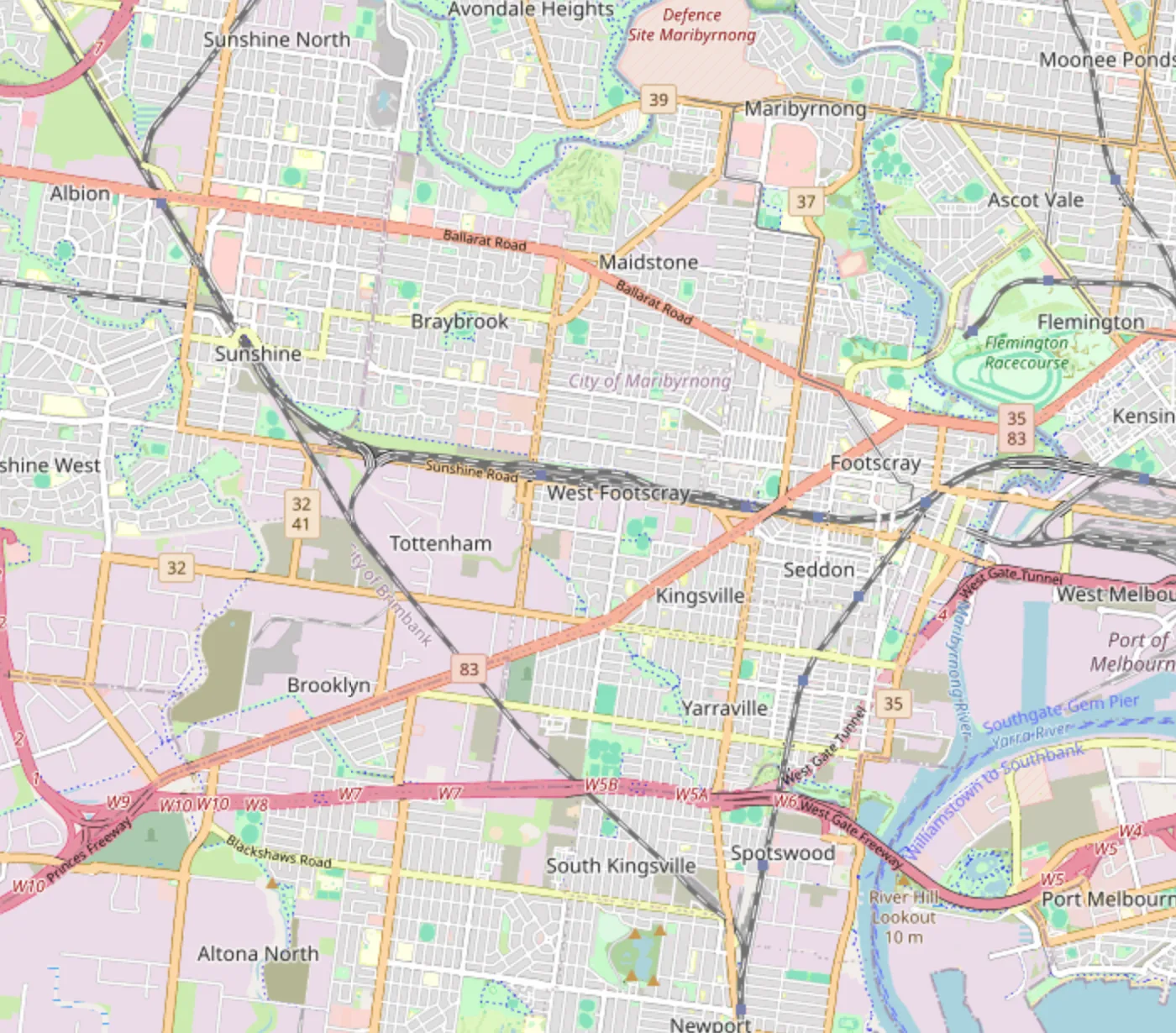
House painters across Sunshine and Sunshine West, VIC 3020. Post-war brick veneer and weatherboard specialists since 1987. Dulux paints, free quotes.
Painting services in Sunshine →Painters in your area
Right across the city, we are the house painters in Melbourne families have trusted since 1987.

Owner & Lead Painter, Modernize Solutions · Painting Melbourne homes since 1987