Exterior house painting ideas fall into four practical groups: two-tone schemes that split a dark body from a light trim, monochrome schemes that keep body and trim close in tone, heritage-accurate palettes for Victorian and Edwardian homes, and single feature elements like a painted front door. The right choice depends on your cladding, your street, and Melbourne’s UV, not just what looks good in a photo.
Most homeowners start an exterior repaint by scrolling colour photos, then get stuck translating a Pinterest board into a scheme that actually suits a Melbourne weatherboard or a 1970s brick veneer. A colour that reads beautifully on a rendered Queenslander does nothing for a double-brick home in Coburg. This guide runs through the exterior ideas that genuinely work here, sorted by cladding type, with the trade-offs most colour boards leave out. For the specific colour names trending in 2026, see our popular paint colours guide; for the step-by-step method of testing and choosing a colour, see how to choose paint colours.
Exterior house painting ideas: quick answer
The exterior schemes that work best on Melbourne homes are a dark body with a light trim on weatherboard, a light or natural-toned body with a dark roofline trim on render, a trim-only repaint on brick to protect the mortar without committing to full masonry paint, and heritage-accurate palettes with a contrasting lacework colour on Victorian and Edwardian homes. Beyond the base scheme, a painted front door is the easiest way to add a genuine feature without repainting the whole facade.
Key takeaway
Match the idea to the cladding first, then the colour. A two-tone charcoal-and-white scheme that looks sharp on weatherboard can look flat on render, and a full-colour repaint on brick is a one-way decision that's expensive to undo. Pick the scheme that suits your home's surface before you pick the shade.
What exterior colour approach suits your cladding type?
Weatherboard suits a two-tone split, brick usually suits leaving the brick alone and repainting trim only, render suits a single body colour with a contrasting roofline, and heritage homes suit an accurate period palette rather than a modern trend colour. Each cladding type reflects light and shows a colour scheme differently, so the same idea can look completely different from one house to the next.
Weatherboard: two-tone is the classic Melbourne look
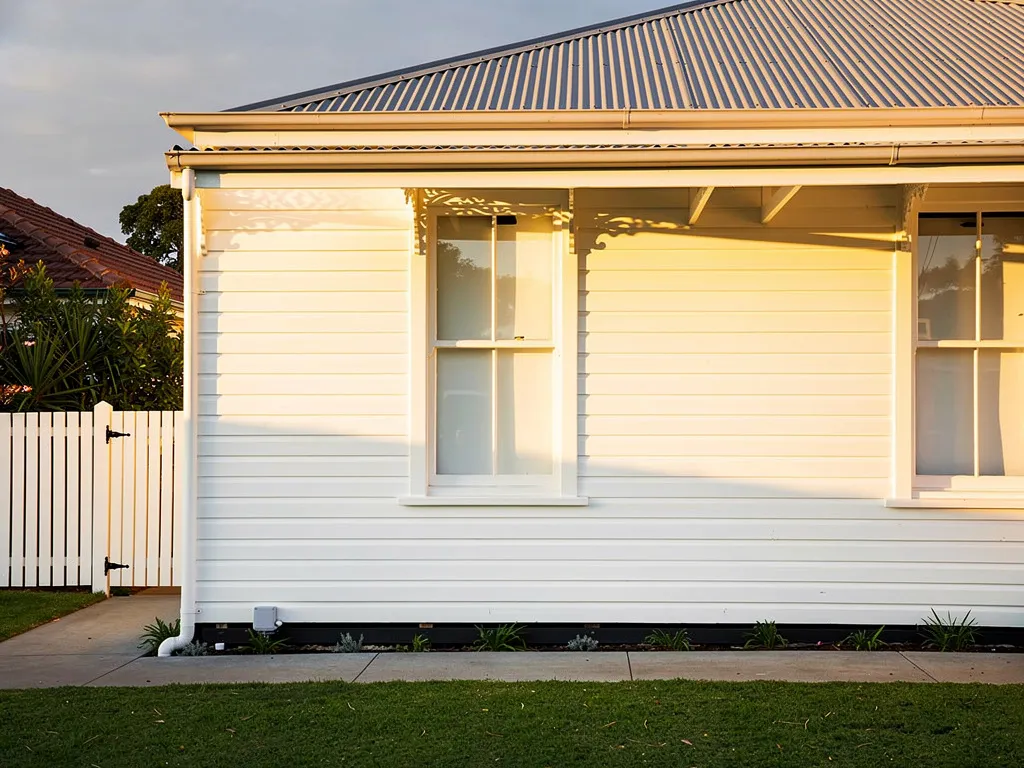
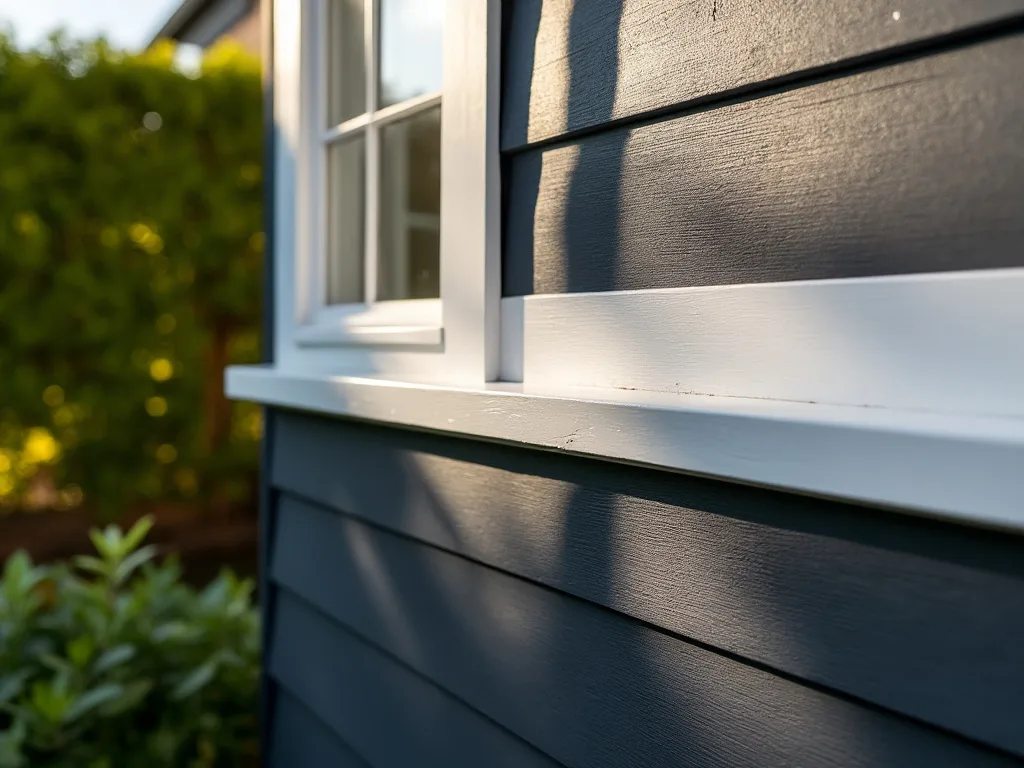
Individual boards catch shadow along their bottom edge. A two-tone scheme, dark body with white or cream trim on window frames, fascia and eaves, uses that shadow line to give a weatherboard home real depth. It’s the most requested look on Melbourne weatherboard, and it works on everything from a Californian bungalow to a 1980s project home. Keep the trim colour light, it’s what makes the cut-lines around windows and doors read as crisp rather than muddy.
Brick veneer: trim-only is often the better idea
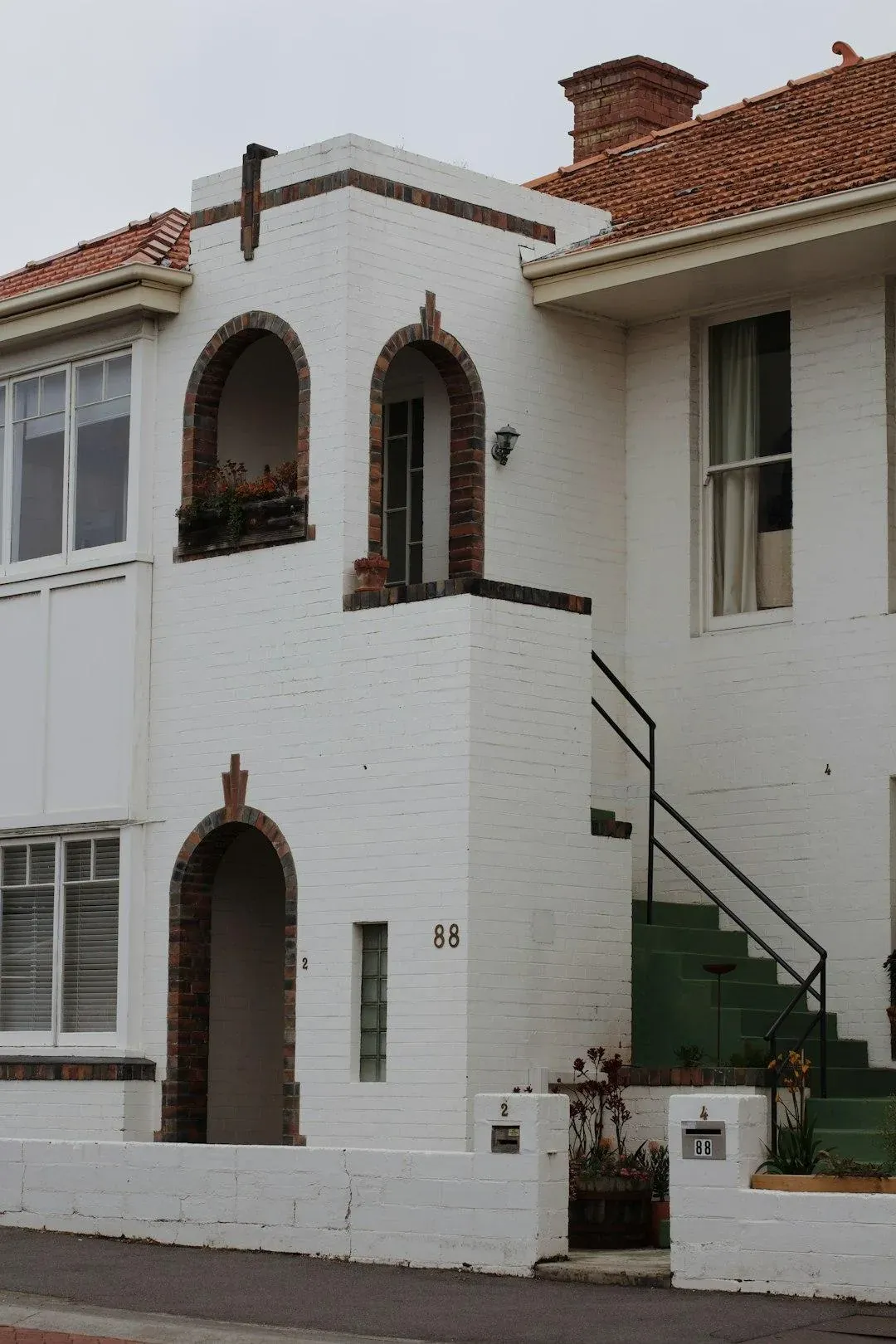
Full-colour masonry paint over face brick is popular, but it’s permanent. Once brick is painted, going back to bare brick means removal, which is far more expensive than the original paint job. A lower-risk idea for a dated brick facade is to repaint the trim, fascia, window frames and front door only, and leave the brick natural. It modernises the front of the house without committing the brickwork itself.
Render and cement sheet: single body colour, dark roofline
Render has no texture to work with the way weatherboard does. A single warm white or soft neutral body colour, paired with a darker roofline trim on the fascia, gutters and often the roof itself, reads as the current, popular Melbourne look. Render also shows patchy, uneven colour more than any other cladding when the paint or the prep is second-rate, so this is the one surface where a premium product like Dulux Weathershield genuinely earns its price. See our rendered exterior cost guide for what that looks like in practice.
Heritage Victorian and Edwardian: period-accurate, not trend-led
Original ironwork lacework, timber fretwork and decorative render detail are the features to build a heritage scheme around. A base colour close to the original palette (often a warm white, sandstone or deep green), with the lacework picked out in a contrasting colour such as navy or forest green, is the look that respects the streetscape. Many inner-Melbourne suburbs, including Fitzroy, Carlton, Richmond, Williamstown and Seddon, sit inside a heritage overlay, which can restrict the colours you’re allowed to use. Check with your council before buying paint. Our complete exterior painting guide covers permits and heritage overlays in full.
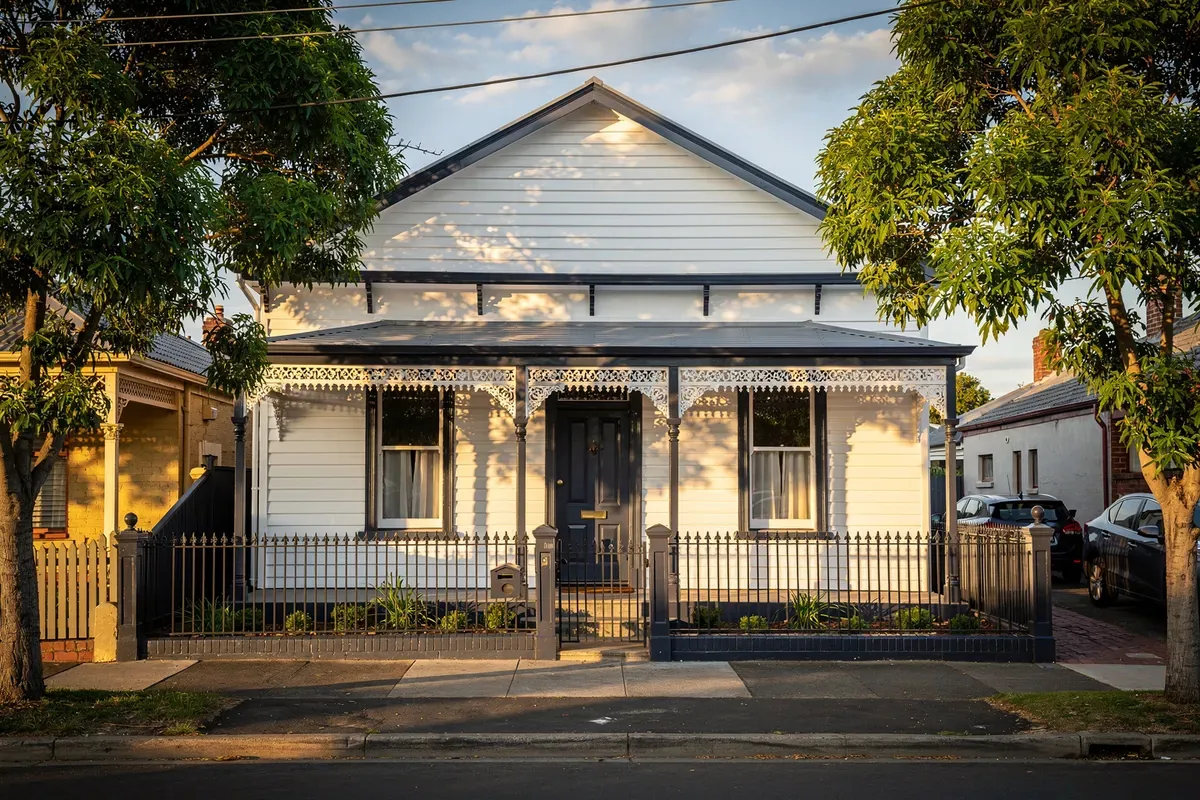
A two-tone scheme on Victorian weatherboard, the trim colour picks out the fretwork without fighting the base colour.
Which exterior colour scheme ideas actually hold up in Melbourne’s climate?
Dark colours on west and north-facing weatherboard fade and chalk faster under Melbourne’s UV, while light and mid-tone colours on the same walls hold their finish longer. Climate should shape the idea, not just the trend.
Melbourne’s west-facing walls cop the most direct afternoon sun of any elevation, and dark, saturated colours absorb more UV and heat than light ones. On weatherboard specifically, that extra heat also drives more expansion and contraction in the timber, which is one of the reasons dark west-facing boards are usually the first to show peeling. None of this rules dark colours out, charcoal remains one of the most requested exterior colours in Melbourne, but it does mean the west and north elevations need the best possible prep and a genuine UV-rated system like Dulux Weathershield, not a budget substitute.
| Cladding | Idea that works well | Why it works | Watch out for |
|---|---|---|---|
| Weatherboard | Dark charcoal body, white trim | Uses board shadow lines for depth | West-facing boards fade and peel first |
| Brick veneer | Trim, window frames and door only | Modernises the facade without committing the brick | Full brick paint is very hard to reverse |
| Render / cement sheet | Warm white or neutral body, dark roofline | Even, flat surface holds colour cleanly | Needs a premium masonry system to avoid patchy fade |
| Heritage weatherboard | Period base colour, contrasting lacework | Respects the streetscape and often the overlay rules | Some suburbs need council-approved palettes |
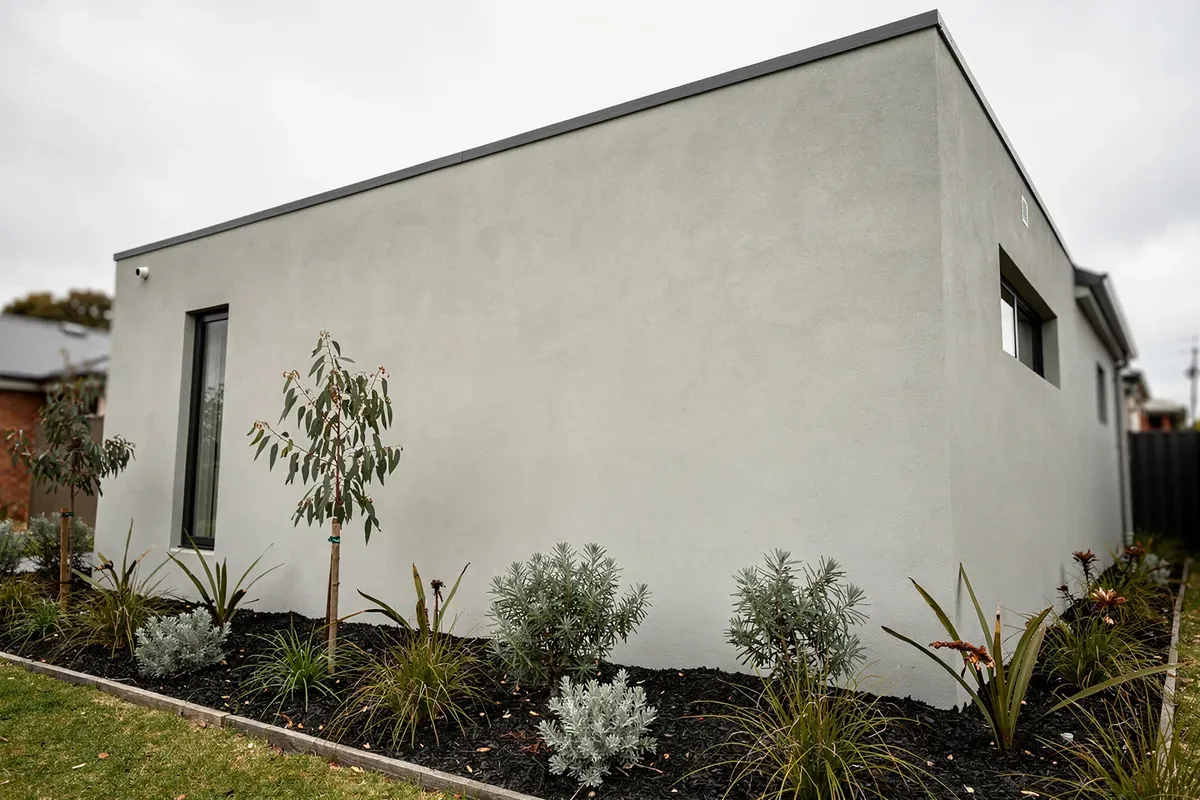
A light body colour on render with a darker roofline, the low-maintenance idea that suits Melbourne's sun-exposed facades.
How should your roof colour guide the exterior scheme?
The roof is usually the largest fixed colour on a Melbourne home, so it should be chosen before the body colour, not after. Most homes keep the existing Colorbond roof and repaint everything else around it.
A dark roof such as Colorbond Monument or Basalt pairs cleanly with a light or mid-tone body and a crisp white trim, the classic Melbourne combination that suits weatherboard and render alike. A lighter roof such as Surfmist or Classic Cream sits better with a mid-tone or warm neutral body, since a very dark body under a pale roof can look top-heavy and unbalanced from the street. If the roof is being replaced or resprayed at the same time as the walls, choose the roof colour first, it’s the hardest and most expensive element to change again later.
What’s the easiest way to add a feature without repainting the whole house?
A painted front door in a saturated colour, against a neutral or heritage-accurate body, is the simplest genuine feature on a Melbourne exterior. It costs a fraction of a full repaint and can be redone again in a weekend if you change your mind.
Forest green, navy, deep red and black are the most requested Melbourne front door colours, and all work against both light renders and heritage weatherboard bases. A matching letterbox ties the feature together at street level. For a garage door, the safer idea is to match the body colour so the door reads as part of the facade rather than competing with it, a contrasting garage door can work on contemporary new builds but tends to look busy on a traditional home.
What are the most common exterior colour mistakes homeowners make?
These are the ideas that look good on a colour chip and cause regret on the actual house.
- Choosing the colour before checking the roof. Pick a body colour that clashes with a Colorbond roof you’re not replacing, and no amount of good painting fixes it. Check the roof first.
- Testing on a small chip instead of the wall. Exterior colours shift dramatically in direct sun versus shade. Paint a large sample patch (at least one metre square) on the actual wall and check it morning, midday and late afternoon before committing.
- Ignoring the streetscape. A colour that’s striking in isolation can clash badly with neighbouring homes and fences, particularly in tightly built inner-Melbourne streets.
- Going too dark on a west-facing weatherboard wall without upgrading the paint system. Dark colours need the strongest UV protection available, not the cheapest tin on the shelf.
- Painting brick without a plan for the long term. Once brick is painted, it stays painted. Treat it as a permanent decision, not a trend to try out.
Key takeaway: The most common exterior colour mistake is testing on a small chip instead of a full sample patch on the actual wall, colours shift dramatically between shade and direct Melbourne sun.
Should you test colours yourself or get a professional colour consult?
DIY colour testing works well for straightforward schemes, a body colour and a trim colour on a home in reasonable condition. Buy sample pots, paint large patches on at least two elevations, and check them across a full day.
A professional consult earns its cost on heritage homes inside a council overlay, on renders where colour needs to coordinate with an existing roof and fence, and on any home where the owner is choosing between several genuinely different scheme ideas (two-tone versus monochrome, for example) rather than shades of the same colour. Painters who work on Melbourne facades every week can also tell you upfront which ideas will fade fastest on your home’s orientation, before you’ve bought a single tin.
Frequently asked questions
What is the most popular exterior house colour idea in Melbourne right now?
A two-tone scheme, charcoal or dark grey body with white or cream trim, remains the most requested idea on weatherboard homes. On render, a warm white or soft neutral body with a darker roofline trim is the current favourite. See our popular paint colours guide for specific shade names.
Should I paint my brick house or leave it natural?
Leaving brick natural and repainting the trim only is usually the lower-risk idea. Painting brick is a one-way decision, once painted, going back to bare brick means costly removal. If you do want a full-colour brick scheme, get a written quote that includes a masonry primer and confirms the choice is permanent.
Do dark exterior colours fade faster in Melbourne?
Yes, particularly on west and north-facing walls that cop the most direct UV. Dark colours absorb more heat and light than pale ones, which accelerates fading and, on weatherboard, increases the expansion and contraction that leads to peeling. A quality system like Dulux Weathershield reduces this but doesn’t eliminate it.
Can I test exterior colour ideas myself before committing?
Yes, for straightforward schemes. Paint a sample patch at least one metre square directly on the wall, not a small chip, and view it in morning, midday and afternoon light. For heritage homes or renders that need to coordinate with an existing roof, a professional colour consult is worth the cost.
Do I need council approval for an exterior colour idea in a heritage suburb?
Often, yes. Suburbs including Fitzroy, Carlton, Richmond, Williamstown and Seddon sit inside heritage overlays that can restrict facade colours to an approved palette. Repainting like-for-like in the same scheme usually doesn’t need a permit. Check with your local council before buying paint, our complete exterior painting guide covers the permit process in full.
Should the roof or the walls be chosen first?
The roof, if it isn’t being replaced. It’s the largest fixed colour on the house and the most expensive to change later, so pick the body and trim to suit the roof rather than the other way around. A dark Colorbond roof pairs well with a lighter body, while a light roof suits a mid-tone or warm neutral body.
What’s a low-cost way to try a new exterior look before committing?
Paint the front door. It’s the cheapest, fastest way to test a bolder colour idea, forest green, navy or black are the most popular choices, and it can be redone in a weekend if it doesn’t work. It’s also a good way to test a bolder body colour before committing to it on the next full repaint.
Rather have a professional handle it?
Free on-site inspection and a fixed-price written quote, no obligation. Painting Melbourne homes since 1987.
Related service: Exterior Painting.
We paint across Sunshine, Niddrie, Glenroy, Spotswood, St Albans, Maidstone and more — see our painting services in Werribee, or the house painters in Melbourne families have trusted since 1987.