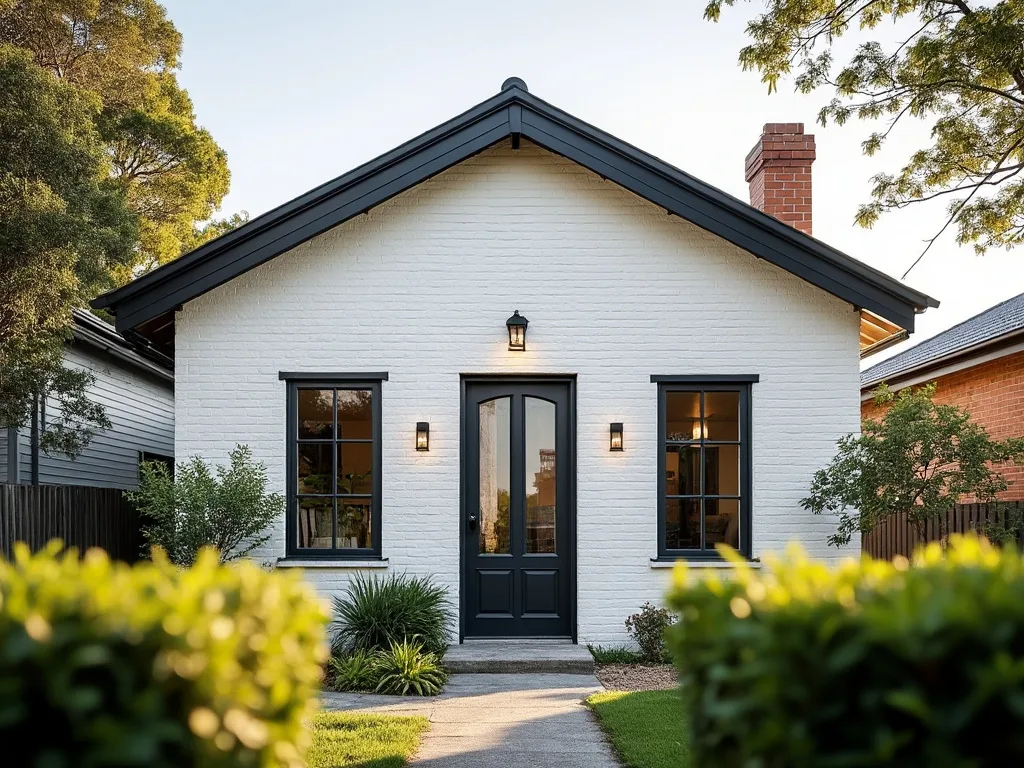
Limewashing a brick house in Melbourne costs $45–$70 per square metre in 2026, painting bare brick runs $35–$55 per square metre ($8,000–$18,000 for an average home), and rendering then painting costs $80–$150 per square metre. All three cover tired brick, and all three are effectively one-way decisions. The right pick comes down to your wall construction: solid double-brick homes want a breathable finish like limewash, while brick veneer can safely take standard paint. This guide compares costs, prep, breathability and maintenance so you can choose once, properly, see our house painting cost guide for standard exterior pricing.
We paint and limewash Melbourne brick homes as part of our limewash painting service, we’ve worked on Melbourne exteriors since 1987, and we carry $20M public liability.
Key takeaway
Limewash $45–$70/m², paint $35–$55/m², bag-and-paint $45–$80/m², full render $80–$150/m². On solid double-brick (pre-1950s), pick a breathable finish, limewash, so the wall can still dry out. On brick veneer, paint is fine. Every option is close to permanent, so decide on construction and maintenance, not just looks.
What are your options for a tired brick facade?
Four finishes cover brick in Melbourne: paint, limewash, bagging, and full render. They differ in look, cost, breathability and how stuck you are with them afterwards. Here’s the field:
| Finish | Look | Breathable? | Reversible? |
|---|---|---|---|
| Acrylic masonry paint | Uniform solid colour, brick texture shows | No, forms a film | No, stripping rarely comes up clean |
| Limewash | Soft, chalky, variegated, mortar lines show | Yes | Partially, wears and washes back |
| Bagging (bag and paint) | Rustic mortar-smeared texture, then painted | No (painted over) | No |
| Full acrylic render | Flat, uniform modern wall, brick disappears | Depends on system | No |
A quick word on each. Paint keeps the brick profile but gives you a clean single colour, it’s the standard way Melbourne homeowners deal with 1970s orange or mixed-batch brick. Limewash is slaked lime brushed on in thin coats; it soaks into the brick face and gives that soft, aged, coastal-Mediterranean look with natural variation, and it’s the traditional finish for old solid-brick walls. Bagging is a mortar slurry rubbed over the brick with a hessian bag, softening the brickwork before paint goes over it. Render buries the brick under a flat coat entirely and reads as a modern rebuilt facade.
We don’t do fake-aged mortar-smear treatments, and we’d steer you away from them: they sit in the same permanent category with none of limewash’s breathability, and the look dates fast.
If you’re leaning towards plain painted brick, our dedicated painting a brick house guide covers that decision in full, including when trim-only is the smarter move.
Key takeaway: Paint for a clean solid colour, limewash for a soft breathable patina, bagging or render to change the wall’s character entirely. None of them undo easily.
How much does each brick finish cost in Melbourne?
Limewash costs $45–$70 per square metre, paint $35–$55, bag-and-paint $45–$80, and full render $80–$150 per square metre in Melbourne in 2026. On whole homes:
| Finish | Rate per m² | Typical single-storey home |
|---|---|---|
| Paint (sealer + 2 topcoats) | $35–$55 | $8,000–$18,000 |
| Limewash (3–4 coats) | $45–$70 | $9,000–$20,000 |
| Bagging + paint | $45–$80 | $10,000–$22,000 |
| Full render + paint | $80–$150 | $15,000–$30,000+ |
Why the ranking falls this way: paint is a known system, sealer plus two topcoats. Limewash uses cheap material (lime costs a fraction of acrylic paint) but wants three to four thin brushed coats with drying time between, so labour carries the price. Australian limewash makers like Bauwerk Colour and Porter’s Paints also sit at premium price points for the coloured, ready-mixed products most homeowners choose. Bagging adds a full mortar-work stage before painting even starts. Render is a different trade doing multiple coats of a cement or acrylic system, then a painter on top, which is why it costs what a full repaint costs twice over.
Double-storey homes add scaffolding money on all four options, the same 40–60% uplift covered in our exterior painting cost guide.
Key takeaway: Paint is the cheapest way to change brick, limewash costs a little more, render costs double or more. Get all quotes as fixed whole-job prices, per-metre rates hide the trim and access costs.
What prep does brick need before painting or limewashing?
Both finishes live or die on the same three prep jobs: clean brick, sound mortar, and moisture sorted. Limewash adds one more: the brick must stay porous, not sealed. Skipping prep on masonry doesn’t show up in week one, it shows up in year two.
The prep sequence on a brick facade:
- Wash. Pressure clean to strip dirt, chalk and any organic growth. Mould and moss get treated, not just blasted, or they grow back through the new finish.
- Repoint. Cracked or crumbling mortar joints are raked and repointed. Any finish applied over failing mortar cracks along the same lines.
- Fix the moisture. Leaking gutters, garden beds piled against the wall, and rising damp all get sorted first. Coating a wet wall locks the problem in.
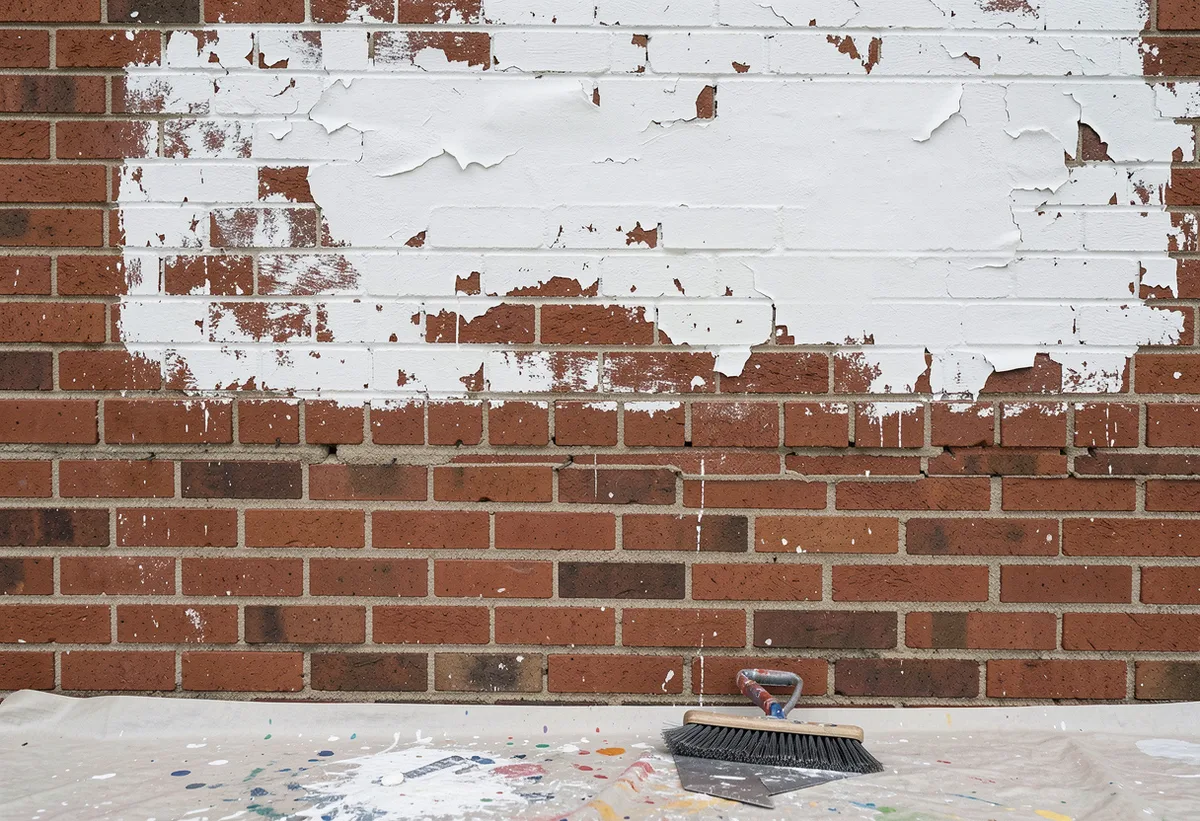
- Efflorescence off. The white salt bloom on brick is dissolved salt moisture has carried to the surface. It gets brushed and treated dry, painting over it guarantees the film lifts.
- Then the system. For paint: masonry sealer or primer, then two topcoats. For limewash: the brick is dampened and coats go on thin, the porosity of bare brick is exactly what limewash bonds into.
That last point is the big fork in the road. Limewash needs bare, porous masonry to calcify into, so previously painted brick can’t be limewashed without full paint removal, which is expensive and rough on the brick face (our paint removal guide explains why). Painted brick can only really be repainted. If you’re choosing today, you’re choosing for the next owner too.
Key takeaway: Clean, repoint, and fix moisture before any finish. And know that paint closes the limewash door permanently, while limewash leaves the paint option open.
Why does breathability matter on a brick house?
Solid double-brick walls manage moisture by breathing it out through the surface. Seal that surface with a plastic film and the moisture stays in the wall, and eventually pushes the film off. This is the single most important, and most skipped, question in the whole decision: what’s your wall made of?
Solid double-brick is the construction of most pre-1950s Melbourne homes, the Victorian and Edwardian stock across Footscray, Yarraville, Brunswick, Essendon and the inner suburbs. There’s no cavity drainage doing the work of a modern wall, and many of these homes carry some level of rising damp. The wall stays healthy because moisture evaporates out through the brick and mortar. Coat it in standard acrylic membrane paint and that path closes: moisture rises higher looking for an exit, salts crystallise behind the paint film, and the result is blistering paint and fretting brick faces a few years in. Limewash, being vapour-permeable, lets the wall keep breathing, which is exactly why it’s the traditional finish on old masonry. Where a painted finish is wanted on solid brick regardless, it needs to be a specified breathable mineral or low-sheen masonry system, not ordinary exterior acrylic.
Brick veneer, standard from roughly the 1960s on, is a different animal: a timber or steel frame does the structure, and the single brick skin has a drained, ventilated cavity behind it. The wall doesn’t rely on the outer face breathing, so acrylic masonry paint is a safe, durable choice.
Quick ways to tell which you have: check the brick pattern (older solid walls often show header bricks, the short ends, in the coursing), tap for the timber-frame hollowness of veneer on inside walls, or just date it, pre-war is almost certainly solid brick.
Key takeaway: Solid brick breathes or it suffers, so limewash or a breathable mineral system. Veneer has a cavity doing that job, so paint away.
Limewash vs whitewash: what’s the difference?
They get used interchangeably, but they are different products: limewash is slaked lime and water that calcifies into the brick surface, while whitewash today usually means watered-down white paint brushed over the brick. The distinction matters because they age in opposite ways.
Limewash soaks into the brick face and becomes part of the masonry, so it weathers by eroding gently and gracefully; it never peels, because there is no film to peel. Whitewash made from diluted acrylic sits on the surface like any paint film, just thinner, so on solid brick it fails the breathability test above the same way full-strength paint does: it goes patchy and flaky rather than softly worn. The look when new is similar, a translucent, mottled white that lets the brick texture show, which is why the terms get swapped. If you want that washed-brick look on a Melbourne period home, limewash is the finish that delivers it and keeps delivering it; diluted paint is a shortcut that reads the same for a year or two and then peels like paint, because it is paint.
Key takeaway: Limewash bonds into the brick and erodes gracefully; whitewash is thinned paint that sits on top and peels. Same look on day one, very different look in year five.
What’s the maintenance on painted brick vs limewash vs render?
Painted brick wants a repaint every 10–15 years, limewash a cheap refresh every 5–10, and render a repaint every 10–15 plus crack patrol. The headline intervals hide the real difference, which is what “redoing it” involves:
| Finish | Recoat interval | What the recoat involves |
|---|---|---|
| Painted brick | 10–15 years | Wash, scrape and prime any failures, two topcoats |
| Limewash | 5–10 years | Wash down, brush on refresh coats, no stripping |
| Bagged + painted | 10–15 years | As painted brick |
| Rendered + painted | 10–15 years | Repaint, plus repairing any render cracks first |
Limewash’s trick is that it has no film to fail. It erodes gently and evenly, the weathered look is part of the appeal, and the refresh is essentially more of the same brushed over a clean wall. Paint fails as a film: chalking first, then cracking and peeling at the weather faces, and every repaint starts with fixing the failures. Melbourne’s UV load does most of that damage, which is also why paint choice matters, a premium masonry topcoat like Dulux Weathershield holds its film years longer than budget paint on the same wall. Render’s long-term cost is cracking: the render skin moves differently to the brick behind it, and hairline render cracks need patching at each repaint.
Whole-of-life over 30 years, limewash usually comes out cheapest despite the slightly higher first cost: three or four cheap refreshes against two or three full repaints.
We’ll tell you straight which finish suits your wall when we see it, including when the honest answer is to leave good brick alone and repaint the trim. Fixed written quotes, Dulux and specified limewash systems, since 1987, 5.0 star reviews.
Weighing up limewash, paint or render?
Free on-site inspection, straight advice on what suits your wall construction, and a fixed written quote. Melbourne brick homes since 1987.
Frequently asked questions
Is limewash or paint better for a brick house?
It depends on the wall. On solid double-brick homes (most pre-1950s Melbourne houses), limewash is the safer finish because it’s breathable, moisture in the wall can still evaporate out. Standard acrylic paint forms a film that can trap that moisture and push itself off. On brick veneer with a drained cavity, breathability matters less and paint’s colour range and harder film often win.
How much does it cost to limewash a brick house in Melbourne?
Limewashing exterior brick in Melbourne costs $45–$70 per square metre in 2026, landing most single-storey homes at $9,000–$20,000 for a full facade. That’s slightly above painting bare brick because limewash goes on in three to four thin coats. Material is cheap, the labour of the extra coats is where the money goes.
How much does it cost to paint a brick house in Melbourne?
Painting a brick house exterior in Melbourne typically costs $8,000–$18,000 for an average home in 2026, or $35–$55 per square metre for a first paint-out on bare brick. Porous brick needs a masonry sealer before two topcoats. Once brick is painted there’s no simple way back, so it’s a one-way decision.
Is limewash reversible on brick?
Partially, and far more than paint. Limewash soaks into the brick face and calcifies rather than forming a plastic film, so it wears back gradually and can be largely washed and brushed off early on, though some residue stays in the pores. Acrylic paint needs blasting or chemical stripping to remove, and the brick face rarely comes up unmarked.
How often does limewash need redoing compared to painted brick?
Limewash wants a refresh coat every 5–10 years, but a refresh is quick and cheap, no film to fail, no peeling to scrape, just clean and recoat. Painted brick runs 10–15 years between repaints with a premium system, but each repaint starts with scraping and priming whatever has failed.
Rather have a professional handle it?
Free on-site inspection and a fixed-price written quote, no obligation. Painting Melbourne homes since 1987.
Related service: Limewash Effect Painting.
We paint across Footscray, Brunswick, Essendon, Richmond, Williamstown, Yarraville and more — see our painting services in Newport, or the house painters in Melbourne families have trusted since 1987.