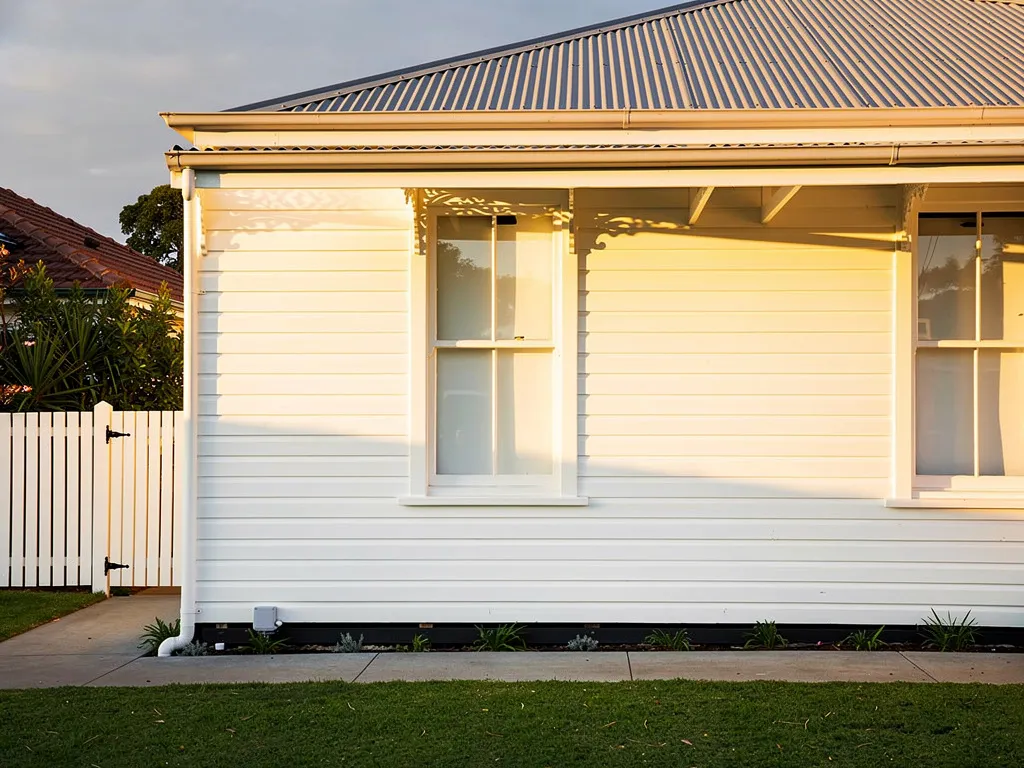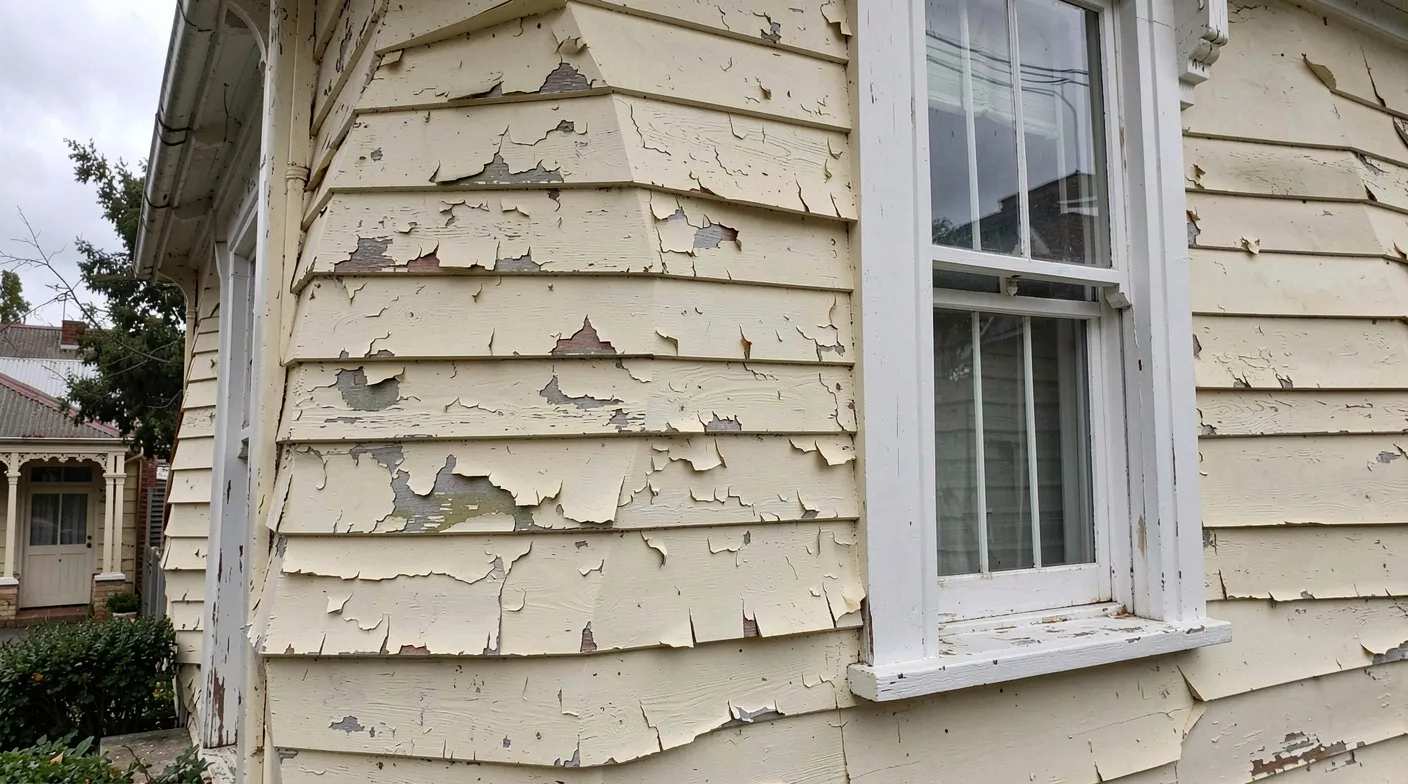
Paint peels when it loses its grip on the surface underneath, usually from trapped moisture, poor preparation, incompatible old coats, or harsh Melbourne sun. The fix is the same indoors and out: scrape off every loose flake, sand the edges smooth, fill any gouges, spot-prime the bare patches, then recoat with quality paint. Sort the cause first, or it peels straight back.
Got paint flaking off a wall, a ceiling, or a whole weatherboard frontage? Get a free, no-pressure quote and we’ll tell you the real cause before you lift a scraper.
Key Takeaway
Peeling paint is an adhesion failure, not a colour problem. Scrape back to a firm edge, sand, fill, prime the bare spots, then recoat with a premium water-based paint. Fix the moisture or prep fault underneath first, or the new coat peels too.
Why does paint peel in Melbourne homes?
Paint peels because the film stops sticking to what’s beneath it. Dulux lists the main exterior causes as moisture seeping through worn caulk or leaks, excess moisture escaping through walls, poor surface preparation, and low-quality paint (Dulux Australia, Exterior Peeling problem solver). Melbourne’s wet winters and bright summers push every one of those along.
Moisture is the usual suspect. In bathrooms, laundries and kitchens, water vapour gets behind the paint and breaks the bond. On older homes, rising damp and a leaking roof or gutter do the same job from outside in. So why does it keep happening? Because the water keeps coming, and fresh paint can’t out-muscle it.
Prep is the second big one. Paint rolled over a dirty, glossy or chalky surface never really keys in. No sanding, no sugar soap, no primer on bare patches, and the coat is living on borrowed time.
Then there’s incompatible coats. Older Melbourne homes often have oil-based trim, doors and skirting. Brush a water-based paint straight over that hard, glossy enamel with no bonding primer and it sheets off like a sticker. A quick metho test on a cotton ball tells you which you’ve got: if colour lifts onto the cotton, it’s water-based.
Outside, the sun finishes the job. UV breaks down the binders that hold paint together, so north and west-facing walls go chalky and start to flake first. Near Port Phillip Bay, salt air makes it worse. Salt settles on the walls, holds moisture against the surface, and lifts coatings off weatherboard and fibre cement in bay-side suburbs like Williamstown, Altona and Brighton.
| Cause | Where it usually shows up | The fix |
|---|---|---|
| Trapped moisture | Bathrooms, laundries, ceilings under a leak, lower walls with rising damp | Find and stop the water, dry the wall, then scrape, prime, recoat |
| Poor surface prep | Anywhere paint went on over a dirty, glossy or chalky surface | Clean with sugar soap, sand back the sheen, spot-prime bare areas |
| Incompatible coats | Old oil-based trim or doors painted over with water-based paint | Sand, then use a bonding or universal primer between the layers |
| Sun and UV | North and west-facing exterior walls, fascias, render | Recoat with a UV-stable premium exterior paint before the film chalks |
| Salt air | Bay-side weatherboard and fibre cement (Williamstown, Altona, Brighton) | Wash off salt, prime bare spots, use a quality exterior paint system |
Peeling isn’t the same as bubbling. If you’ve got spongy, fluid-filled bumps rather than flaking sheets, read our guide to fixing paint bubbling instead. And if it’s timber cladding letting go out west, our guide to why weatherboard paint peels in Melbourne covers the causes in detail.
Can you paint over peeling paint?
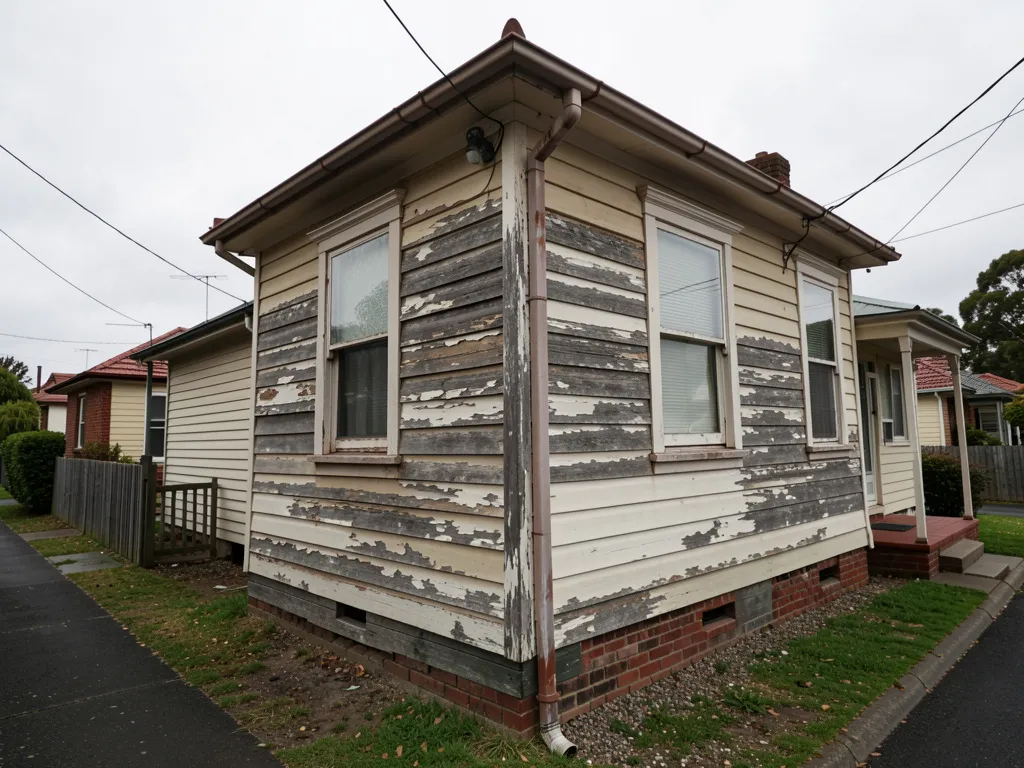
No. Painting over peeling paint just glues a fresh coat onto a layer that’s already letting go, so the whole lot lifts within months. Dulux is blunt about it: peeling is a loss of adhesion, and a new coat can’t fix a bad bond (Dulux Australia). You have to remove the loose paint back to a firm edge first.
Why does it make things worse? Fresh paint adds weight and moisture. Both pull the already-loose section further from the wall, so a small flaking patch turns into a sheet. The bubbling guide makes the same point about adhesion, and it holds true here.
Treat any loose paint as dead surface. It has to come off before you rebuild. The good news is you rarely need to strip a whole wall. Scrape only what lifts easily, feather the hard edges so your finger glides from bare wall onto sound paint without catching a ridge, then prime the bare spots.
How do you fix peeling paint on interior walls and ceilings?
Fix interior peeling in five steps: scrape, sand, fill, prime, repaint. Dulux recommends removing all loose material, feathering the edges, filling where flaking spans several paint layers, priming bare patches, then recoating with a premium primer-undercoat and a washable topcoat (Dulux Australia, Interior Cracking, Flaking and Peeling). Sort any leak or damp before you start. If you’ve lost the original paint code, see our guide on matching an existing paint colour before you recoat.
- Stop the cause first. Press the peeling area. If it’s damp, find the leak, the rising damp or the ventilation problem and fix it. Let the wall dry fully before anything else.
- Scrape off all loose paint. Use a flexible filling knife and lift away everything that comes free. Don’t gouge the plaster, just take the dead paint.
- Sand and feather the edges. Work 120-grit paper around each bare patch until the edge blends flat. Wipe the dust off with a damp cloth or a tack cloth.
- Fill and prime. Fill any dents or damaged plaster, sand smooth, then spot-prime every bare patch with a quality sealer-undercoat so the topcoat has something to grip.
- Repaint. Two coats of a good interior paint, with full drying time between them. Prime the whole repair area, not just the bare spot, so the sheen ends up even.
Ceilings deserve special care, because a peeling ceiling is usually a leak above. We’ve lost count of the bathroom ceilings where the real fault was a tired shower recess or a slipped roof tile, not the paint at all. Fix the water, dry it out, then repaint. Want the room done properly while you’re at it? Our interior painting service handles the prep, the patching and the finish in one go.
How do you fix peeling paint on exterior weatherboard and render?
Outside, the steps are the same but the conditions are harsher. Scrape and wire-brush all loose paint, sand rough timber, prime any bare boards, then recoat with a top-quality water-based exterior paint for better adhesion and water resistance (Dulux Australia, Exterior Peeling). Fix the moisture source and let washed walls dry first.
- Wash the wall. Clean off dirt, chalk and salt with sugar soap, then rinse. After washing or rain, give it a couple of days to dry, and never paint a surface that’s still damp to the touch. Trapped moisture is what started the peeling in the first place, so painting over a wet wall just sets up the next round.
- Scrape and wire-brush. Take off every loose flake back to a firm edge. Weatherboard gaps and joints often hide the worst of it.
- Sand and re-caulk. Sand rough timber smooth and feather the edges. Re-caulk split joints and gaps, since open joints are a common entry point for the moisture that started the peeling.
- Spot-prime the bare areas. Prime bare timber, render and fibre cement with the right exterior primer before any topcoat goes near them.
- Repaint in the shade. Follow the shade around the house. Paint baking in direct sun skins over on top while the underside stays wet, which is how the next round of peeling begins.
When we strip a weatherboard home in Williamstown or Altona, the bay-facing wall is almost always the first to let go, salt and sun working on it year-round. That’s normal near the water, and it’s why prep and a UV-stable paint matter more there than almost anywhere else. For the full process on older cladding, see our complete guide to exterior painting in Melbourne, or have a look at our exterior painting service.
Should you fix peeling paint yourself or call a painter?
A few flaking patches on one interior wall are a fair weekend job. Widespread peeling, exterior weatherboard, ceilings, or any home painted before 1970 is work for a professional. A large share of Australian homes built before 1970 still carry lead paint, and dry-sanding that paint is genuinely dangerous.
Lead is the reason older Melbourne homes need a careful hand. Old paint could contain very high levels of lead, and WorkSafe Victoria warns against dry-sanding or abrasive-blasting lead paint, because the dust is fine enough to breathe in or settle into carpet and furniture (WorkSafe Victoria). Worth the risk for a Saturday DIY job? Not really.
On older homes around Footscray, Yarraville and Brunswick, we test before we sand. The paint under those top coats is often lead, and you only find out once it’s airborne if you haven’t checked.
That’s where a settled local crew earns its keep. We’re a family-owned Melbourne business that’s painted homes since 1987, we carry $20M public liability, and our own team does the work start to finish, never subcontracted. Our 5.0 Star Reviews come from real homeowners. Across more than three decades, we’ve seen what’s hiding under most peeling walls. See the full picture of what we do as house painters in Melbourne.
How do you stop paint from peeling again?
Stop peeling coming back by fixing three things: the cause, the prep, and the paint. In our experience, surface preparation is the single biggest factor in how long a finish lasts. Kill the moisture source, clean and sand properly, prime every bare patch, then use a premium coat rated for the surface.
Cheap paint over rushed prep is a false economy. A quality system, primer plus topcoat from the one brand, bonds harder and holds colour far longer. Outside, that gap is wider again. UV-stable premium paint keeps its grip and colour for years longer than budget paint, especially on sun-blasted north and west walls and salt-exposed bay frontages.
Timing helps too. Recoat exterior surfaces before the old film chalks and fails, not after, and you avoid a full strip-back next time. A bit of yearly upkeep on caulk, gutters and flashing keeps water out of the joints where peeling starts.
One more honest tip. When you get quotes, make sure the prep is written into them, not just the price. A low quote that skips prep is the one that peels.
Paint peeling and not sure why?
We find the real cause, prep it properly and repaint. Free on-site inspection across Melbourne.
Frequently asked questions
Can you paint over peeling paint?
No. Painting over peeling paint glues a fresh coat onto a layer that’s already letting go, so the whole lot lifts within months. You have to scrape back to a firm edge first, sand the edges smooth, clean the surface, spot-prime any bare patches, then recoat. Dulux describes peeling as a loss of adhesion, and a new coat can’t repair a bad bond.
Why does my paint keep peeling?
If paint keeps peeling in the same spot, the cause underneath hasn’t been fixed. Usually it’s moisture from a leak, rising damp or poor ventilation, or it’s prep that was skipped, like painting over a glossy or chalky surface with no sanding and no primer. Stop the water and prep properly, or it returns every time.
How do you fix peeling paint on a ceiling?
First find out why the ceiling is peeling, because it’s often a roof or bathroom leak above. Fix the water source and let the plaster dry fully. Then scrape off the loose paint, sand the edges flat, fill any damaged plaster, spot-prime the bare areas with a stain-blocking sealer, and repaint. Skipping the leak just guarantees a repeat.
Is peeling paint in an old Melbourne home dangerous?
It can be. Many Australian homes built before 1970 still carry lead paint, and a lot of inner and western Melbourne homes fall in that era. Dry-sanding or scraping lead paint releases dust you don’t want in the house. Test first, and get a professional to handle it safely.
How long should a proper repaint last before it peels?
A well-prepped interior repaint should hold for many years before it needs attention. Outside is harder on paint, so quality exterior work typically lasts several years longer with premium UV-stable products than with cheap paint over poor prep. Sun, salt air near the bay and skipped preparation are what cut that lifespan short.
The short version
Peeling paint is almost always an adhesion problem, not a paint colour you’ve grown tired of. Find the cause, whether that’s moisture, missed prep, mismatched coats or years of Melbourne sun, then scrape, sand, fill, prime and repaint properly. Do that, and the new coat stays put. Rush it, and you’ll be back with a scraper by next winter. That’s the standard we hold ourselves to at Modernize Solutions, and it’s the same advice we’d give a mate.
Sources
- Dulux Australia, Exterior Paint Peeling problem solver, retrieved 2026-06-29, https://www.duluxtrade.com.au/technical-advice/professional-painter-problem-solver/exterior/peeling
- Dulux Australia, Interior Cracking, Flaking and Peeling problem solver, retrieved 2026-06-29, https://www.duluxtrade.com.au/technical-advice/professional-painter-problem-solver/interior/cracking-flaking-peeling/
- WorkSafe Victoria, Managing lead-based paint removal, retrieved 2026-06-29, https://www.worksafe.vic.gov.au/managing-lead-based-paint-removal
Rather have a professional handle it?
Free on-site inspection and a fixed-price written quote, no obligation. Painting Melbourne homes since 1987.
Related service: House painting in Braybrook.
We paint across Ardeer, Footscray, Brunswick, Essendon, Richmond, Williamstown and more, see our painting services in Yarraville, or the house painters in Melbourne families have trusted since 1987.