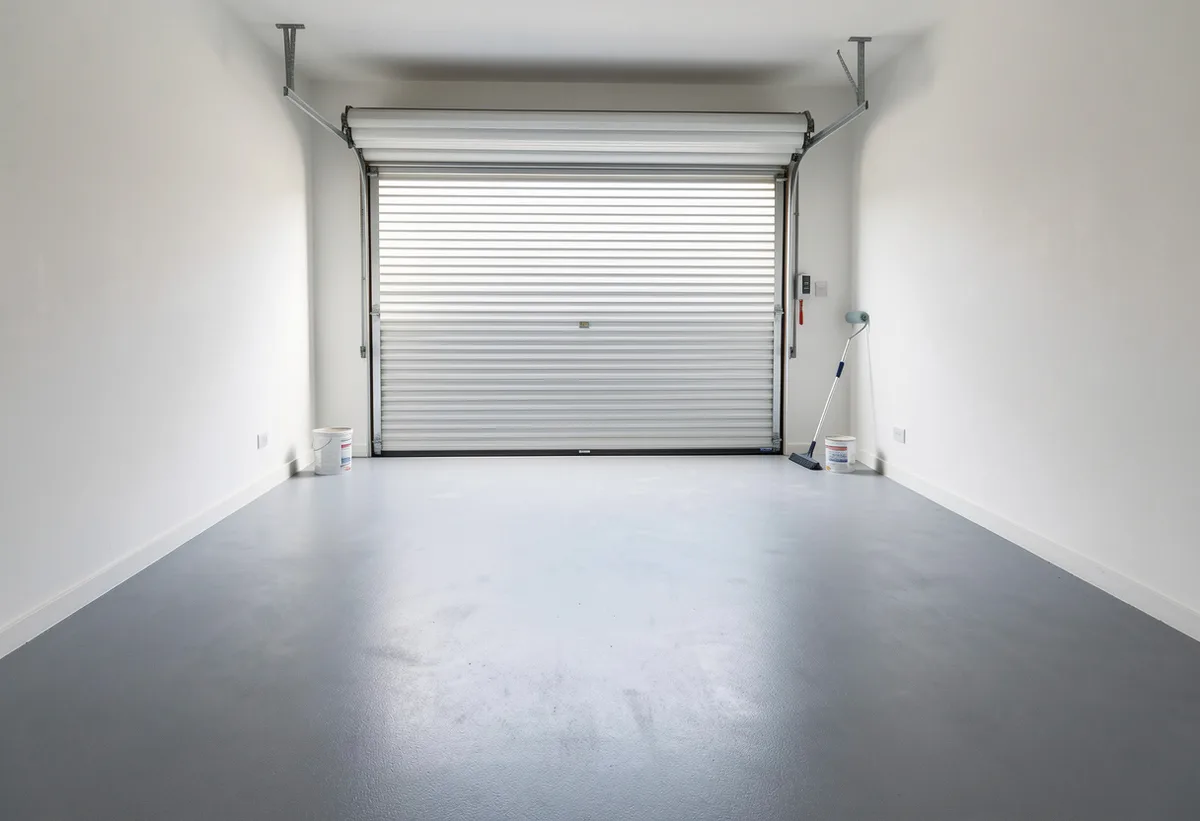
Painting concrete works on floors, walls and exterior surfaces, but each needs a different paint: paving paint or epoxy on floors ($80 to $180 per 4 litres), acrylic over a masonry sealer on walls, and exterior acrylic on render. Professionally, painted concrete floors cost roughly $20 to $45 per square metre in Melbourne. The prep is the whole job: concrete that is not etched, ground or sealed sheds its paint within a year, which is why half the concrete you see painted is peeling.
This guide covers the method for each surface, the right product, real Melbourne prices, and the three reasons concrete paint fails.
Key takeaway
Concrete painting is a preparation job with some painting at the end. Clean, etch or grind, seal, then two coats of the right product: paving paint or epoxy for floors, acrylic over sealer for walls and render. Budget $20-$45 per square metre professionally for floors, and never put wall paint on a floor.
Can you paint directly onto concrete?
No. Paint applied straight onto bare concrete peels, and it usually starts within months. Three properties of concrete work against you: it is porous, so it drinks paint unevenly; it is alkaline, which attacks paint binders from behind; and finished concrete is often steel-trowelled smooth or factory-sealed, giving paint nothing to grip.
That is why every concrete surface gets the same three-step foundation before any colour goes on:
- Clean. Pressure wash outdoor concrete; degrease garage floors (oily patches reject paint completely); vacuum and wash interior slabs.
- Profile. Acid etch with a hardware-store etching solution, or mechanically grind, until the surface feels like fine sandpaper. Water beading on the slab means it is sealed and must be ground.
- Seal or prime. A concrete sealer or dedicated concrete primer evens the porosity and blocks the alkalinity.
New concrete adds one more rule: let it cure at least 28 days before painting. Paint over green concrete traps moisture and fails fast.
What paint do you use on concrete?
Floors need floor-rated coatings, walls take standard acrylic over a sealer. This is the decision most DIY jobs get wrong, so here is the full table:
| Surface | Right product | Typical price (4L, 2026) |
|---|---|---|
| Garage or internal floor | Epoxy floor coating or paving paint | $90–$180 (epoxy kits more) |
| Path, patio, porch | Paving paint (e.g. Dulux Concrete & Paving, Berger Jet Dry) | $80–$130 |
| Driveway | Epoxy or polyurethane driveway coating | Covered in the driveway guide |
| Concrete / besser block walls | Acrylic (interior or exterior grade) over masonry sealer | $60–$130 |
| Rendered concrete, exterior | Exterior acrylic (Dulux Weathershield, Haymes Solashield) | $100–$170 |
| Concrete roof tiles | Roof membrane coating, professional job | Quoted per roof |
The one rule worth repeating: ordinary wall paint on a floor wears through at the traffic paths within months. Floor coatings are engineered for abrasion; wall paints are not, and no amount of extra coats changes that.
How do you paint a concrete floor?
Clean, degrease, etch, seal, then roll two thin coats of floor coating, and give it a week before parking a car on it. A single garage is a weekend-plus-drying job DIY, or $800 to $2,000 professionally depending on the slab’s condition.
The full sequence for a garage or internal floor:
- Empty the space completely and sweep, then vacuum.
- Degrease oil patches with a concrete degreaser and stiff broom. Rinse. Repeat until water no longer beads on the oily spots.
- Etch the slab with etching solution as directed, or hire a grinder for sealed or painted slabs. The surface should feel like fine sandpaper when dry.
- Fix cracks and spalls with a concrete repair filler and let it cure.
- Apply the sealer or the coating system’s primer coat.
- Roll the first coat thin with a long-nap roller on a pole, cutting in edges with a brush. Thin coats bond; thick coats peel.
- Second coat after the recoat window, usually 16 to 24 hours. Add a non-slip additive to the final coat on any surface that gets wet.
- Wait: light foot traffic in 24 to 48 hours, furniture after several days, vehicles after 5 to 7 days. Hot tyres on a half-cured floor is the classic new-coating failure.
Garage floor: paving paint or epoxy?
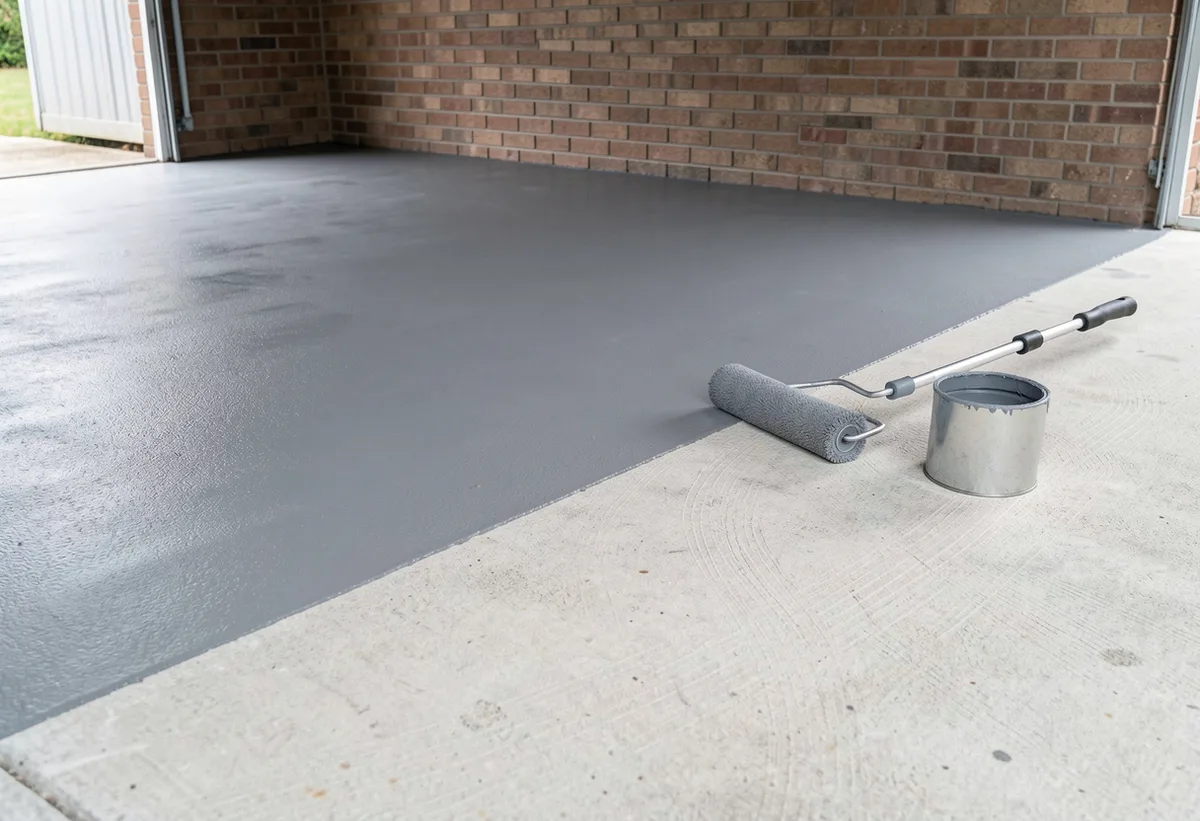
Epoxy for a garage you park in daily, paving paint for storage garages and budgets under $500. This is the decision most garage jobs turn on, so here is the straight comparison:
| Paving paint | Epoxy coating | |
|---|---|---|
| Cost, single garage DIY | $150–$300 | $300–$700 (kit) |
| Cost, professional | $800–$1,500 | $1,500–$3,500 |
| Life under a daily-driven car | 2–4 years, hot-tyre pickup is the killer | 8–15 years |
| Application | Roll it like paint, forgiving | Two-part mix, working time limits, less forgiving |
| Best for | Storage garages, sheds, quick pre-sale tidy-up | Daily-parked cars, workshops, long-term homes |
The honest verdict: hot tyres are the test. A car driven daily comes home with hot tyres that soften cheap coatings and peel them on the contact patch, which is why paving paint garages fail in the wheel paths first. If the garage stores boxes and bikes, paving paint is fine and far cheaper. If it parks the daily driver, pay for epoxy once instead of repainting every three years.
How do you paint concrete walls?
Concrete and besser block walls are the easy case: seal, fill, then paint like a normal wall. Once sealed, a concrete wall takes standard acrylic and prices like any other wall on the job.
The differences from plasterboard are all in the first hour:
- Efflorescence (the white powdery salt deposit on block and concrete walls) must be brushed off dry and its moisture source found, or it will push the new paint off. Do not wash it in, brush it off.
- Seal with a masonry sealer to even the porosity and block alkalinity.
- Fill mortar-joint gaps and block pinholes if you want a flat finish; block walls swallow paint into every void.
- Roll with a long-nap roller (15-20mm) so the paint reaches into the texture, two coats.
Interior retaining walls, basement walls and garage walls that show damp patches need the moisture fixed first. Paint is a finish, not a waterproofing product: bagged or painted-over damp always returns.
How do you paint exterior concrete and render?
Exterior concrete, from bare block fences to rendered walls, takes exterior acrylic over a sealed surface, and it is one of the most repaint-friendly surfaces on a house. Render and concrete hold paint well when prepped, which is why sprayed-and-back-rolled render is a staple of Melbourne exterior work.
The exterior additions to the standard prep:
- Pressure wash and let the surface dry fully, one to two days in Melbourne winter.
- Kill any mould or moss with a wash-down first, or it grows straight through the new coat.
- Hairline render cracks get a flexible filler or a high-build coating; structural cracks get a builder before a painter.
- Two coats of exterior acrylic, sprayed and back-rolled or rolled, over the sealed surface.
For a full rendered house exterior, expect $6,000 to $12,000 in Melbourne, broken down properly in our rendered house painting cost guide. Driveways are their own trade with their own coatings: see the concrete driveway painting guide.
How much does it cost to paint concrete in Melbourne?
DIY floor jobs run $8 to $15 per square metre in materials; professional concrete floor painting runs roughly $20 to $45 per square metre. The spread is almost entirely preparation: a sound bare slab sits at the bottom of the range, a sealed or previously painted slab needing grinding sits at the top.
| Job (2026 Melbourne prices) | Typical cost |
|---|---|
| Single garage floor, professional | $800–$2,000 |
| Concrete floors, professional, per sqm | $20–$45 |
| Driveway, professional | $1,500–$4,500 |
| Rendered house exterior, professional | $6,000–$12,000 |
| DIY floor, materials only, per sqm | $8–$15 |
A quote well under these ranges usually means the prep is being skipped, and on concrete, skipped prep is not a discount, it is a shorter countdown to peeling.
Why does paint peel off concrete?
Three causes account for nearly every failed concrete paint job: no surface profile, rising moisture, or the wrong paint.
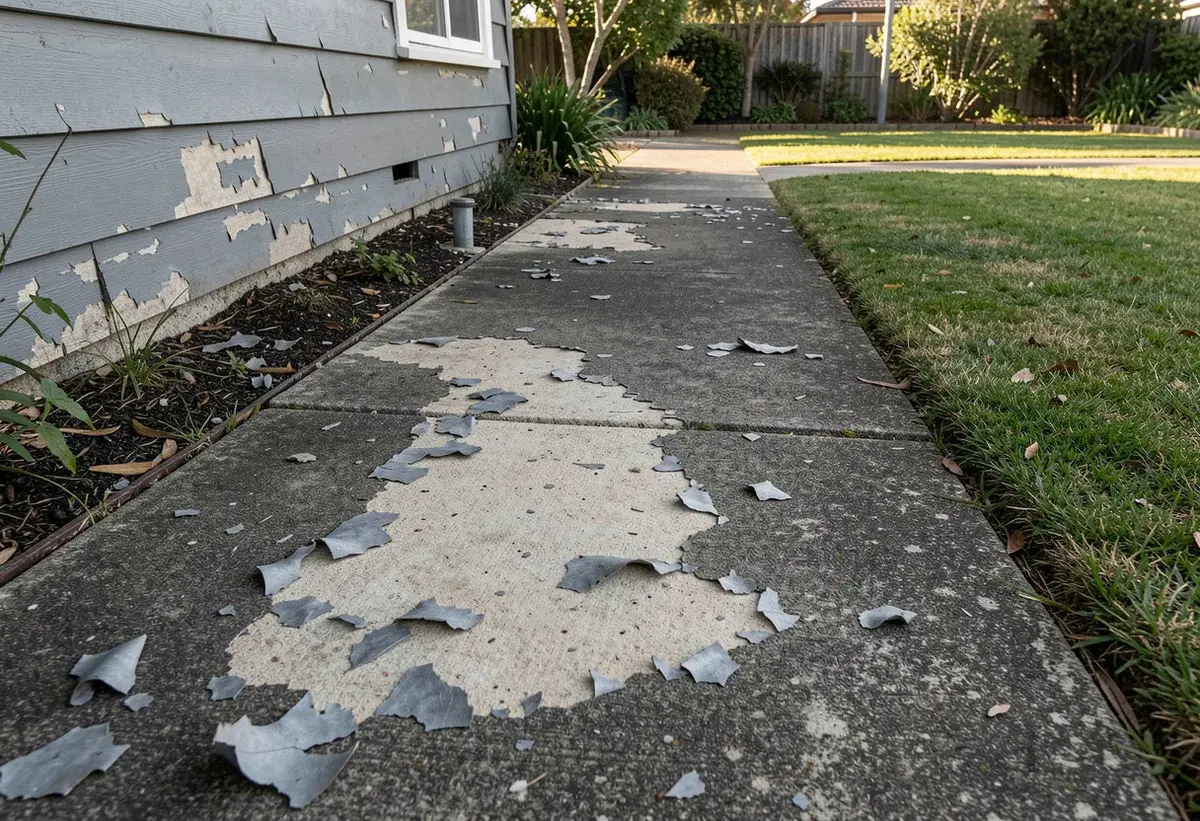
- No profile. The slab was smooth, sealed or dusty and never etched or ground, so the paint sat on top instead of gripping. Fails as sheets and flakes, often within the first year.
- Moisture from below. Slabs without a moisture barrier wick ground moisture upward, and the vapour pressure pushes coatings off. Tape a 50cm square of plastic sheet to the slab for 24 hours: condensation underneath means moisture, and a breathable coating or moisture-tolerant epoxy, not standard paint.
- Wrong product. Wall paint on floors, interior paint outdoors, or paving paint under hot car tyres. Fails at the wear points first.
If an old painted surface is already failing, the loose paint has to come off before anything new goes on: methods per surface are in our paint removal guide.
We paint rendered exteriors, concrete walls and garage floors as part of painting jobs across Melbourne. The same family has run the crew since 1987, every quote is fixed and written, and every job carries $20M public liability.
Tired concrete letting the place down?
We prep and paint rendered exteriors, concrete walls and floors across Melbourne. Free on-site inspection and a fixed written quote, painting since 1987 with $20M public liability.
See our full exterior painting service for rendered and concrete exteriors.
Frequently asked questions
Can you paint directly onto concrete?
No. Bare concrete needs cleaning, etching or grinding, and a sealer or concrete primer first, or the paint peels. New concrete must also cure for at least 28 days before painting.
What kind of paint do you use on concrete?
Floors and driveways need paving paint, epoxy or polyurethane coatings built for traffic. Concrete and block walls take standard acrylic over a masonry sealer, and rendered exteriors take exterior acrylic like Dulux Weathershield. Wall paint on a floor wears through in months.
How much does it cost to paint concrete in Melbourne?
DIY floors cost $8 to $15 per square metre in materials. Professionally, concrete floors run roughly $20 to $45 per square metre, a single garage $800 to $2,000, a driveway $1,500 to $4,500, and a rendered house exterior $6,000 to $12,000.
Why does paint peel off concrete?
Three causes: no surface profile (the slab was never etched or ground), moisture rising through the slab pushing the coating off, or the wrong paint, usually wall paint on a floor. The plastic-sheet test, taped to the slab for 24 hours, reveals a moisture problem before you paint.
Do you need to seal concrete before painting?
Yes, almost always. Sealer evens out concrete’s porosity and blocks its alkalinity, which otherwise attacks paint from behind. The exception is epoxy systems that ship with their own dedicated primer.
Related service: Exterior Painting.
We paint across Essendon, Richmond, Williamstown, Yarraville, Newport, Moonee Ponds and more — see our painting services in Ascot Vale, or the house painters in Melbourne families have trusted since 1987.