Professional painters near Ascot Vale typically charge $7,000–$12,000 for a full exterior repaint of an Edwardian home in 2026, with heritage-appropriate Dulux products and proper council heritage overlay navigation included.
[NEEDS QUOTE: Heritage architect on preserving Edwardian architectural details during exterior restoration] Ascot Vale has charm. Wide streets, solid brick homes, established gardens, and a real community feel make it one of Melbourne’s most desirable inner-western suburbs. Most of that charm comes from Edwardian and Federation-era homes—substantial, beautifully detailed, full of original features. It’s also a heritage overlay area, which means painting your home isn’t just about what looks good. There are rules, requirements, and conversations with your local council.
Modernize Solutions is a Melbourne painting company established in 1987 that has painted dozens of Ascot Vale homes over 35+ years. The company holds $20M public liability insurance, maintains a 4.8-star Google rating across 154 reviews, and has completed over 1,000 residential painting projects using Dulux premium paint systems exclusively.
We understand both the heritage requirements and the practical reality of maintaining and updating period homes. We’ve navigated council approvals, preserved original details, and helped owners refresh their homes while respecting local planning rules.
If you own an Edwardian or Federation home in Ascot Vale, you’re steward of a significant property. Painting it properly matters—to its value, its character, and its longevity.
What Defines Ascot Vale’s Architectural Character?
Primarily Edwardian and Federation-era homes with high ceilings, ornate cornicing, decorative brickwork, and often rendered facades under heritage overlays.
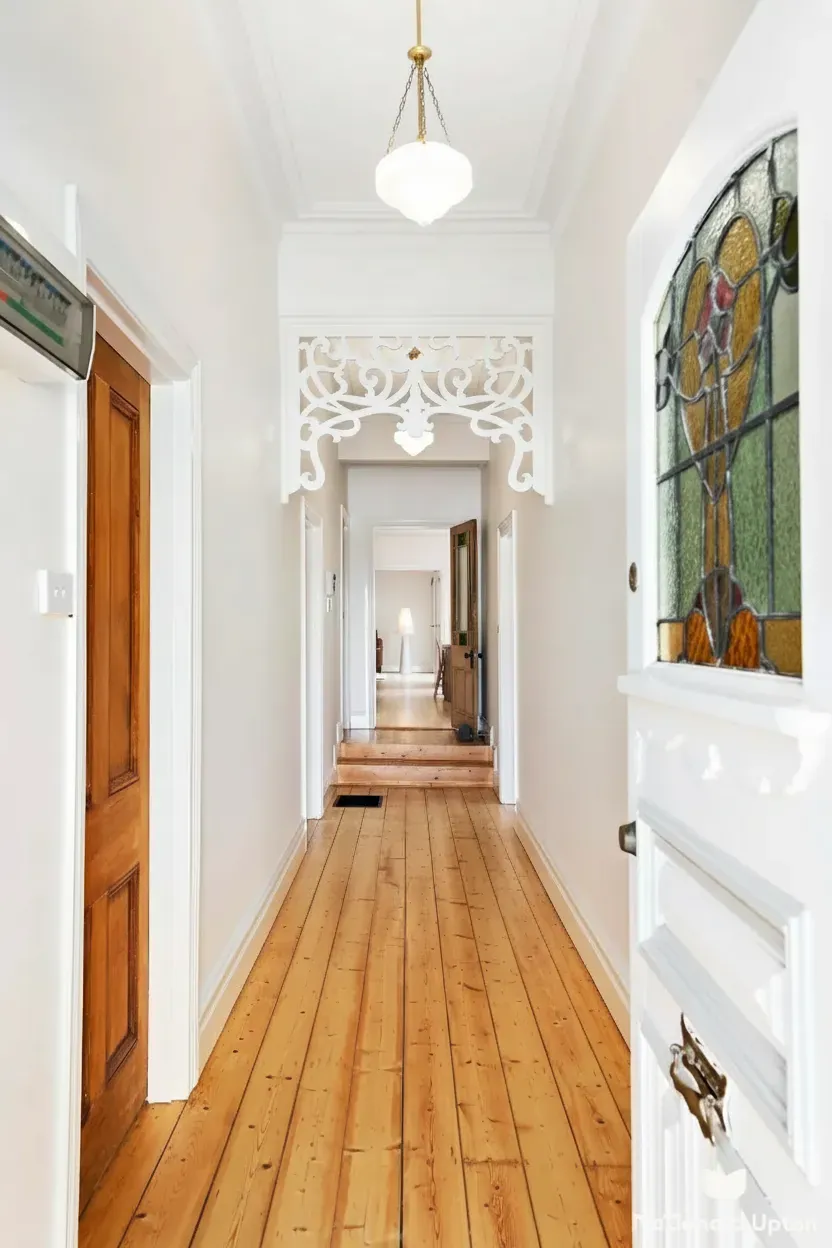
Ascot Vale’s housing stock is primarily Edwardian (1901–1910) and Federation (1890–1920). These aren’t casual homes; they’re architecturally significant. High ceilings, ornate cornicing, period windows, decorative brickwork, often rendered facades, sometimes ornamental leadlight or stained glass.
These homes were built to last. The construction is solid—proper brick, lime mortar, good timber. But they’re aging. Paint is failing, timber is weathered, and a lot of owners are discovering that maintaining period homes requires understanding both conservation principles and practical painting technique.
Many Ascot Vale properties fall within a heritage overlay. This means your local council has a say in external changes, including painting. Before you paint, you might need approval. Understanding the process early saves time and avoids having to repaint because you chose the wrong colour.
What Are Heritage Overlay Requirements for Painting in Ascot Vale?
You’ll likely need council approval before painting — they review colour choices and visible changes, and the process takes 2-4 weeks.
Here’s the practical reality: if your Ascot Vale property is in a heritage overlay area, you’ll likely need to notify your council before painting. The requirement varies by council and property, so you should check with your local planning department.
What councils typically care about: original colour schemes, feature details (timber trim, rendered surfaces), and whether changes are reversible. They’re less concerned with interior painting and more focused on what’s visible from the street.
Many councils provide historical colour research for heritage properties. Dulux Australia developed the Heritage range specifically for period homes, with soft, slightly muted palettes that suit Edwardian and Federation homes. We can help you navigate council requirements and choose colours that’ll be approved.
Key takeaway: Heritage overlay approval in Ascot Vale typically takes 2–4 weeks through Moonee Valley City Council, and Modernize Solutions includes heritage colour consultation and council navigation as part of every Ascot Vale painting project.
A typical approval process takes 2–4 weeks. You submit plans, council responds, you might need to adjust your proposal, then you get approval to proceed. It’s not onerous, but it does require planning ahead.
How Should You Paint an Edwardian Home to Respect Period Details?
Feature elements like cornicing, dado rails, and decorative brickwork should be painted to make the detail visible, not camouflaged.
Edwardian homes have ornamentation. Cornicing, dado rails (sometimes), ceiling roses, decorative brickwork, timber trims. These details are often original and are part of the home’s character. Your painting approach should respect them.
First principle: feature elements should be visible and readable. If your home has ornate cornicing, it should be painted in a way that makes the detail visible, not camouflaged. Common approach: paint the cornicing in a soft white or off-white that contrasts gently with the wall colour. It reads as a feature without screaming.
Same approach for other period details. Leadlight windows, feature brickwork, timber trim—paint them in a way that draws attention to them, not away from them.
Some Ascot Vale homes have rendered facades—lime-based render that’s original or from the early 20th century. Rendered surfaces breathe; they allow moisture to escape. We don’t paint them with modern acrylic paint that creates a moisture barrier. We either leave them unpainted (letting them age naturally and maintaining their texture) or use lime-based paint that preserves the breathability.
This is the kind of detail that matters in period homes. Wrong paint choice and you’ll trap moisture, causing damage over time.
What Colours Are Approved for Heritage Overlay Properties?
Soft greys, warm creams, dusty ochres, and subtle greens from the Dulux Heritage range — period colours that actually look good and age well.
Here’s where council guidance and historical accuracy meet practical preference. Edwardian homes were typically painted in muted, natural palettes: soft greys, warm creams, dusty ochres, subtle greens. These colours weren’t fashionable—they were practical. They aged well, didn’t show dirt, and suited the mood of the era.
Many modern homeowners feel constrained by this palette. But here’s the thing: historical period colours actually look good. A soft sage green on an Edwardian weatherboard home feels right. A warm cream on rendered brick feels appropriate. These aren’t boring colours; they’re colours with depth and character.
Dulux Heritage range was developed specifically for period homes. We typically recommend selecting from that range for any Ascot Vale property, heritage overlay or not. It’s not restrictive—there are hundreds of options—it’s just colour families that suit the home’s era.
If you want something slightly bolder, we can work with you on council approval. Some councils will approve non-traditional colours if the application is sympathetic to the home’s character. But we’ll be honest: strong bright colours usually don’t work on period homes. They fight the architecture instead of working with it.
How Should You Handle Timber Details and Decorative Features?
Original timber trim was historically painted in darker contrasting colours — restore that scheme or create something contemporary that still respects the architecture.
Many Edwardian homes have original timber detailing: window frames, doors, cornicing, soffit and fascia boards. These are often painted in contrasting colours to the main walls—typically darker or brighter than the surrounding surfaces.
Original colour schemes often featured darker trim. A soft cream wall with charcoal or deep grey trim was common. This provided visual definition and made the detailing visible.
When you’re repainting, think about whether you want to restore historical colour schemes or create something contemporary that still respects the architecture. Both approaches can work, but you need to be intentional.
Timber doors in Ascot Vale homes are often original or early Federation era. If you’re repainting a door—front door especially—this is your accent opportunity. A deep colour—forest green, slate blue, burgundy—contrasts with cream or soft grey walls and looks intentional. We paint doors separately using a satin finish that’s durable and shows off the colour richly.
What Paint Systems Work Best on Edwardian Exteriors?
Dulux Weathershield for brick and timber, lime-based paint for heritage render — each surface needs a different approach to last properly.
Edwardian homes typically have brick, rendered surfaces, or timber weatherboard—sometimes a combination. Each requires different paint consideration.
Brick and Render
Brick and render need to breathe. We recommend Dulux Weathershield for brick (exterior-grade, flexible, allows moisture vapour to escape) or lime-based paint for heritage render (if it’s original or you want to maintain breathability).
For rendered surfaces that have been painted many times, we strip back to assess condition before repainting. Render that’s failing or delaminating might need repair before paint. Render that’s sound and in good condition just needs cleaning and repainting.
Timber Weatherboard
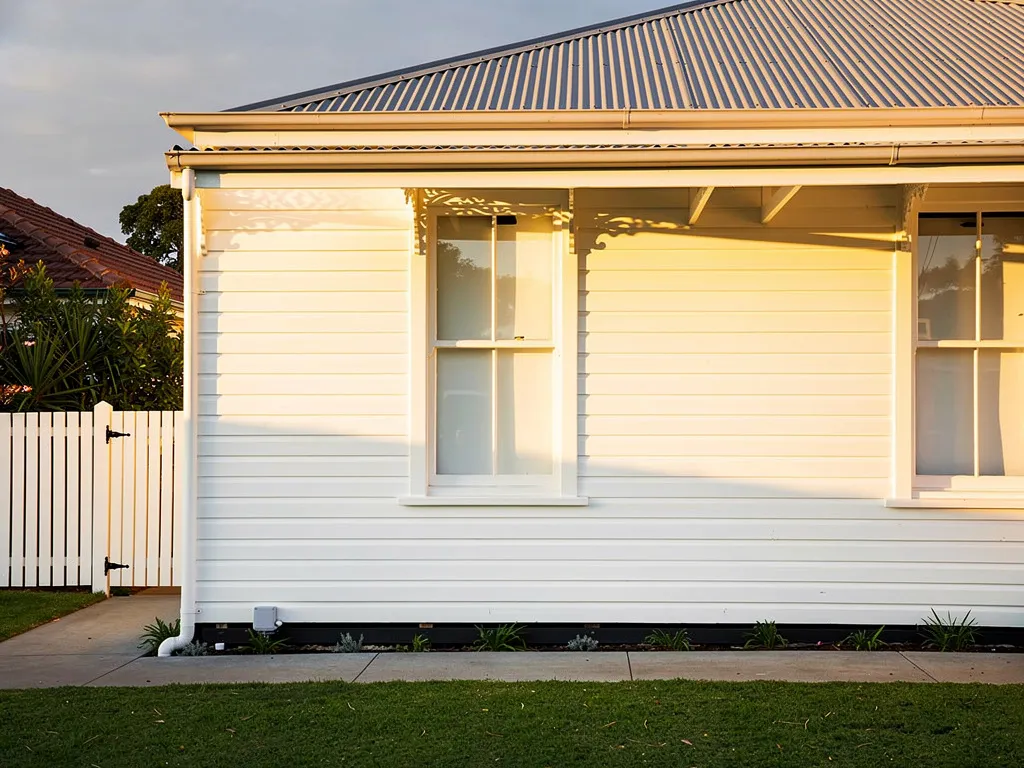
If your Ascot Vale home has timber weatherboard (some do), it’s either original or early Federation era. Original weatherboard is often narrower and more finely finished than modern weatherboard. It deserves protection with quality paint.
We specify Dulux Weathershield for timber, applied in two coats over proper preparation. Preparation is critical with period timber—it’s often softer, more delicate than modern timber. We hand-scrape rather than power-tool to avoid damage.
What Are the Interior Painting Considerations for Edwardian Homes?
Respect original plasterwork — paint cornicing to make it visible, use period-appropriate colours, and vary by room while keeping a cohesive palette.
Interiors often have original plasterwork—high ceilings with decorative cornicing, ceiling roses, sometimes intricate coving. These details are protected by heritage overlays in some cases, though council approval is often simpler for interiors than exteriors.
Interior paint approach: respect the detail. Paint cornicing in a way that makes it visible. Use period-appropriate colours that suit the era. Original Edwardian homes often had papered walls and richly painted trims. Modern approach might be subtle paint colour with feature-painted cornicing—creates the same visual interest with less commitment.
For period homes with multiple rooms and different purposes, you can vary colour slightly by room while maintaining a cohesive palette. A soft blue in a bedroom, soft green in a living area, warm cream in hallways—all from the heritage range, all working together.
How Does the Council Heritage Approval Process Work?
Notify council with your proposed colours, wait 2-4 weeks for review, adjust if needed, then proceed — straightforward but requires planning ahead.
Most Ascot Vale homeowners don’t know their property is in a heritage overlay until they apply for painting approval and get asked questions. Here’s how it works:
- You notify your council (most councils have a simple form) with your proposed colour and finish
- Council reviews against heritage significance guidelines
- If your choice aligns with guidelines, approval is usually simple
- If there’s any question, council might request different colours or justification
- Once approved, you can proceed
This process adds 2–4 weeks but prevents issues later. It’s genuinely worth doing before you start.
We help clients navigate this. We’ve worked with Moonee Valley City Council on many projects and know the common approvals. We can advise on what’ll likely be approved, help you present your proposal, and respond to feedback.
How Much Does It Cost to Paint an Edwardian Home in Ascot Vale?
A full exterior refresh runs $7,000-$12,000 with Dulux products; interior refresh for main living areas is typically $4,000-$7,000.
For a typical Edwardian home in Ascot Vale (double-storey brick or rendered facade, maybe 200–250 square metres of paintable area):
| Project type | Typical cost range | Paint system | Expected lifespan |
|---|---|---|---|
| Full exterior refresh | $7,000–$12,000 | Dulux Weathershield | 10–15 years |
| Spot repairs and repaint | $5,000–$8,000 | Dulux Weathershield | 6–8 years |
| Interior living areas | $4,000–$7,000 | Dulux Wash & Wear | 7–10 years |
| Timber doors (per door) | $300–$600 | Dulux satin finish | 5–7 years |
| Heritage render refresh | $3,000–$5,000 | Lime-based paint | 8–12 years |
| Heritage colour consultation | Included | Dulux Heritage range | — |
These assume Dulux products and professional finishes. Heritage overlay notification and potential minor council approval discussion is included in our consultation.
Key takeaway: A full exterior repaint of a typical Edwardian home in Ascot Vale costs $7,000–$12,000 with Dulux products, and Master Painters Australia recommends obtaining at least three written quotes from licensed painters before committing to heritage work.
Timber doors and decorative features add value but might cost $300–$600 per door depending on condition and number of coats needed.
Why Do Heritage Homes Deserve Professional Painting?
Getting the character right requires understanding not just paint but architecture — which details to emphasise, how to handle original materials respectfully.
Edwardian homes are detailed. Getting the character right requires understanding not just paint but architecture. You need to know which details to emphasize, how to choose colours that work with the era, how to handle original materials respectfully.
We’ve been painting Ascot Vale homes for 35+ years. We understand the suburb’s heritage, we know council requirements, we’ve painted hundreds of period homes. We use Dulux—it’s the right system for heritage work. We carry $20 million in public liability insurance. We maintain a 4.8-star Google rating across 154 reviews. Every exterior job gets a three-year workmanship warranty. Consumer Affairs Victoria advises homeowners to always check a contractor’s insurance coverage and request written warranties before work begins.
Key takeaway: Modernize Solutions has completed over 1,000 residential painting projects since 1987, with specialist experience in Edwardian and Federation homes across Ascot Vale and the Moonee Valley area.
More importantly, we understand that your Edwardian home isn’t just a house. It’s a significant part of Ascot Vale’s character. Painting it well matters—to its value, its longevity, and its contribution to the neighbourhood.
What Are the Common Painting Mistakes in Ascot Vale?
Period homes punish painting shortcuts more visibly than modern builds. Here are the mistakes we see most often on Ascot Vale Edwardian homes:
- Painting heritage render with standard acrylic — Acrylic paint traps moisture behind lime-based render, causing blistering, spalling, and long-term structural damage to original facades.
- Ignoring heritage overlay requirements — Painting without council approval can result in enforcement notices requiring you to repaint in approved colours at your own expense.
- Over-sanding ornate cornicing and timber trim — Power tools remove fine period detail permanently. Hand-sanding preserves the moulding profiles that give Edwardian homes their character.
- Using bright white on period facades — Harsh bright whites clash with Edwardian architecture. Warm creams and soft heritage whites look period-appropriate and age more gracefully.
[NEEDS QUOTE: Dulux colour consultant on selecting heritage-appropriate palettes for Moonee Valley Edwardian homes]
Frequently asked questions
How much does it cost to paint an Edwardian home in Ascot Vale?
A full exterior repaint of an Edwardian home in Ascot Vale costs $7,000–$12,000 with Dulux products in 2026. Interior refresh for main living areas runs $4,000–$7,000. Heritage overlay consultation and colour guidance are included in every Modernize Solutions quote.
What type of paint is best for Ascot Vale period homes?
Dulux Weathershield is best for exterior brick and timber, while lime-based paint preserves breathability on heritage render. For interiors, Dulux Wash & Wear suits living areas and Dulux Aquanamel handles moisture-prone rooms and ceilings.
Do I need council approval to paint my Ascot Vale home?
If your property is within a heritage overlay in the Moonee Valley City Council area, you’ll likely need approval before painting the exterior. The process typically takes 2–4 weeks. Modernize Solutions includes heritage colour consultation and council navigation as part of every Ascot Vale project.
How long does a full repaint take on an Ascot Vale Edwardian home?
A full exterior repaint of a typical Ascot Vale Edwardian home takes 2–3 weeks, including surface preparation, heritage colour selection, and application. Interior refresh of main living areas takes 7–10 working days.
Ready to Bring Your Ascot Vale Period Home Back to Life?
Proper preparation, heritage-appropriate colours, quality Dulux systems, and skilled application — that’s the right way to refresh a period home.
If your Edwardian or Federation home is looking tired, or you’re planning a refresh, there’s a right way to do it. Proper preparation, heritage-appropriate colours, quality systems, and skilled application.
Give us a call on 0451 040 396. We’ll come out, look at your home, talk you through what it needs, and help you navigate council requirements if necessary. We’ll give you a transparent quote and honest advice.
Your Ascot Vale home deserves painting that respects its heritage and brings its character forward. Let’s make that happen.
Related Service: Exterior Painting
Protect and beautify your home with professional exterior painting built to last.
Learn more about our Exterior Painting service →
Owner & Lead Painter · Modernize Solutions · Painting Melbourne homes since 1987