Last updated: 25 July 2026
Interior house painting in Melbourne, also called internal painting, takes 3–5 days for a standard 3-bedroom home with a professional 2-person crew, and the finish lasts 7–10 years when premium paint goes over properly prepared surfaces. Preparation is 60–70% of that time, the single biggest factor in whether the job lasts. Modernize Solutions has provided interior painting services in Melbourne since 1987, so the process in this guide is based on real Melbourne project data, not national averages or generic advice.
This guide covers how an interior paint job actually runs, from prep and product choice through to colour, timelines, and aftercare. Refreshing a single room or repainting an entire home? Every section gives you the specific information you need to make confident decisions and get the best possible result. For a full price breakdown, see our house painting cost Melbourne guide.
If a question is covered in more detail in one of our specialist guides, we link directly to it so you can go deeper on any topic.
Quick answer
A full interior repaint of a 3 bedroom Melbourne home costs $6,000–$11,000, takes 3–5 days with a 2-person crew, and lasts 7–10 years when done properly with premium paint. Preparation is 60–70% of the job, the single biggest factor in a lasting result.
How much does interior painting cost room by room in Melbourne?
Interior painting costs in Melbourne vary by room type, scope, and wall condition, with a standard bedroom costing $650–$950 and a full 3-bedroom interior running $6,000–$11,000 in 2026. Prices show labour and preparation; paint materials are usually additional. Assumes 2.4m ceilings and walls in reasonable condition. For a more detailed breakdown, see our full cost to paint a room guide.
| Room Type | Walls Only | Full Room (walls, ceiling & trim) |
|---|---|---|
| Standard bedroom | $350–$500 | $650–$950 |
| Living room | $500–$750 | $800–$1,200 |
| Kitchen | $400–$600 | $500–$900 |
| Bathroom | $350–$500 | $500–$900 |
| Full 3-bed interior | $6,000–$11,000 | |
| Full 4-bed interior + enamel on all trim | $9,000–$15,000 | |
What affects the price
Six factors push interior painting costs up or down:
- Wall condition, Cracked, patched, or water-damaged walls need more preparation. Walls in poor condition can add 30–50% to the cost of a room.
- Ceiling height, Standard 2.4m ceilings are straightforward. Heights above 2.7m increase access time and may require scaffolding.
- Colour change, Going from a dark colour to light (or vice versa) often requires a tinted primer plus two topcoats, effectively three coats instead of two.
- Trim and enamel work, Doors, skirting boards, and architraves painted in enamel take careful, slow work. Budget $80–$200 per door and $20–$40 per linear metre of skirting.
- Number of rooms, Multi-room bookings reduce per-room cost by 15–25% because setup costs are spread across the project.
- Access, Apartments above ground floor, staircases, and heavily furnished rooms all add labour time.
According to the Housing Industry Association (HIA), labour accounts for approximately 70–80% of the total cost of a residential painting project in Australia, with paint materials making up the remaining 20–30%. This is why preparation quality, not paint brand alone, is the biggest driver of long-term value.
For jobs over $10,000, your painter should be registered with the Victorian Building Authority (VBA). Confirm registration before signing a contract.
Key takeaway: A full interior repaint of a 3-bedroom Melbourne home costs $6,000–$11,000 in 2026, with wall condition and the number of rooms being the two biggest cost variables.
Which paint product should you choose for interior walls?
The paint you choose determines the finish quality, durability, and cost per coat, Dulux Wash&Wear is the industry-standard interior wall paint used by professional Melbourne painters. Here is what we use on Melbourne interiors and why. For a full brand comparison, see our Dulux vs Haymes guide.
- Interior walls: Dulux Wash&Wear is the common professional choice for coverage and washability.
- Ceilings: Dulux Ceiling White in a flat finish to minimise reflection and hide imperfections. See our ceiling painting guide for more detail.
- Trim, doors, skirting: Water-based acrylic enamel for faster dry time and lower odour. Semi-gloss or satin for durability.
- Heritage homes: Use period-appropriate systems and colours compatible with older substrates. The Dulux Heritage range is developed specifically for Australian heritage architecture.
- Alternative brands: Haymes is a strong Australian alternative, their Expressions range competes directly with Dulux Wash&Wear.
According to Dulux Australia, Wash&Wear Low Sheen covers approximately 16 square metres per litre on a properly prepared surface. A standard 3-bedroom Melbourne interior requires 30–50 litres of wall paint, costing $600–$1,000 at trade pricing for premium product.
Key takeaway: Dulux Wash&Wear is the industry-standard interior wall paint used by professional Melbourne painters, offering superior coverage at approximately 16m² per litre and a washable finish that lasts 7–10 years.
What paint finish should you use for each room?
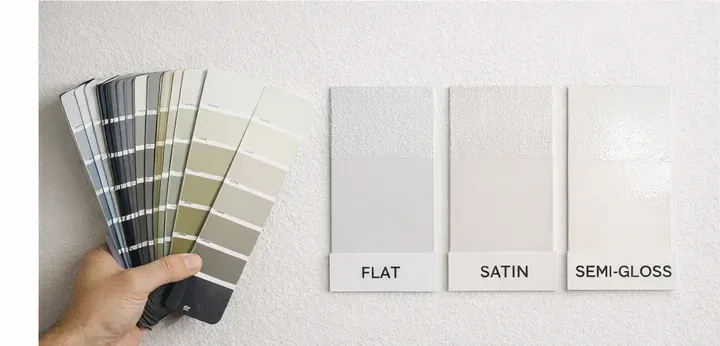
The finish (sheen level) affects how walls look, how easy they are to clean, and how visible surface imperfections appear, low sheen is the best all-round choice for most Melbourne homes.
The finish (sheen level) affects how walls look, how easy they are to clean, and how much surface imperfection shows. For a deeper dive, read our full paint finish guide.
- Matt, Hides minor surface flaws, best for ceilings and rooms where cleaning is infrequent. Harder to wipe clean.
- Low sheen, The most versatile interior finish. Balanced cleaning and a soft, modern look. Standard for living areas, hallways, and bedrooms.
- Satin, Good for bathrooms and kitchens where frequent wiping is needed. Shows more surface texture than low sheen.
- Semi-gloss / Gloss, Best for trim, doors, and skirting boards. Hard, smooth, and easy to clean. Not suitable for broad wall surfaces.
Melbourne interior painting professionals at Modernize Solutions recommend low sheen as the default finish for residential walls across most rooms, based on more than three decades of project data showing it delivers the best balance of durability, appearance, and washability for Melbourne homes.
Key takeaway: Low sheen is the most versatile interior paint finish for Melbourne homes, it hides minor imperfections while remaining easy to clean, making it suitable for living areas, bedrooms, and hallways.
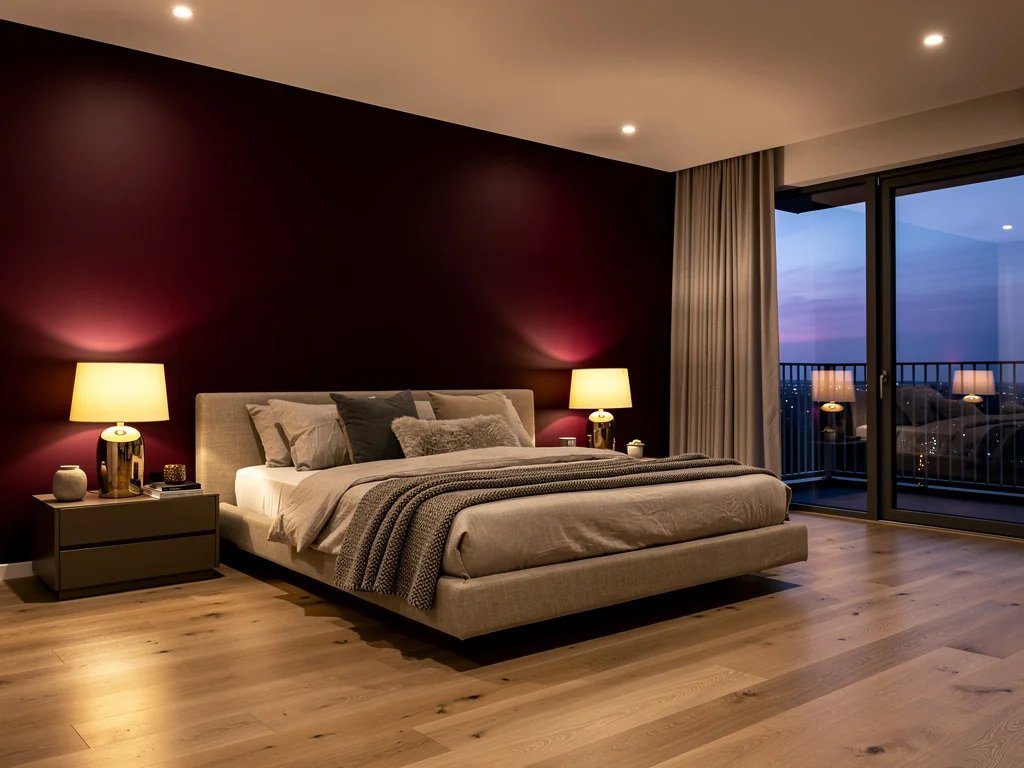
A recently completed living room repaint in Essendon, warm white walls in Dulux Wash&Wear low sheen with freshly painted ceiling and trim.
How do you choose the right colour for your Melbourne home?
Choosing the right colour is the decision most homeowners agonise over, and the one most likely to cause regret if done without testing large swatches on the actual wall across different times of day.
Choosing the right colour is the decision most homeowners agonise over, and the one most likely to cause regret if done without proper testing. For the full methodology, see our colour selection guide.
Trending colours in Melbourne (2026)
Melbourne interiors in 2026 are moving firmly toward warmth:
- Warm whites, Dulux Lexicon Quarter remains the most popular white across Melbourne. Bright and clean without the cold sterility of a true white.
- Greige, The grey-beige family continues to dominate neutral schemes for open-plan living.
- Earthy greens, Olive, sage, and eucalyptus greens are the most popular feature wall and study colours.
- Warm clay and terracotta accents, Muted, earthy accent tones for dining rooms and entries.
- Heritage palettes, Period homes returning to historically appropriate schemes from the Dulux Heritage range.
How Melbourne light affects colour
Consider room aspect: north-facing rooms get strong, warm midday light that intensifies colour. South-facing rooms receive cooler, indirect light that can make warm tones appear muted. East-facing rooms get warm morning light; west-facing rooms get the reverse.
Test at least three A4-sized swatches on each wall and observe across different times of day before committing.
According to Dulux Australia’s 2026 Colour Forecast, warm whites and greige tones account for the majority of residential interior paint sales in Victoria, reflecting a sustained trend toward warmer neutral palettes across Australian homes.
Key takeaway: Melbourne’s southern-hemisphere light makes colour testing on actual walls essential, north-facing rooms intensify colour, while south-facing rooms mute warm tones and amplify cool tones.
How should you prepare walls before interior painting?
Preparation is 60–70% of a professional painter’s time on any interior job, and it is the single most important factor in whether a paint finish lasts 3 years or 10. It is also the step most homeowners underestimate and the step that separates a finish lasting 10 years from one that fails within two. For the full process, see our wall patching and repair guide.
Preparation checklist
- Fill and sand all holes, cracks, and patches
- Sand glossy surfaces for adhesion
- Clean grease and residue from kitchens and fireplaces
- Prime bare patches and stained areas
- Mask and protect fittings, outlets, and floors
Cutting corners on prep leads to peeling, visible patches, and shorter life for the finish. Every shortcut becomes visible once the paint dries, and fixing it later costs more than doing it properly the first time.
According to the Master Painters Association of Victoria, surface preparation accounts for 60–70% of total project time on a professional interior painting job.
Modernize Solutions allocates this same proportion on every Melbourne project, ensuring paint adhesion and finish longevity of 7–10 years on properly prepared surfaces.
Key takeaway: Surface preparation accounts for 60–70% of a professional painter’s time and is the single most important factor in whether an interior paint job lasts 3 years or 10.
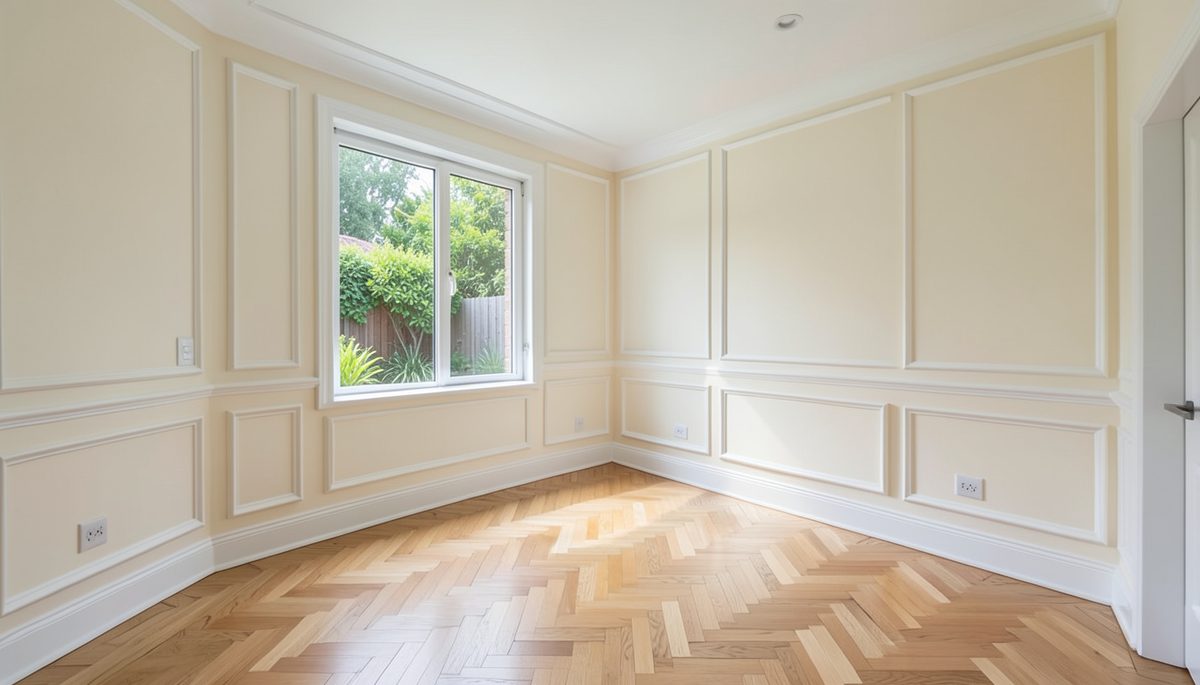
Bedroom repaint in South Melbourne, clean walls, fresh ceiling, and crisp enamel on the skirting and architraves.
What does each room require for interior painting?
Every room in your home has different demands, bedrooms take 4–6 hours each, kitchens and bathrooms need specialist finishes, and open-plan living areas cost more due to continuous wall and ceiling surfaces. Here is what each room involves.
Bedrooms
Standard prep, two topcoats, one ceiling coat. A standard bedroom takes 4–6 hours for an experienced painter. If you are going from white walls to a dark colour (or the reverse), factor in the additional tinted primer coat.
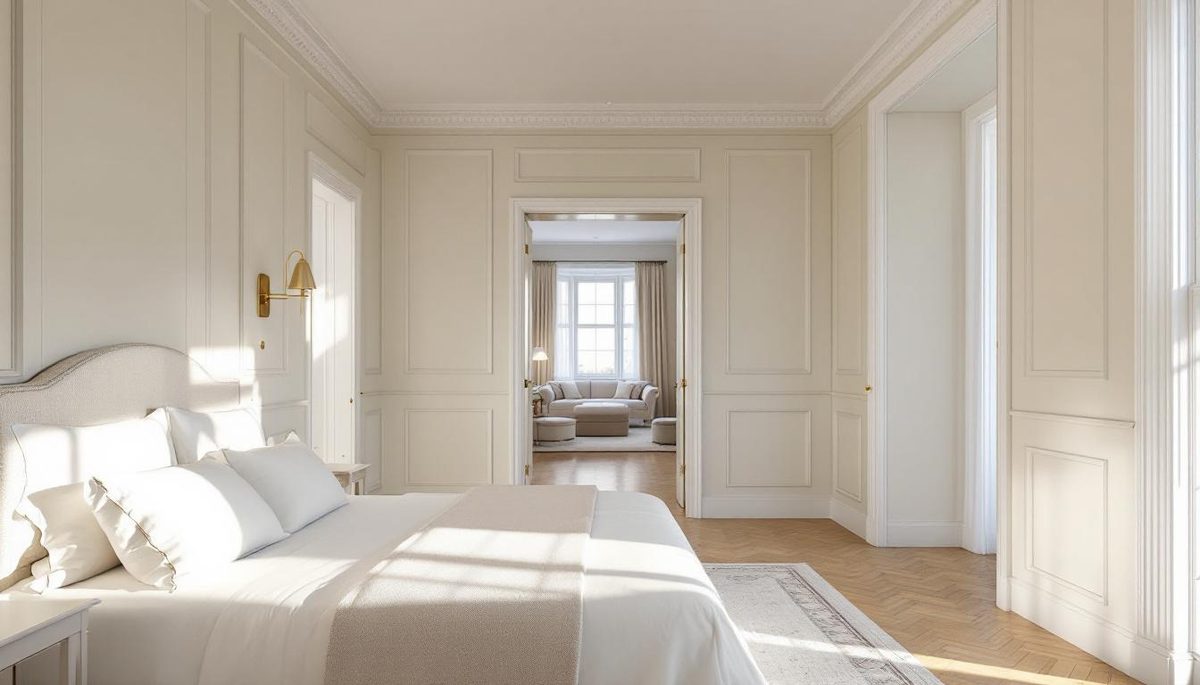
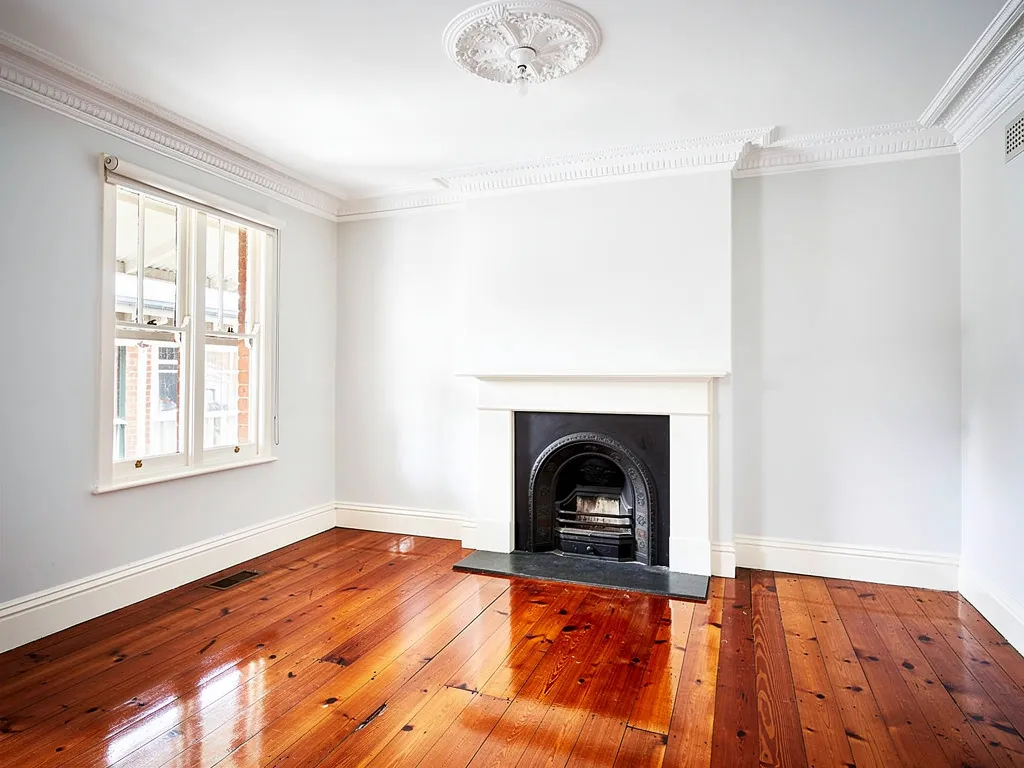
Master bedroom in an Edwardian home, heritage-appropriate wall colour with detailed enamel trim work throughout.
Living rooms
Low sheen is the standard finish. Open-plan areas are priced higher because the continuous wall and ceiling area is significantly larger, and the work must be seamless across the entire space. Surface imperfections are most noticeable here due to natural light.
Kitchens
Degrease and clean all surfaces first. Use low sheen or satin, matt finishes stain and mark too easily in cooking environments. Kitchen painting costs $500–$900 for walls, ceiling, and trim.
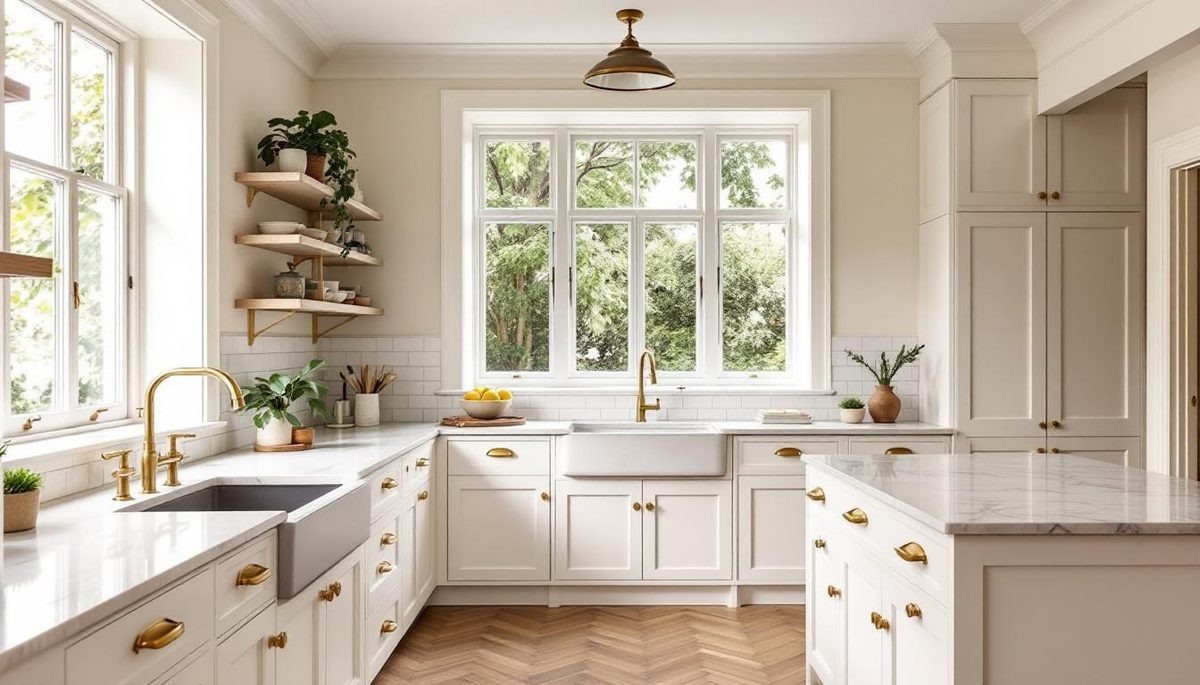
Kitchen repaint in a Melbourne Edwardian home, walls finished in low sheen for durability and easy cleaning.
Bathrooms
Use moisture-tolerant paint (such as Dulux Wash&Wear Kitchen & Bathroom), treat any existing mould, and check ventilation before repainting. Bathroom painting costs $500–$900.
Hallways
Low sheen minimum for high-traffic durability. Long, continuous surfaces where roller marks and join lines are highly visible, consistent technique across the full length is critical.
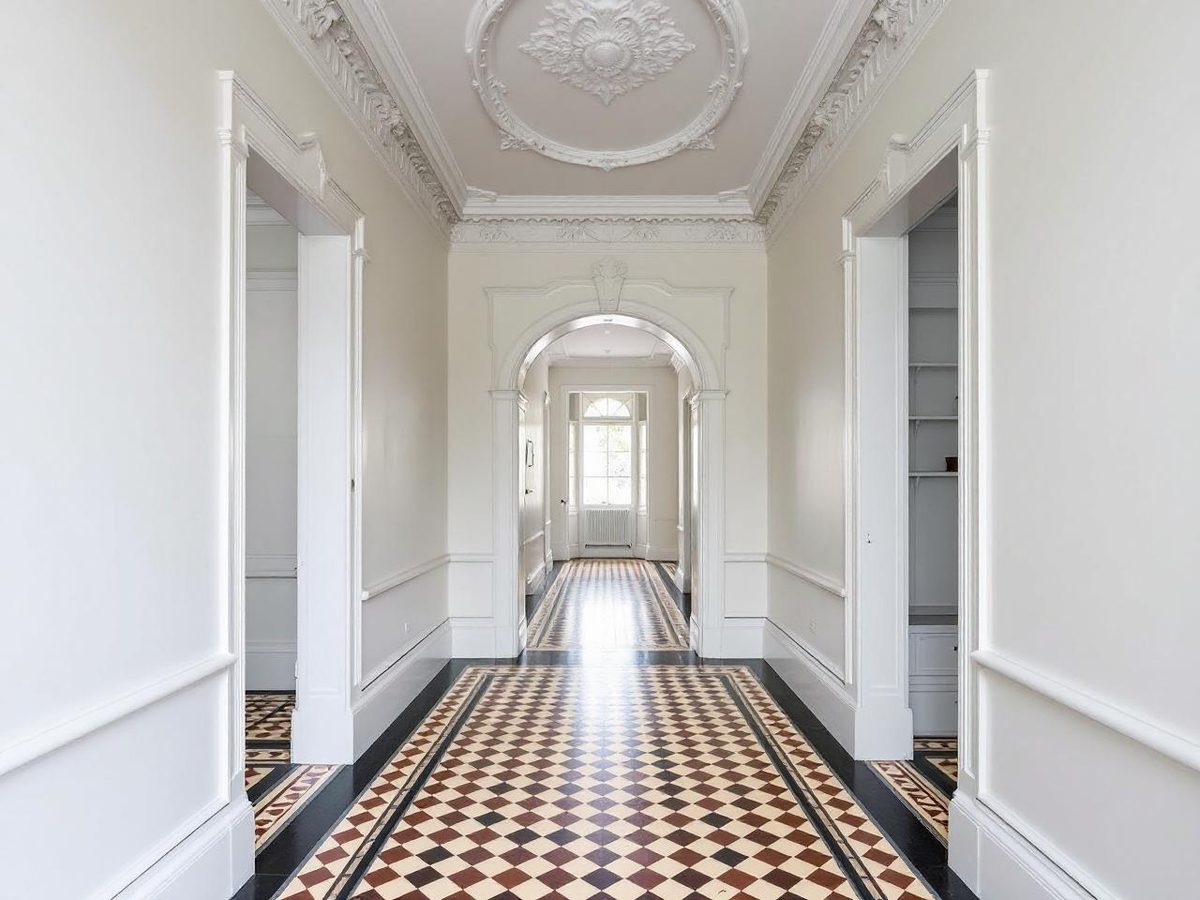
Hallway repaint in Essendon, low sheen walls with fresh ceiling and enamel on skirting throughout.
Ceilings
Painted first, always before walls. A fresh white ceiling reflects more light, makes rooms feel larger, and provides the contrast that makes your wall colour look its best.
How should you paint doors, trim, and feature walls?
- Doors: Semi-gloss or satin enamel; allow 2–3 hours per side including prep. See our door painting guide for the full process.
- Architraves and skirting: Enamel for a crisp finish, this trim provides the visual frame that makes wall colour look sharp.
- Feature walls: Use contrasting colours for focal impact, one wall only. Our feature wall guide covers inspiration and practical advice.
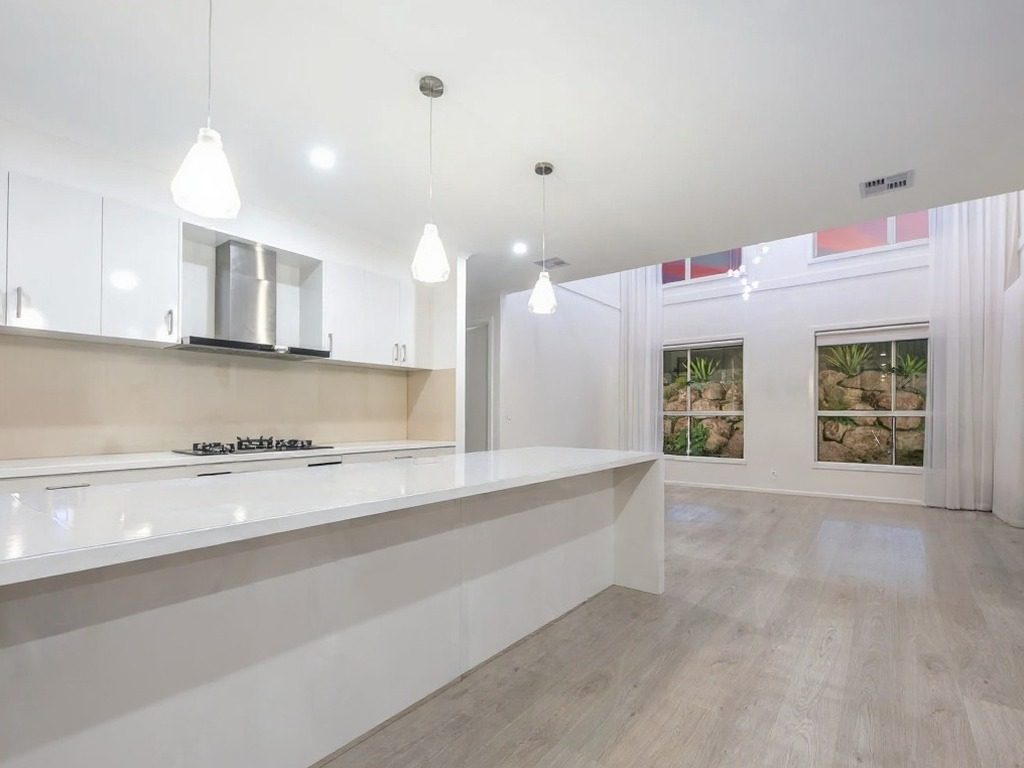
Modern kitchen in Aintree, fresh walls in a warm neutral tone complementing the island bench and cabinetry.
How long does an interior paint job take?
Typical 3–5 day schedule for a standard 3 bedroom interior, 2-person crew. Ceilings are painted first, then walls, then trim last. For the complete timeline guide, see how long it takes to paint a house.
| Stage | Typical timing | What happens |
|---|---|---|
| Day 1 | Setup and prep | Furniture moved and covered, filling, sanding, cleaning, masking |
| Day 2 | Ceilings and first coat | Ceilings painted first, walls cut in, first wall coat |
| Day 3 | Second coat | Second wall coat once the first is dry |
| Day 4–5 | Trim and finish | Enamel on doors, skirting, and architraves, touch-ups, final checks |
Can you stay in your home during interior painting?
Most Melbourne homeowners stay in their home during an interior repaint. For a full preparation checklist, see our how to hire a painter guide.
Before painters arrive: Remove fragile items, take down wall hangings, clear surfaces, secure pets in a room not being painted.
During work: Keep windows open for ventilation, ask for the daily schedule, avoid freshly painted areas for at least two hours after each coat.
Air quality: Modern water-based paints meet Australian VOC standards with low odour. For extra sensitivity, low VOC and zero VOC options are available that virtually eliminate odour while maintaining the same performance.
Should you DIY or hire professional interior painters?
DIY suits single-room touch-ups and low-stakes work. Professional interior painting suits multi-room jobs, high-visibility areas, high ceilings, enamel work, and heritage detailing. A professional can complete a standard bedroom in 4–6 hours; an inexperienced DIYer may take 8–14 hours with a lower-quality finish. For the detailed breakdown, see our DIY vs professional painting guide.
What special situations require extra attention?
- Lead paint in pre-1970 homes: Requires testing and safe handling by trained contractors. According to the Australian Bureau of Statistics, approximately 30% of Melbourne’s housing stock was built before 1970 and may contain lead-based paint. Professional painters follow EPA Victoria lead safety guidelines including dust containment and wet sanding. Do not attempt to sand or scrape suspected lead paint yourself.
- Painting over wallpaper: Firmly adhered wallpaper can sometimes be painted over with thorough prep; remove peeling or textured paper first.
- Low VOC paints: Available from both Dulux and Haymes for sensitive households.
How long does interior paint take to cure?
Curing timeline
- Touch-dry: 1–2 hours.
- Recoat-ready: 2–4 hours.
- Light use: 24–48 hours, furniture can be moved back carefully.
- Full cure: 2–4 weeks, paint reaches maximum hardness.
Aftercare tips
- Avoid scrubbing for two weeks.
- Wait two weeks before hanging pictures or installing hooks.
- Keep rooms ventilated and fix moisture issues promptly.
- Quality paint on properly prepared walls lasts 7–10 years before repainting is needed.
Key takeaway: Interior paint is touch-dry in 1–2 hours but takes 2–4 weeks to fully cure, avoid scrubbing, hanging pictures, or pushing furniture against walls during this curing period to prevent permanent marks.
What are the common mistakes with interior house painting?
Avoiding these common interior painting mistakes can save Melbourne homeowners thousands of dollars in remedial work:
- Skipping surface preparation, Painting over dusty, greasy, or unsanded walls causes peeling and bubbling within months. Preparation accounts for 60–70% of a professional painter’s time for good reason.
- Using the wrong paint finish, Matt paint in a kitchen or bathroom stains and marks quickly. Use low sheen or satin in high-traffic and wet areas.
- Not allowing adequate drying time between coats, Applying a second coat too soon traps solvents and causes the finish to wrinkle, peel, or remain tacky.
- Choosing colours without testing on the wall, Paint chips and screens cannot replicate how a colour behaves in your specific room’s light. Always test A4-sized swatches.
- Painting in poor conditions, Temperatures below 10°C or high humidity prevent proper paint adhesion and curing, leading to premature failure.
How do you find reliable interior painters in Melbourne?
To find reliable local painters:
- Search reviews, ask for recent project photos, and request written fixed-price quotes.
- Confirm the team does its own work, not subcontracted labour.
- Check public liability insurance and confirm the team stands behind its work.
- Verify credentials: you can check any ABN at abr.gov.au.
- For guidance on the full selection process, see our how to hire a painter guide.
Rather have a professional handle it?
Free on-site inspection and a fixed-price written quote, no obligation. Painting Melbourne homes since 1987.
Related service: Interior Painting.
We paint across South Kingsville, Footscray, Brunswick, Essendon, Richmond, Williamstown and more — see our painting services in Yarraville, or the house painters in Melbourne families have trusted since 1987.