Last updated: 8 August 2026
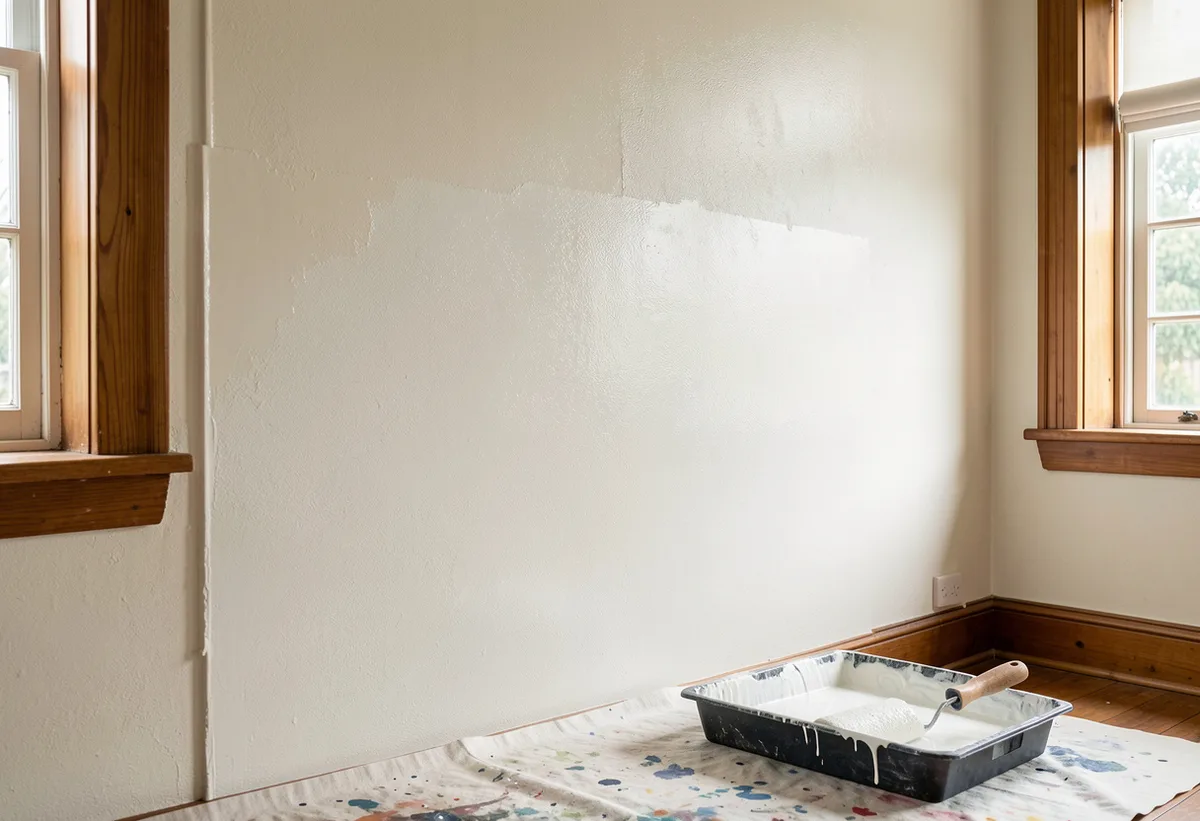
Two coats is the answer for walls, near enough to always. One coat almost never covers evenly, even repainting the same colour, because the film is too thin to hide roller overlaps and minor patching. Change the colour dramatically, paint over stains or repairs, or paint new plaster, and a primer or tinted undercoat goes on first, making it three.
Key takeaway
Two topcoats always. Add an undercoat for colour changes, stains, patches and new plaster. Budget paints that need a third coat cost more than quality paint that covers in two.
When do walls need three coats?
The short answer: whenever what’s underneath can show through. The undercoat-plus-two-topcoats jobs:
- Strong colour changes, dark to light or light to dark. A grey-tinted undercoat under deep colours, or a white undercoat over them, kills the old colour in one pass.
- New plasterboard. Bare plaster drinks paint unevenly and flashes at every joint; a plasterboard sealer evens the suction first.
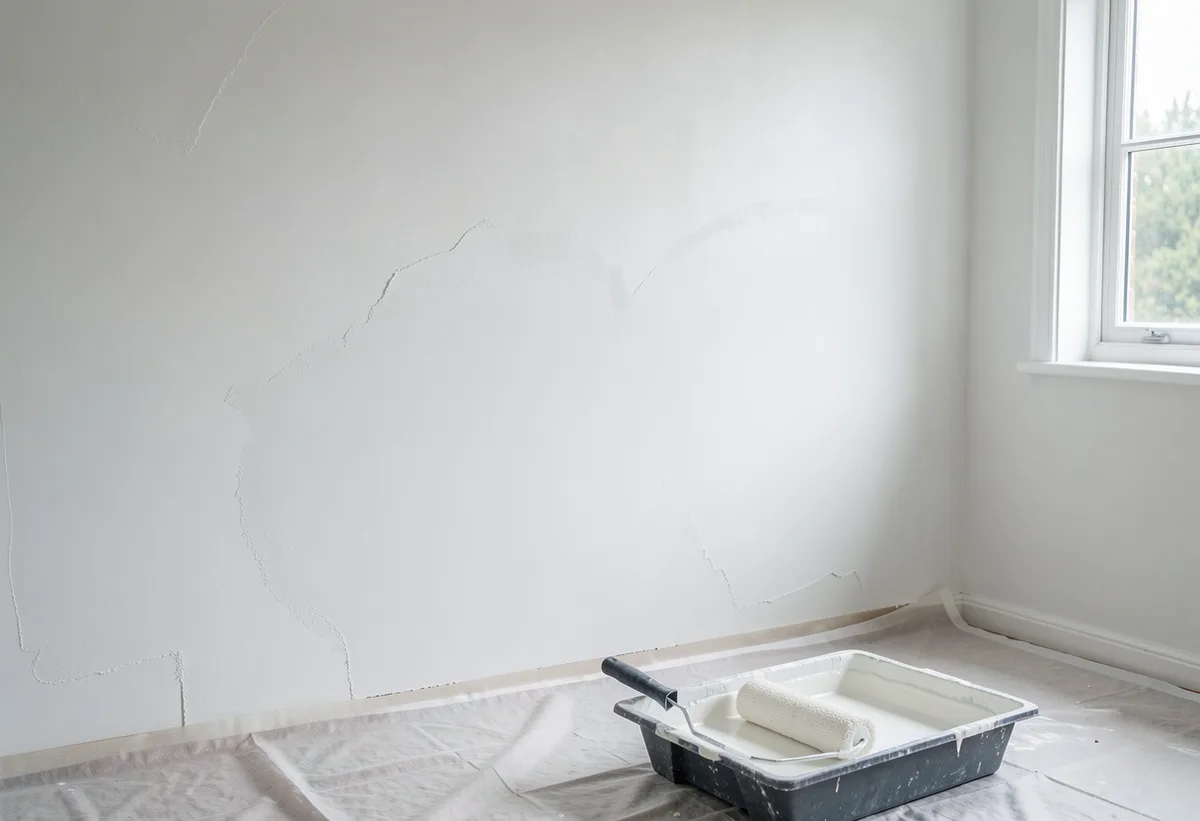
- Stains and repairs. Water marks, smoke and heavy patching bleed through topcoats; a stain-blocking primer locks them down. Our wall preparation guide covers the sequence.
- Glossy old surfaces. Old enamel walls need a scuff and an adhesion primer before acrylic topcoats will hold.
| Situation | Coats | System |
|---|---|---|
| Same colour refresh, walls in good condition | 2 | Two topcoats |
| Any repaint, minor patching | 2 | Two topcoats over spot-primed patches |
| Strong colour change | 3 | Tinted undercoat + two topcoats |
| New plasterboard | 3 | Plasterboard sealer + two topcoats |
| Stains, smoke, water marks | 3 | Stain-blocking primer + two topcoats |
| Old glossy enamel walls | 3 | Scuff + adhesion primer + two topcoats |
How far does a litre of paint actually go?
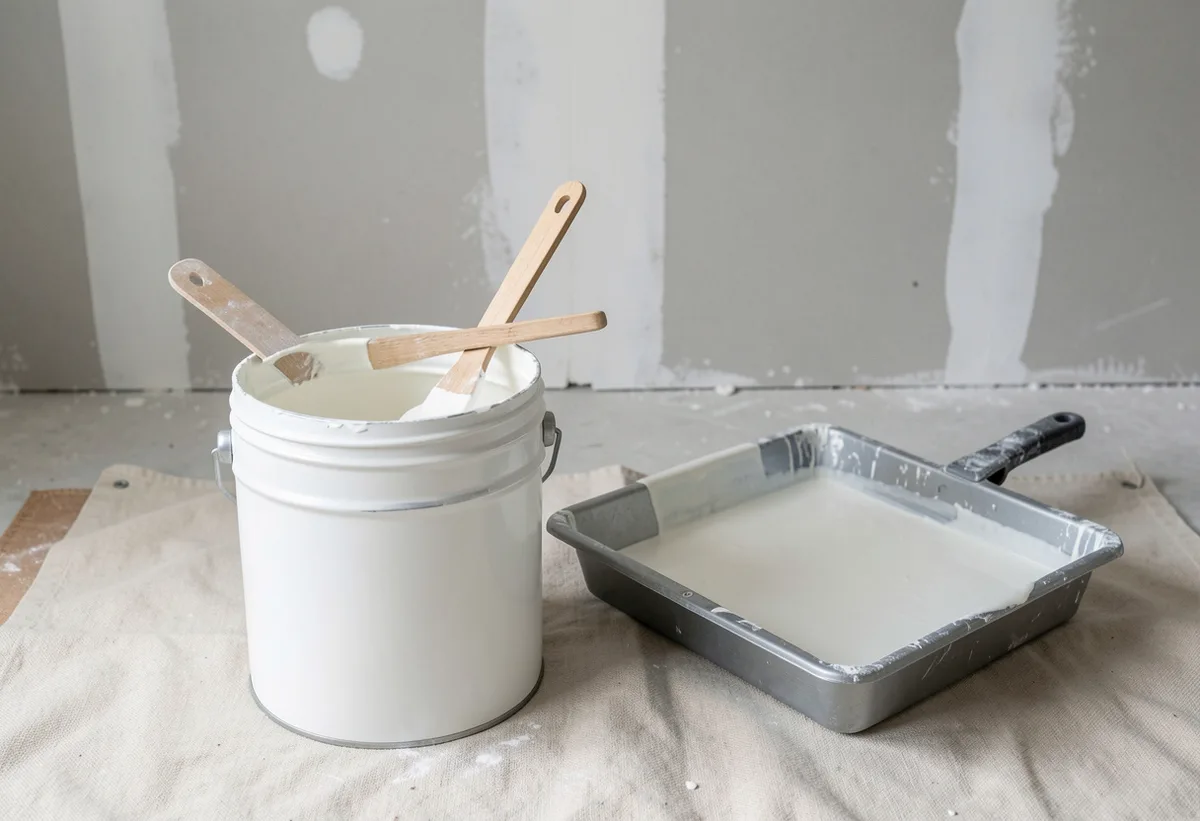
Plan on 12 to 14 square metres per litre per coat on a normal interior wall, even though most premium tins claim up to 16. The tin figure is measured on a smooth, sealed test surface. Lightly textured walls, older repaints and anything porous will use more.
| Product | Tin coverage claim | Realistic on walls | Approx. price (4L) |
|---|---|---|---|
| Dulux Wash&Wear Low Sheen | Up to 16 m² per litre | 12 to 14 m² per litre | Around $100 to $115 |
| Haymes Expressions Low Sheen | Up to 16 m² per litre | 12 to 14 m² per litre | Around $95 to $110 |
| Taubmans Endure Interior | Around 14 to 16 m² per litre | 12 to 14 m² per litre | Around $85 to $100 |
| Acrylic sealer undercoat | Around 12 to 14 m² per litre | 10 to 12 m² on new plaster | Around $70 to $90 |
The maths for a standard 15 square metre bedroom: about 32 square metres of wall area once you subtract the door and window. Two coats means 64 square metres of coverage, which is roughly 5 litres of paint at real-world spread rates. A 4 litre tin plus a 1 litre top-up does it, with a little left for touch-ups.
Buying short is the classic DIY mistake. A second tin tinted on a different day can be fractionally off-colour, so buy the full quantity in one batch and box (mix) the tins together if you’re doing a large area.
How long should you wait between coats?
Wait at least two hours between coats of water-based wall paint, and stretch that to three or four hours in a cold or damp Melbourne winter. The two hour recoat figure on a Dulux Wash&Wear label is measured at around 25 degrees. A 12 degree August day in an unheated house is nowhere near that.
Touch dry is not recoat ready. Paint feels dry on the surface long before the film underneath has hardened. Roll the second coat too early and you drag the first one, trap moisture, and end up with patchy sheen that only shows once everything cures. If the room feels damp, give it longer and keep some air moving through.
What does an extra coat of paint cost in Melbourne?
An extra coat on a standard bedroom adds roughly $120 to $250, and a third coat through a whole three bedroom interior adds about $800 to $1,500. That’s the labour to cut in and roll every wall again, plus another 2 to 3 litres of paint per room.
That number matters in two directions:
- Don’t pay for coats you don’t need. A quote pushing three topcoats on sound, previously painted walls in a similar colour is padding. Two topcoats over proper prep is the professional standard.
- Don’t accept a quote that hides the coat count. The cheapest quote on the table is often priced for one coat, and the patchy result costs you a full repaint. Make sure the number of coats, the primer and the prep are written down. Our guide to room painting costs in Melbourne breaks down what fair pricing looks like.
Why not just buy one-coat paint?
The short answer: because side light doesn’t believe the label. Thicker one-coat formulations genuinely cover better per pass, but a single pass still leaves overlap bands and thinner patches that show when the afternoon sun rakes along the wall. Two thinner coats level into one even film, and that is the difference between a wall that looks painted and a wall that looks finished. Quality paint that genuinely covers in two coats is cheaper than budget paint that needs three, the arithmetic we walk through in the Melbourne painting cost guide.
Does the same rule apply to ceilings and trim?
The short answer: two coats there as well, with their own products. Ceilings take two coats of flat ceiling paint (and not on the walls, see ceiling paint on walls), and doors and trim take two coats of enamel over a sanded, primed surface. On a professional interior repaint, the two-coat standard on every surface is simply built into the quote.
Want the coat count in writing?
We quote every interior repaint with prep, primer and two full topcoats itemised, so you know exactly what you're paying for. Free on-site quotes across Melbourne.
Rather have a professional handle it?
Free on-site inspection and a fixed-price written quote, no obligation. Painting Melbourne homes since 1987.
Related service: Interior painting.
We paint across Maribyrnong, Sunshine, Niddrie, Glenroy, Spotswood, St Albans and more, see our painting services in Maidstone, or the house painters in Melbourne families have trusted since 1987.