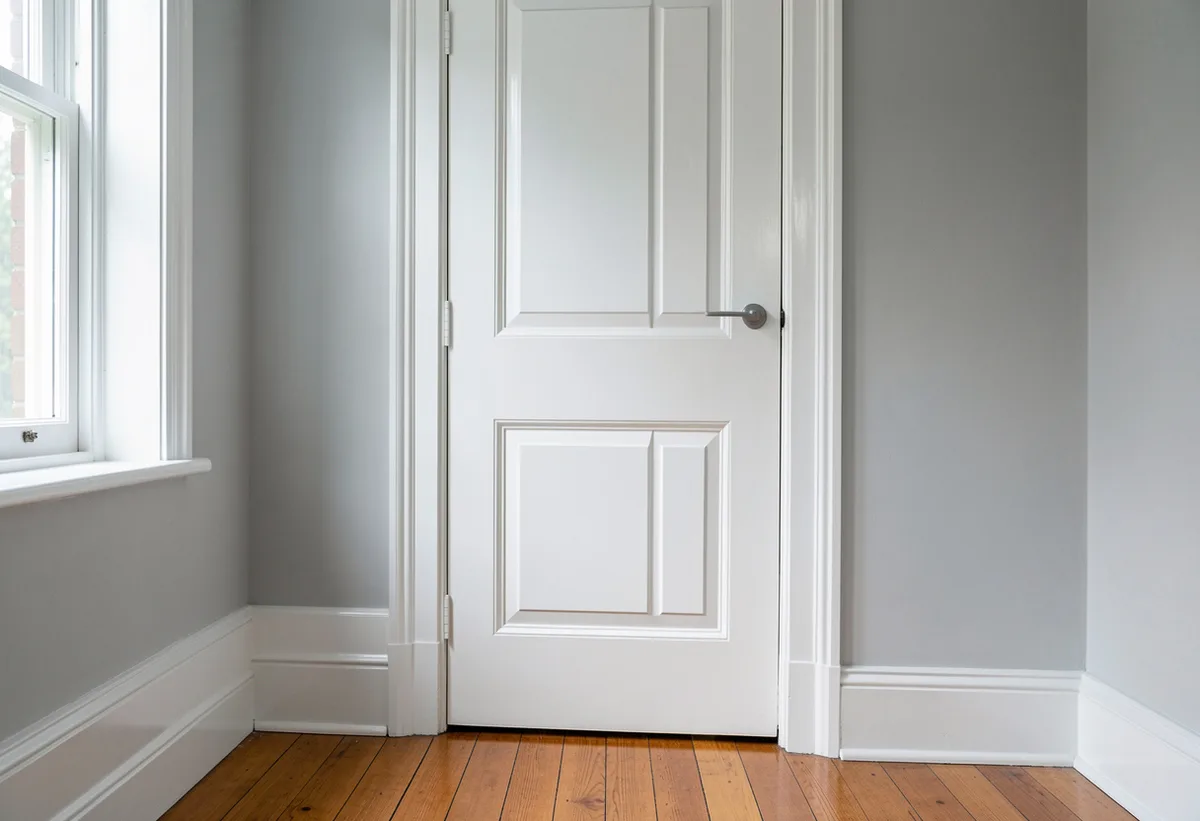
Use water-based enamel for almost every enamel job in a home: doors, skirting boards, window frames, trim and cabinetry. It’s touch dry in 30-60 minutes, recoatable in 2-4 hours, doesn’t yellow, and cleans up with water. Oil-based enamel still earns its place in exactly three situations: recoating old oil enamel, chasing a glass-like full-gloss finish, and some high-wear metal. That’s the verdict we apply on Melbourne jobs every week, and the reasoning is below.
Key takeaway
Water-based enamel (like Dulux Aquanamel) is the default for doors, trim and skirting: fast recoat, no yellowing, low odour. Pick oil-based only for recoating existing oil enamel without full prep, ultimate gloss self-levelling, or hard-wear metal. And never put water-based straight over old oil enamel without sanding and an adhesion primer.
What’s the actual difference between water-based and oil-based enamel?
“Enamel” describes the hard, wipeable finish used on doors and trim, not what’s in the can: water-based enamel carries acrylic resin in water, oil-based enamel carries alkyd resin in mineral turps. That one difference in the carrier drives everything else: drying time, smell, yellowing, cleanup and how the film ages.
| Water-based enamel | Oil-based enamel | |
|---|---|---|
| Touch dry | 30-60 minutes | 4-8 hours |
| Recoat | 2-4 hours (same day) | Typically 16 hours (next day) |
| Yellowing on whites | No | Yes, worsens with age and low light |
| Odour / fumes | Low | Strong, lingers for days |
| Cleanup | Soap and water | Mineral turpentine |
| Finish | Very good levelling, slight texture up close | Best-in-class self-levelling, glass-like gloss |
| Film with age | Stays flexible, moves with timber | Goes brittle, can crack on moving joints |
| Full cure | 14-30 days | Several weeks, dries to a harder, more brittle film |
Drying and recoat figures are from the manufacturers’ data sheets, Dulux Aquanamel for water-based and Dulux Super Enamel for oil-based, at standard conditions. In a cold Melbourne winter, add time to both.
When should you still choose oil-based enamel?
Three real cases: recoating surfaces already painted in oil enamel, a full-gloss finish where self-levelling matters more than anything, and high-wear metal like handrails and balustrades. Oil sticks readily to old oil, so on a quick recoat of sound existing enamel it saves the adhesion-primer step. And nothing levels out brush marks quite like a slow-drying alkyd gloss, which is why some heritage front doors still get it.
The trade-offs you accept: next-day recoats double the job length, the fumes mean living around wet oil enamel is unpleasant, and on white trim the yellowing is guaranteed, only the timeframe varies.
Why did painters switch to water-based enamel?
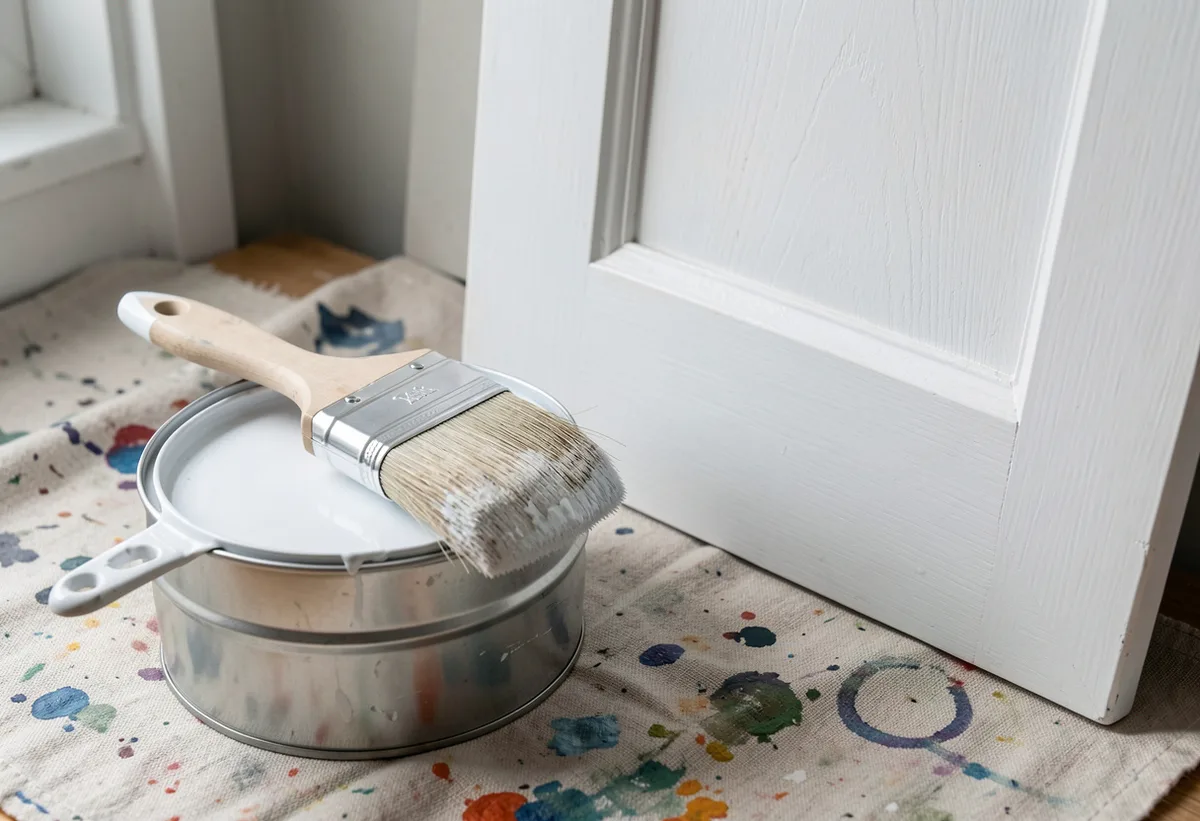
Because modern water-based enamels closed the durability gap while keeping their three built-in advantages: same-day recoats, no yellowing, and low odour. Twenty years ago the knock on water-based enamel was a softer film and visible brush marks. Current formulations changed that: cured Aquanamel is hard enough for skirting boards that cop vacuum cleaners and school shoes, and levelling is close enough to oil that the difference is invisible from arm’s length.
The practical wins on a real job are hard to overstate. Doors get two coats in one day instead of two days. A family can sleep in the house the same night. And the white trim painted this year is still white in ten years, we see the difference constantly on repaints of Melbourne homes where one previous owner used oil and another used acrylic.
The trap: water-based paint over old oil-based enamel
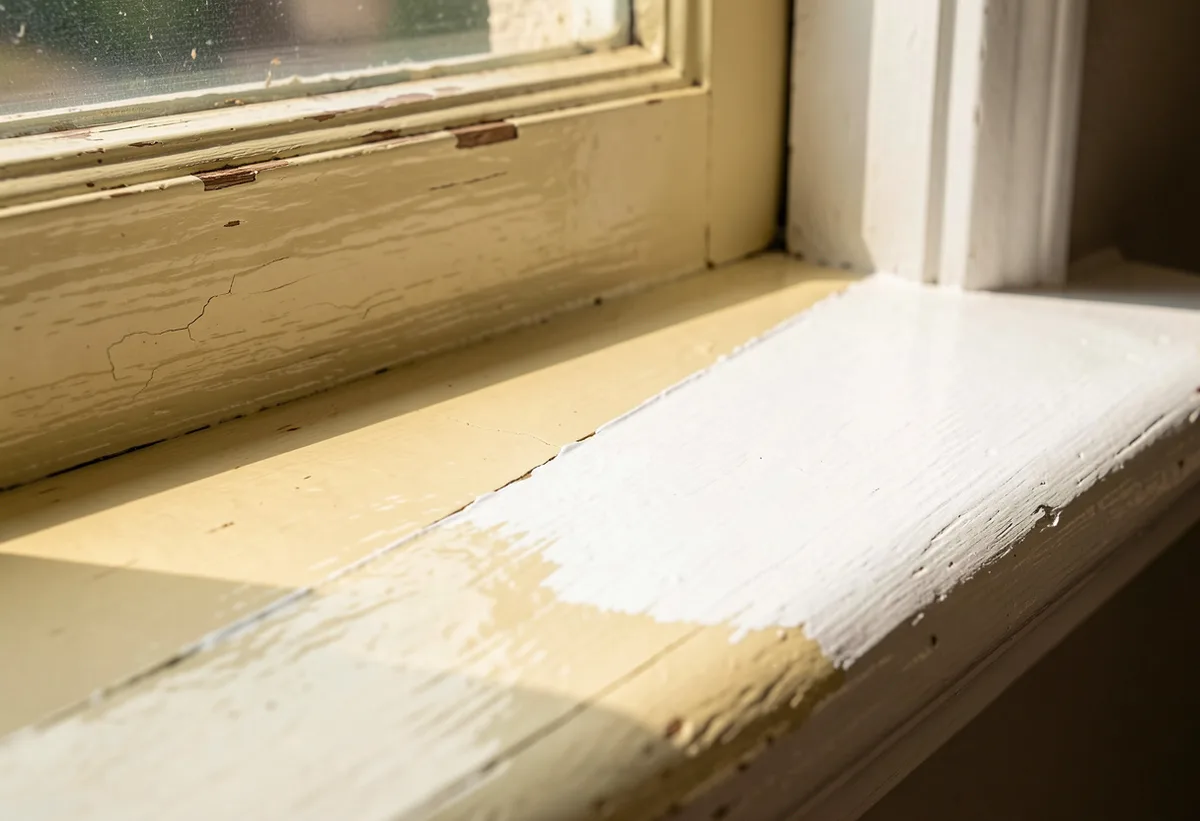
Most Melbourne homes built or last painted before the mid-1990s have oil-based enamel on their doors, trim and window frames, and putting water-based paint straight over it is one of the most common causes of peeling we get called to fix. The new coat can’t key into the hard, glossy alkyd surface, so it sits on top like a sticker, and comes off like one.
The right process on old enamel: test the surface first (methylated spirits on a rag, see the FAQ below), sand thoroughly to dull all gloss, wash with sugar soap, then apply a dedicated adhesion primer before the water-based topcoats. Our paint and primer guide covers which primer to use where, and if the old paint is already lifting, deal with that first, see how to fix peeling paint.
One extra caution in older homes: pre-1970 enamel layers may contain lead. Test before sanding, and use lead-safe practices if it’s positive.
Which enamel for which job around the house?
| Surface | Our pick | Why |
|---|---|---|
| Interior doors | Water-based, semi-gloss | Same-day two coats, no yellowing |
| Skirting boards and architraves | Water-based, semi-gloss | Flexes with timber, scuff-resistant |
| Window frames and sashes | Water-based, semi-gloss | Stays flexible through sun and movement, see our window painting service |
| Front door (full gloss look) | Either, oil if mirror gloss is the goal | Oil self-levels best; accept slower recoat |
| Kitchen cabinets | Water-based enamel or 2-pack systems | Fast recoat matters across many doors |
| Handrails, metal balustrades | Oil-based or metal-rated enamel | Hardest wearing film on metal |
A note on finish choice rather than chemistry: semi-gloss is the standard for trim, gloss shows more surface imperfection, our paint finish guide covers that decision room by room.
Getting enamel work done properly
Enamel surfaces are the ones you touch and see up close every day, and they’re also the least forgiving of shortcuts: skipped sanding, wrong primer, or rushed recoats all show. Modernize Solutions has painted doors, trim and windows across Melbourne since 1987, exclusively with Dulux systems, backed by a workmanship guarantee and $20M public liability insurance.
Want your trim done once, properly?
Free on-site quote across Melbourne. We test what's on your trim now and spec the right system for it.
Related service: Door & Trim Painting
Add the finishing touches with crisp door and trim painting.
Learn more about our Door & Trim Painting service →Painters in Yarraville
Painters in Yarraville 3013. Edwardian weatherboards and workers' cottages done properly, since 1987. Dulux paints, $20M insured, free quotes.
Painting services in Yarraville →