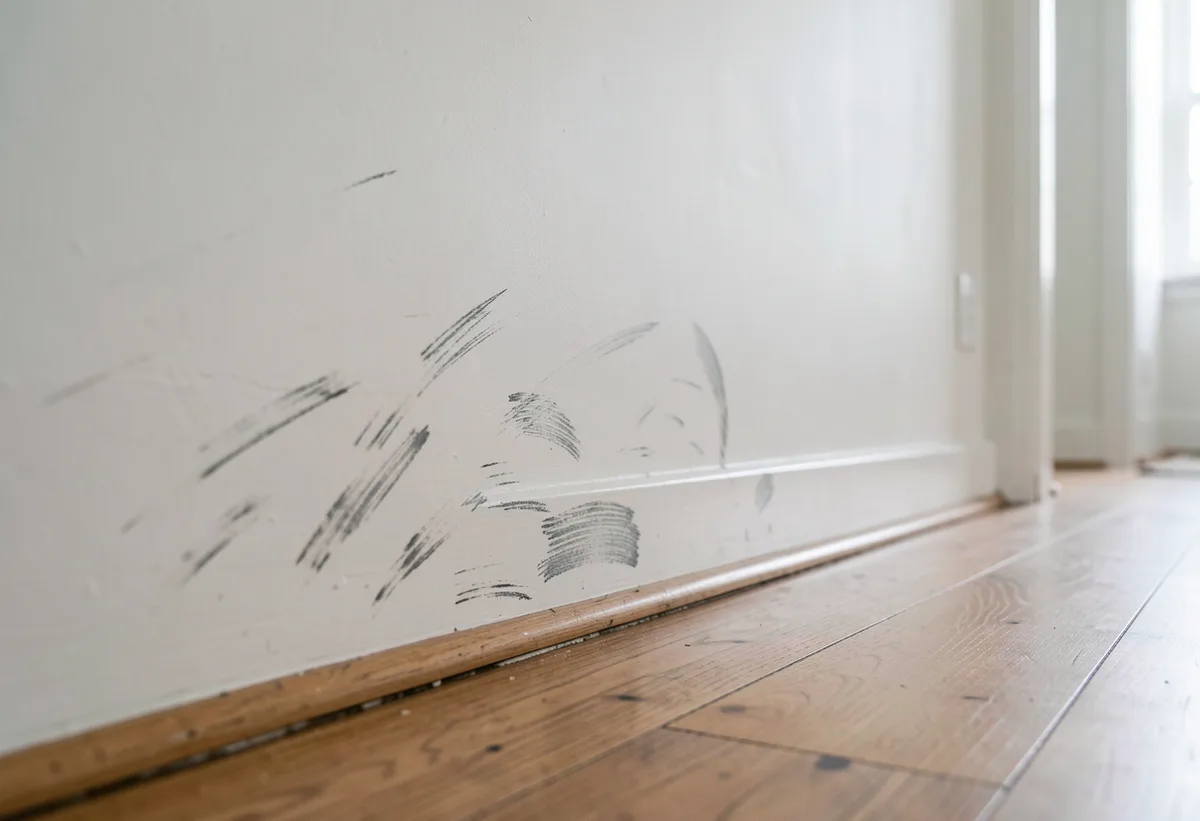
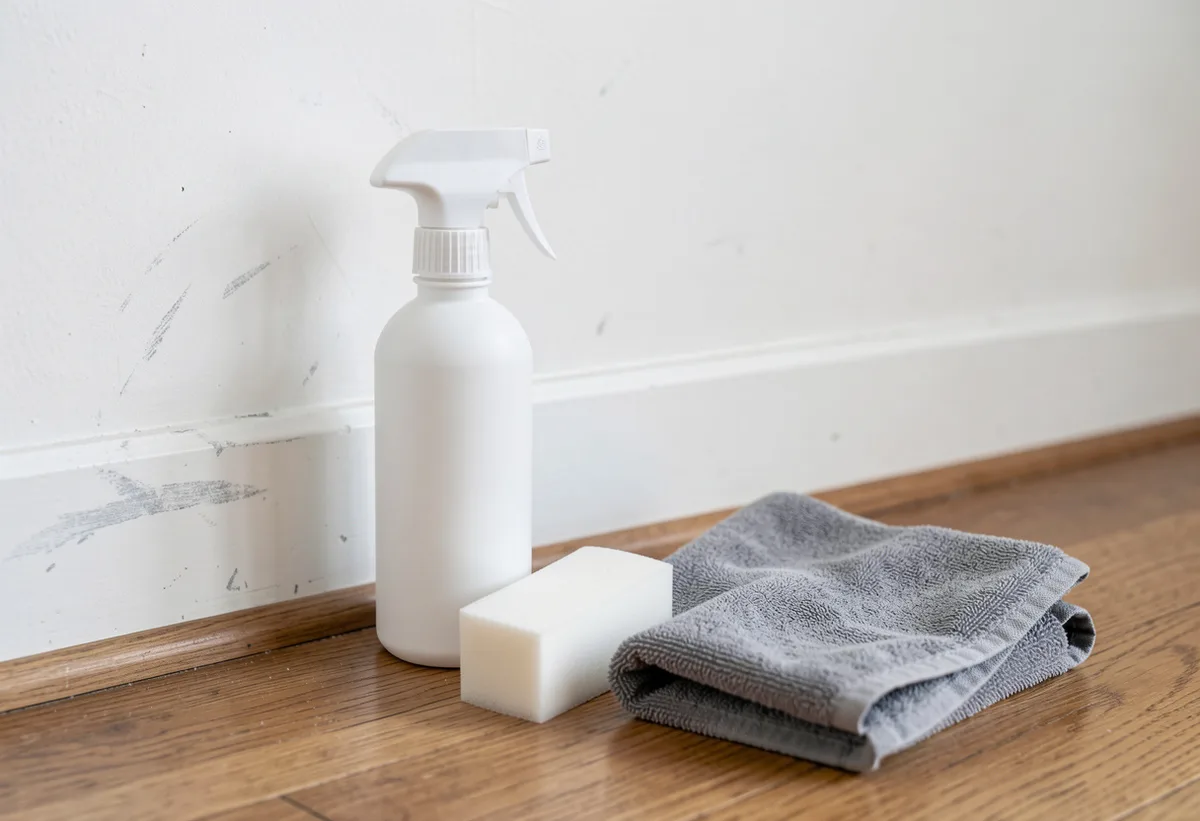
To get scuff marks off white walls: rub gently with a damp melamine eraser sponge for under a minute per mark, or spray sugar soap and wipe with a microfibre cloth for greasy marks. Total kit cost is under $15. The one rule: light pressure, because hard scrubbing on matte paint polishes it shiny, and that damage can’t be washed off.
Below: the gentle-to-strong cleaning order, why scrubbing sometimes makes it worse, and the paint fix for hallways and stairwells that scuff every week.
Key takeaway
Eraser sponge for rubber and shoe scuffs, sugar soap for greasy marks, always light pressure. A shiny patch after cleaning is burnished paint and only a repaint fixes it. Walls that scuff constantly want a washable low-sheen paint, not more scrubbing.
What takes scuff marks off white walls fastest?
A damp melamine eraser sponge lifts most scuffs in 30 to 60 seconds. Wet it, wring it until it stops dripping, and rub the mark with light, moving strokes. Most black shoe and rubber scuffs transfer onto the sponge almost immediately.
Work gentle-to-strong through this order, stopping at whatever works:
- Dry microfibre cloth. Fresh rubber scuffs sometimes buff straight off.
- Warm water and a drop of dishwashing liquid on a cloth. Handles general grime and finger marks.
- Melamine eraser sponge, damp, light pressure. The workhorse for real scuffs.
- Sugar soap sprayed on, wiped off, then rinsed with a clean damp cloth. Best for greasy kitchen-adjacent marks and cleaning whole wall sections evenly.
Skip abrasive cream cleansers and scourers on painted walls; they scratch the film and dull the finish permanently.
Why does cleaning leave a shiny patch on the wall?
Because matte paint burnishes: rubbing flattens its light-scattering surface into a polished spot that catches light differently. The mark is gone, but a glossy ghost sits where it was, and it’s most obvious in raking afternoon light down a hallway.
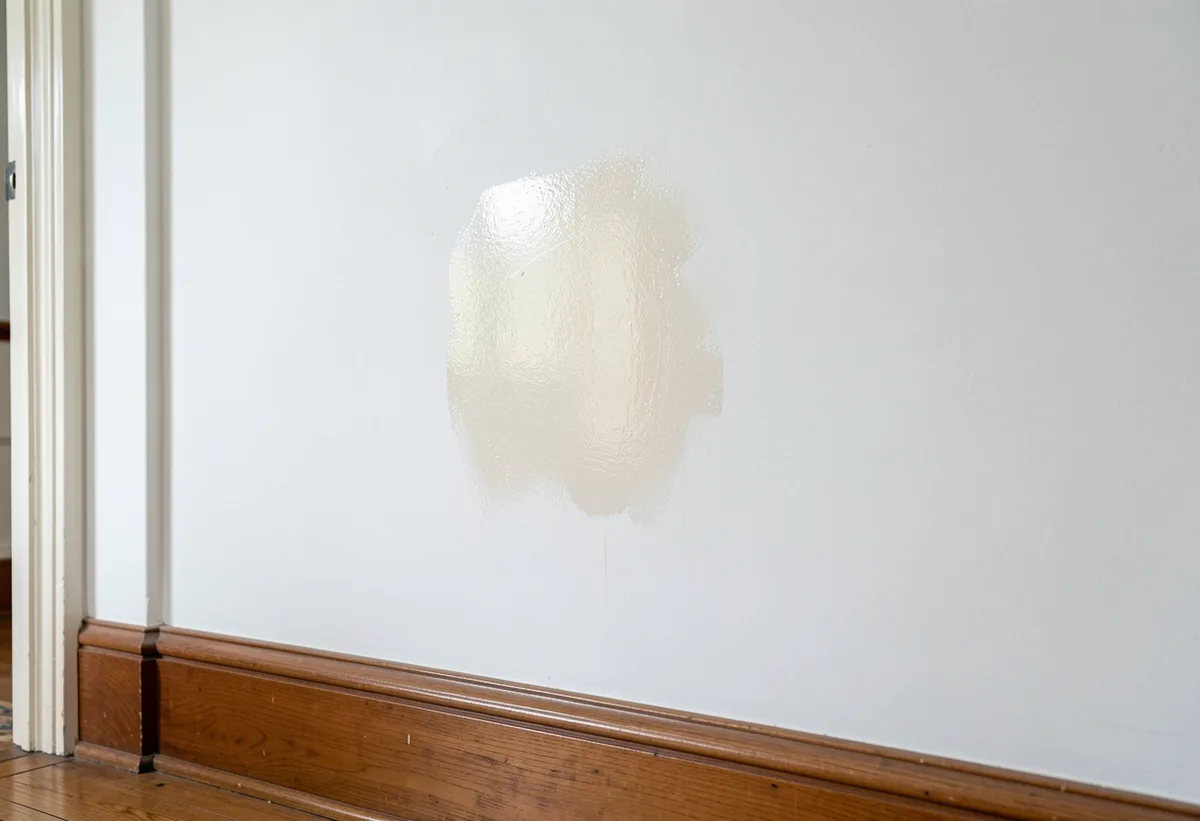
Burnishing is physical wear, not residue, so no product removes it. Prevention is pressure control: let the sponge’s texture do the work and stop the moment the scuff lifts. Cheap flat “ceiling white” style paints on walls burnish worst; premium washable paints barely burnish at all. If a wall already has obvious shiny patches, repainting that wall is the only genuine fix, and it’s worth doing in a paint made for the job (next section).
Which paint stops walls scuffing in the first place?
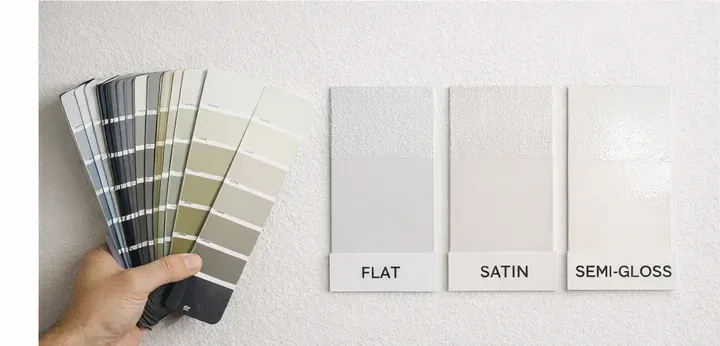
A washable low-sheen or satin acrylic. In high-traffic areas it’s the difference between wiping marks off weekly and repainting yearly. Flat matte hides wall imperfections beautifully but holds every mark and hates being cleaned; washable formulations take a sponge without burnishing.
| Area | Recommended finish | Why |
|---|---|---|
| Hallways, stairs, kids’ rooms | Washable low-sheen (e.g. Dulux Wash&Wear) | Cleans repeatedly without burnishing |
| Living, bedrooms | Low-sheen or quality washable matte | Balance of looks and cleanability |
| Kitchens, laundries, bathrooms | Satin / semi-gloss, moisture-rated | Wipes clean, handles humidity |
| Ceilings | Flat matte | Never touched, hides imperfections |
Our kitchen and bathroom paint finish guide goes deeper on sheen choices room by room.
When is a scuff not a cleaning job?
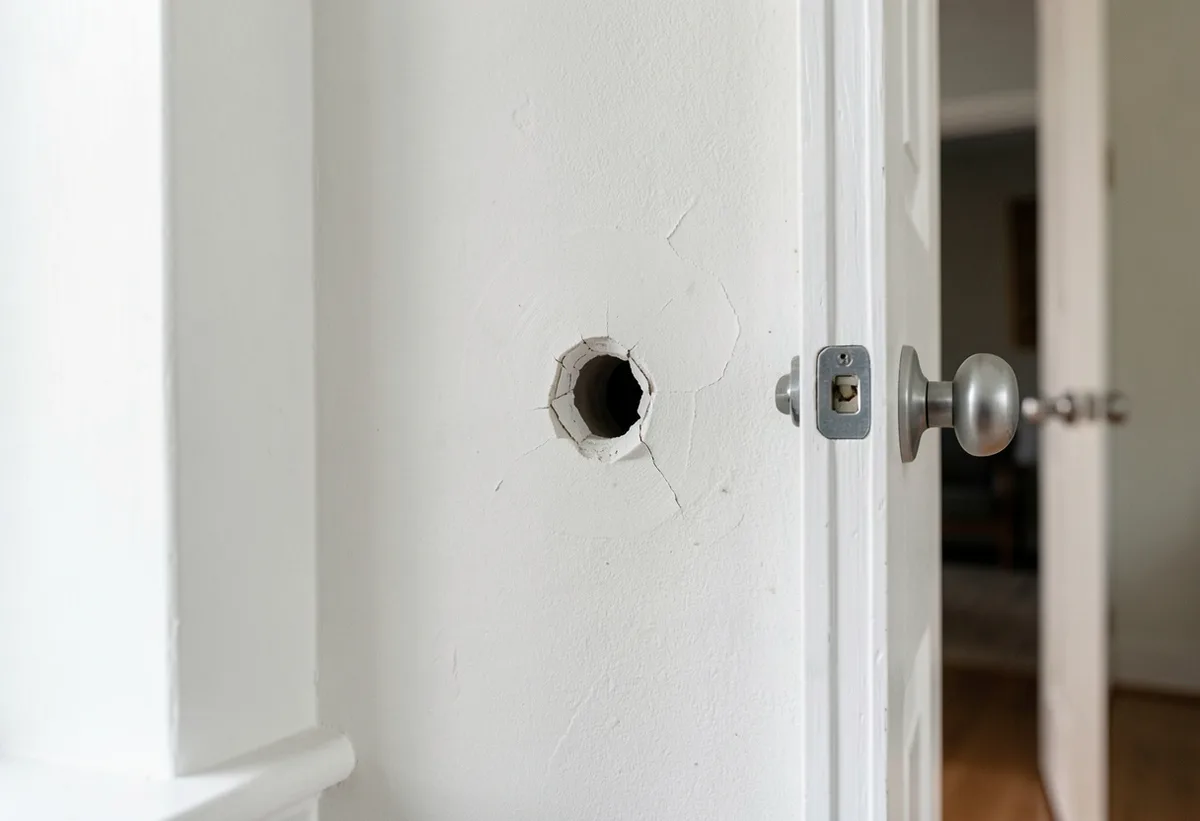
When there’s a dent or chip under the mark, when the scuff has gone through the paint to the undercoat, or when cleaning one patch makes the rest of the wall look dirty. A mark with texture behind it needs filling and touch-up paint, not scrubbing; the chipped paint repair guide covers that, and anything bigger falls under patching holes.
The “clean patch on a dingy wall” problem is the classic sign a wall is at the end of its paint life. White walls in Melbourne’s high-traffic homes realistically look their best for five to seven years; after that, each spot-clean widens the gap between cleaned and uncleaned paint.
Is it worth getting a painter for scuffed walls?
For marks that clean off, no. For burnished patches, scuffs through to the undercoat, or a hallway that’s permanently marked, yes: a repaint in a washable paint is a few hundred dollars and resets the wall for years. A hallway or single room repaint is a small, quick job, and batching it with the house’s other dings and chips makes the visit better value; that’s what our small painting jobs service is for. For whole-house numbers, see the house painting cost guide.
Hallway past the point of cleaning?
We repaint high-traffic walls in proper washable paint so scuffs wipe off instead of building up. Free quote, anywhere in Melbourne.
Learn more about our interior painting service or our small painting jobs service for single walls and touch-ups.
Rather have a professional handle it?
Free on-site inspection and a fixed-price written quote, no obligation. Painting Melbourne homes since 1987.
Related service: Interior painting.
We paint across Pascoe Vale, Albion, Ardeer, Footscray, Brunswick, Essendon and more, see our painting services in Richmond, or the house painters in Melbourne families have trusted since 1987.