To repair chipped paint: sand the chip’s hard edges smooth, fill any depth with fine surface filler (about $15 a tub), sand flat, spot-prime, then feather on a colour-matched topcoat. A single chip takes about 30 minutes of work plus drying time. The sanding and feathering steps are what make the repair invisible; skipping them is why most DIY touch-ups stay visible.
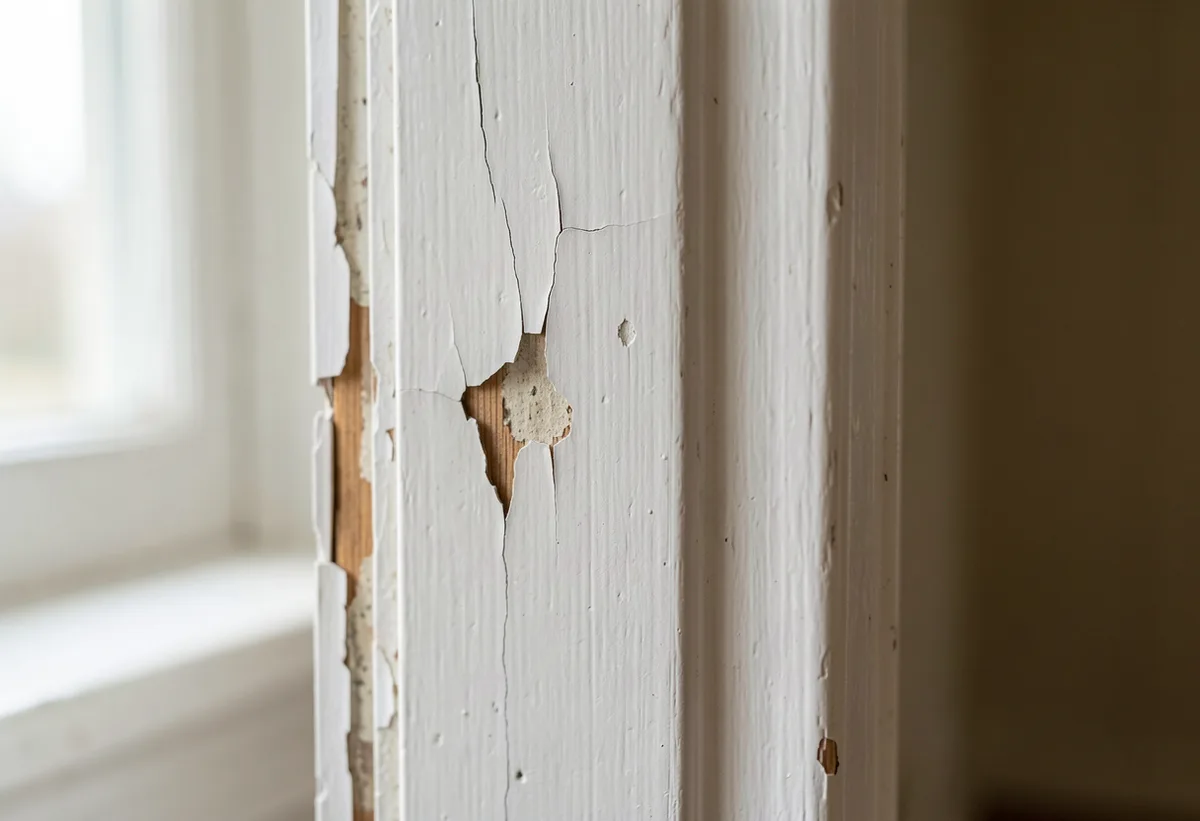
A chip is impact damage, not a paint failure like bubbling or peeling, so the fix is mechanical: rebuild the missing surface, then hide the join.
Key takeaway
A chip repair is five steps: sand edges, fill, sand flat, prime, feather the paint. The repair is only as invisible as your colour match, so on walls older than about five years, budget for the possibility of repainting the whole wall.
What causes paint to chip?
Paint chips when an impact breaks the paint film’s bond in one spot: furniture edges, door handles, picture hooks, thrown toys, or trades moving gear. Older paint chips more easily because paint gets brittle as it ages, and multiple built-up layers (common in Melbourne period homes) flake off in thicker pieces when struck.
One caution before you reach for the sandpaper: if your home was built before 1970, the older layers under the chip may contain lead. Don’t dry-sand suspected lead paint. See our lead paint guide for pre-1970 Melbourne homes first.
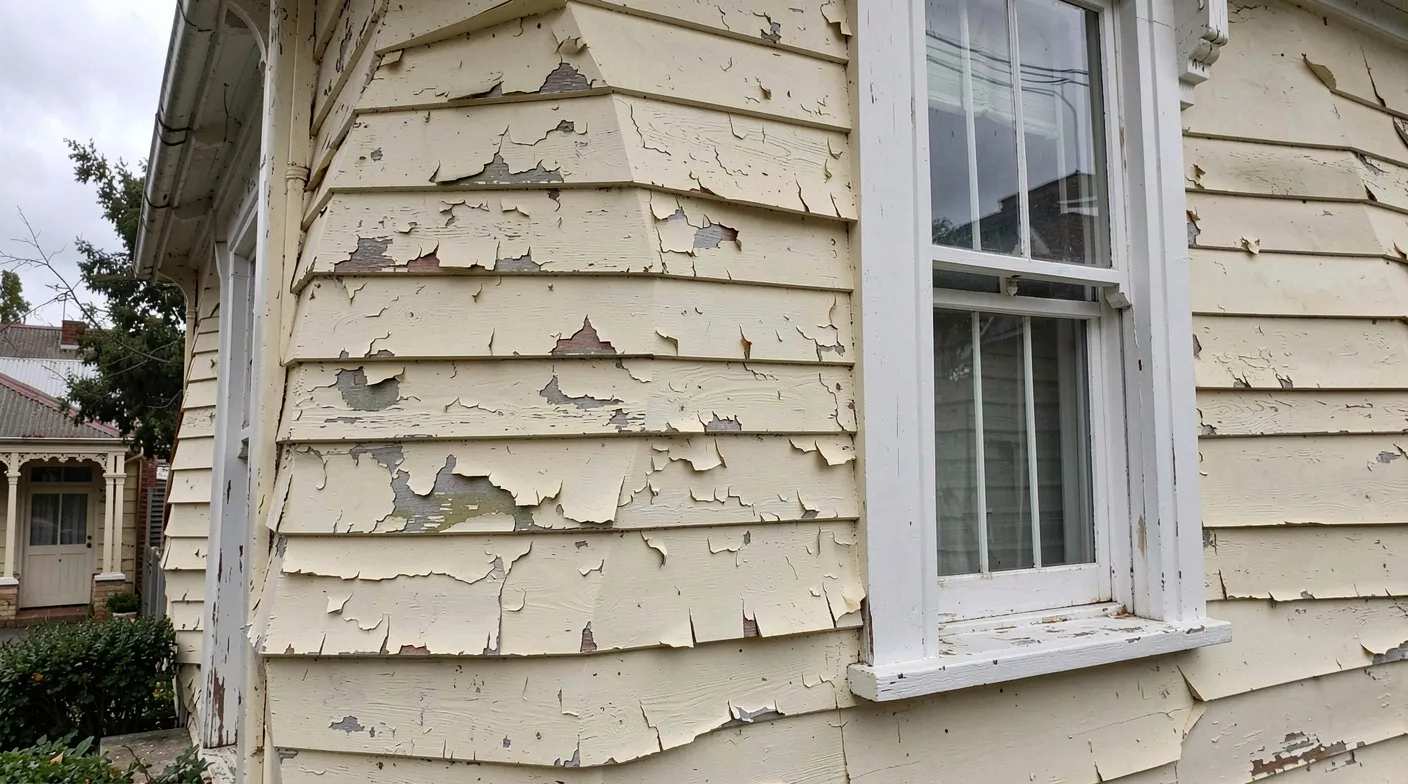
If chips are appearing without impacts, or paint is coming away in sheets or flakes on its own, that’s adhesion failure, not chipping. Head to the peeling paint guide instead.
How do you repair chipped paint on walls, step by step?
Sand, fill, sand, prime, paint. In detail:
- Sand the chip’s edges. Fold 240-grit sandpaper and lightly sand the crater’s rim until you can’t feel a ridge running a fingertip across it. This is the step most people skip and the reason most repairs show.
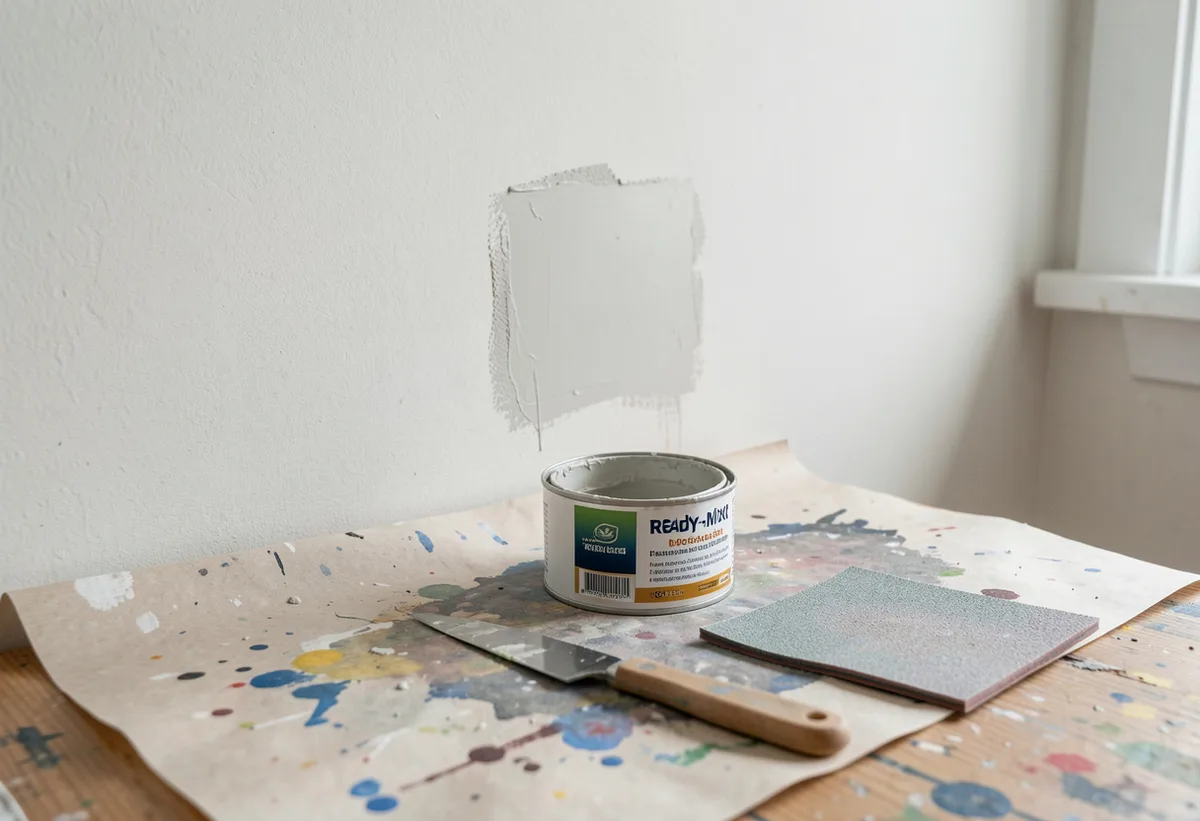
- Fill the chip. Press ready-mixed fine surface filler into the crater with a flexible putty knife, slightly proud of the wall. Deep chips get two thin coats, letting the first dry fully (fillers shrink).
- Sand flat. Once dry (usually 1 to 2 hours), sand flush with 240-grit using a light circular motion, then wipe the dust off with a barely damp cloth.
- Spot-prime. Dab or mini-roll a coat of primer over the filled area. Filler is more porous than painted wall; unprimed, it drinks the topcoat and dries as a dull spot.
- Feather the topcoat. Apply the colour-matched paint over the repair and a hand-width beyond it, using the same tool the wall was originally painted with (usually a mini-roller). Two light coats beat one heavy one.
| Chip depth | What to use | Dry time before painting |
|---|---|---|
| Surface only (paint film, no crater) | No filler, just sand edges and prime | 30 min primer dry |
| Shallow crater (under 1 mm) | Fine surface filler, one coat | 1-2 hours |
| Deep chip into plaster (1-5 mm) | Surface filler, two thin coats | 2-4 hours total |
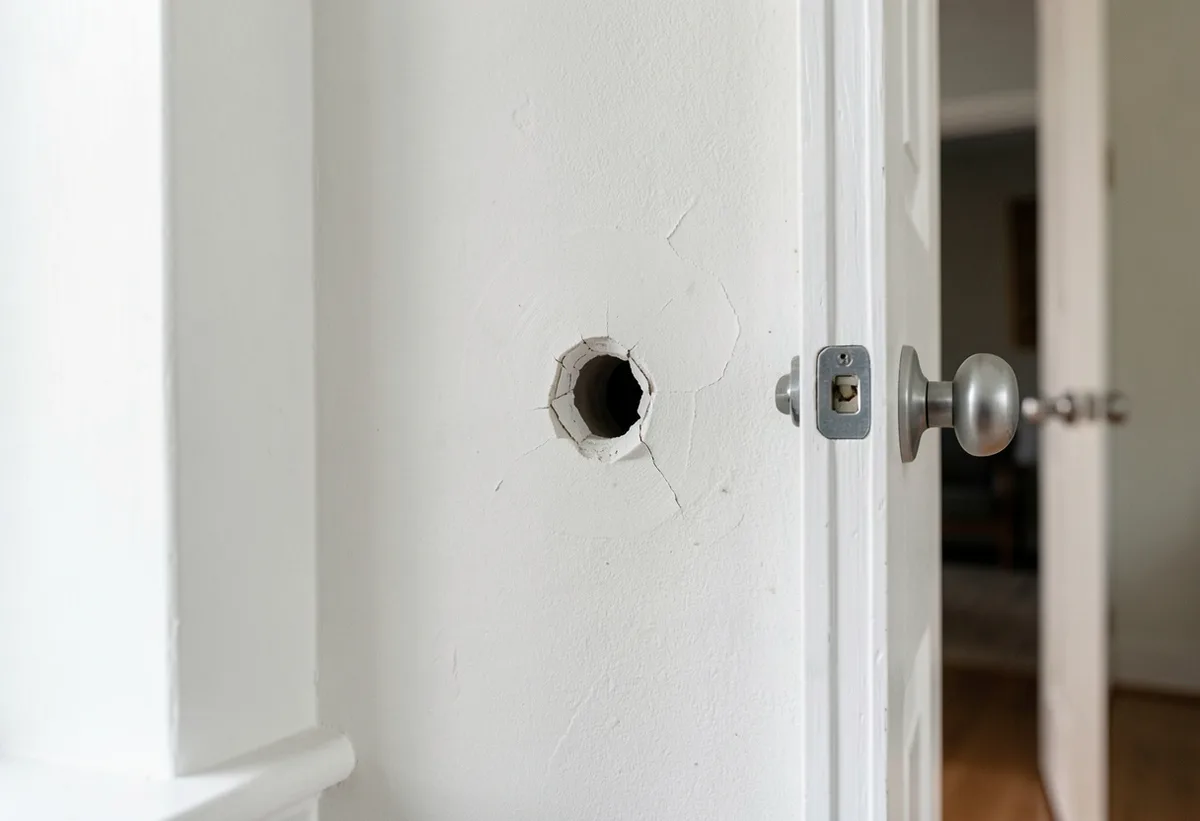
| Chunk out of plasterboard or plaster | See the hole patching guide | Overnight |
How do you fix chipped paint on doors, skirting and trim?
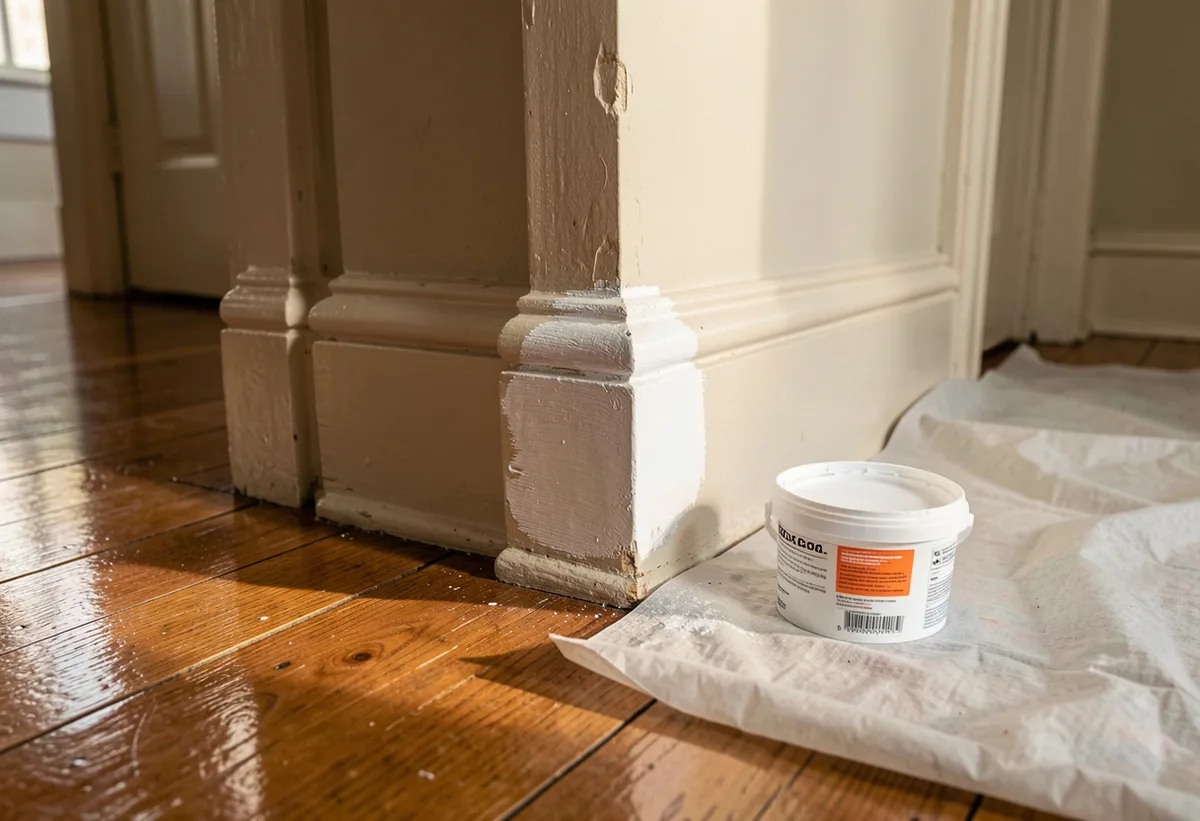
Same five steps, but use a harder filler and a brush. Doors and trim take repeated knocks, so soft plaster-based filler gets punched straight back out. Use a timber filler or two-part epoxy filler on door edges, skirting corners and window sills, and sand with 180-grit before finishing with 240.
Trim in most Melbourne homes is painted in gloss or semi-gloss enamel, which telegraphs surface flaws more than matte wall paint. Take the sanding stage seriously and apply the enamel in thin brushed coats along the length of the timber, not across it. On white trim, note that “white” enamels yellow slightly with age; a bright new white patch on 10-year-old trim will show, and the honest fix is repainting that length of skirting or that door edge end to end.
How do you colour-match the touch-up paint?
Best to worst: the original tin, the recorded colour name remixed fresh, a paint-shop scan of a chip flake, and last, eyeballing a colour card. Keep any leftover paint tins; the colour and finish written on the lid is worth more than the paint inside.
If you’re matching from a flake, prise off a piece about the size of a 10-cent coin from inside the chip area (somewhere already damaged) and have a trade paint shop scan it. Matching services get very close on colour but can’t match age: walls fade, yellow and burnish over years, so even a perfect match can flash slightly. That’s why feathering matters, and why past a certain wall age the real fix is corner-to-corner.
When does chipped paint mean a bigger problem?
A chip that grows, or paint that keeps flaking around a repaired chip, means the surrounding paint has lost adhesion and the chip just exposed it. Watch for these signs that you’re past touch-up territory:
- Paint flakes away easily around the chip when you sand, and the bare patch keeps growing
- The exposed surface under the chip is powdery, damp or stained
- Chips cluster along one wall or ceiling area, which points at movement or moisture rather than impacts
- The home is pre-1970 and the exposed layers might contain lead
The first two usually trace back to moisture or a skipped primer decades ago, and repainting over them fails fast. Our peeling paint guide covers the diagnosis.
Is it worth getting a painter for chipped paint?
For one or two chips with the original tin on hand, do it yourself. For chips across multiple rooms, no colour records, enamel trim, or any pre-1970 home, a professional visit is usually the better economics. A touch-up visit in Melbourne typically runs $350 to $650 and clears every chip, ding and scuff in the house in one go, with proper colour matching. Compare that with buying filler, sandpaper, primer, sample pots and a Saturday, per room.
This is exactly what our small painting jobs service exists for: touch-ups, single walls and single doors, without pretending you need a full repaint. If the damage turns out to be bigger than chips, our house painting cost guide shows what full-room and full-house work actually costs in Melbourne.
Chips, dings and scuffs through the house?
We do small jobs properly: colour-matched, feathered, invisible. One visit clears the lot. Free quote, anywhere in Melbourne.
Learn more about our interior painting service or our small painting jobs service for touch-up work.
Rather have a professional handle it?
Free on-site inspection and a fixed-price written quote, no obligation. Painting Melbourne homes since 1987.
Related service: Interior Painting.
We paint across Pascoe Vale, Albion, Ardeer, South Kingsville, Footscray, Brunswick and more — see our painting services in Essendon, or the house painters in Melbourne families have trusted since 1987.